Extraordinary Stories

1944 (1) Act of kindness (12) Acting (2) Adoption (4) Adventure (766) Advertisement (6) Africa (1) Aging (14) Agriculture (47) Airplanes (9) Alphabet (5) American Red Cross (1) Americana (116) Amish (43) Ancestry (5) Ancesty (2) Animals (43) Anniversary (4) Antigua (10) Antiques (14) Apron (1) architcture (1) Architecture (36) Art (175) Art? (8) Arts and Crafts (69) Athletics (6) Automobiles (40) Awards (7) Banking (2) Barn raising (2) Baseball (103) Basketball (3) Batik (1) Beaches (89) Becoming A Citizen (1) Bed & Breakfast (2) Bee Keeping (6) Beer & Breweries (2) Bikes (3) Birds (9) Birthdays (34) Blindness (1) Blogging (5) Bookbinding (5) Books (12) Boxing (2) Brother Steve (12) Buisiness (3) Business (5) Canals (1) Cancer (14) Candy (30) Caribbean Islands (9) Caribbean Villas (15) Cats (5) Caves (1) Census (1) Chesapeake Bay (61) Children (28) Chocolate (4) Christmas (57) Church Adventures (122) Cigars (1) Circus (3) Civil Rights (8) Civil War (6) Classic Cars (7) Climate Change (5) Clubs (1) Coin club (2) Coins (1) Collections (73) Comedy (3) Comic Books (5) Commercials (1) Comnservation (2) Conservation (41) Covered Bridges (3) Craftsmanship (12) Creamsicle the Cat (11) Crime (16) Crisis (312) Cruise Travel (6) Crying (1) Culture (4) Dancing (1) Danger (16) Daughter Brynn (58) Daughter-In-Law Barb (7) Death (5) Death and Dying (65) Destruction (2) Donuts (1) Downsizing (2) Dunking (5) Easter (3) Eavesdropping (1) Education (48) Energy (15) Entertainment (165) Entrepreneurial (62) Ephrata (1) Etchings (1) Eternal Life (4) Facebook (5) Factories (4) Fads (6) Family (261) Farming (37) Father (42) Father Time (68) Favorites (88) Firefighting (1) Flora and Fauna (28) Fond Memories (490) Food and Cooking (171) Food and Drink (111) Football (16) Forgetfullness (3) Former Students (10) Framing (30) Friends (359) Fruits and Vegetables (3) Fun (4) Fundraiser (6) Furniture (1) Games (7) Generations (3) Gifts (1) Gingerbread houses (1) Giving (8) Globes (1) Golf (3) Good Luck (2) Graduation (1) Grandkids (136) Grandparents (3) Grandview Heights (29) Great service (3) Growing Old (8) Growing Up (187) Guns (2) Handwriting (3) Hat Making (2) Hawaii (49) Health and Well Being (61) Health Care (4) Health Hazards (110) Heartbreak (7) Heroes (26) High School (142) History (777) HO Railroading (4) Hockey (4) Holidays (134) Home construction (7) Horses (2) Housing (3) Humorous (71) Hurricanes (1) Ice and Preservation (2) Ice Cream (8) Inventions (34) Islands (4) Italy (12) Jewelry (3) Job Related (62) Just Bloggin' (56) Just Wondering (19) Juvenile Diabetes (5) Labor (3) Lancaster County (542) Law Breakers (8) LDubs In-Laws (3) Lefties (1) Libraries (1) Life's Lessons (175) Lightning (1) Lists (72) Lititz (18) Locomotives (1) Lodging (1) Love (4) Magazines (2) Magic (1) Maps (2) Marching (2) Market (5) Medical (161) Memories (28) Middle School (3) Milk (2) Minorities (1) Money (3) Mother (54) Movies (6) Mt. Gretna (1) Music (118) My Brother (19) My Wife (260) Neighbors (7) New Year's Day (5) Newspapers (4) Nicknames (2) Nuisance (3) Obsolescence (5) Occupations (2) Old Age (1) oldies (1) Pain and Suffering (12) Panama Canal Cruise (13) Parish Resource Center (14) Patriotism (3) Penmanship (1) Pets and Animals (99) Photography (220) Pizza (1) Plastic (2) Playing Trains (2) Poetry (2) Politics (27) Polution (3) Postal Service (2) Predators (2) Presidents (11) Pride (4) Printing (81) Protesting (3) Public Service (65) Questionnaire (1) Quilts (1) Race relations (6) Rain (1) Reading (4) Records (2) Religion (10) Retirement (4) Revolutionary War (3) Robotics (1) Rock & Roll (4) Rodents (2) Saints (4) Sand (1) Scouting (2) Sex (1) Shakespeare (1) Shelling (2) Shopping (24) Simple Pleasures (122) Slavery (6) Small Towns (4) Smoking (1) Snickedoodle (1) Snow (1) Son Derek (27) Son Tad (33) Son-In-Law Dave (27) Soup (1) Spices and Herbs (1) Sports (139) Sports and collectibles (1) Spring Break (1) St. James (2) St. Martin/Sint Maarten (306) Stained Glass (3) Stone Harbor (4) Story-Telling (26) Stragers (2) Strangers (4) Strasburg Railroad (1) Stress (3) Stuff (4) Suicide (2) Sun (1) Surfing (1) Tattoos (4) Teaching (49) Technology (90) Television (6) Thanksgiving (2) The Arts (6) The Beach House (62) The Flag (1) The Future (5) The Shore (78) This and That (23) Timekeeping (7) Tools and Machines (25) Tours (2) Toys and Games (31) Track & Field (1) Tragedy (8) Trains (19) Transportation (18) Travel (16) Trees (2) Trending (2) TV Favorites (23) Underground Railroad (10) Unit of Measurement (1) USA (2) Vacation and Travel (545) Vehicles (80) Vison and Eyesight (2) War (14) Watches and Watchmaking (5) Weather (48) Weddings (3) White House (1) Wisdom (3) Yearbooks (12) York County (3)
Showing posts with label Inventions. Show all posts

Monday, August 10, 2020

The "The Edison Of Lancaster" Story

It was and ordinary day.  Reading an article that had been recently posted to the "SoWe Lancaster" website by Jim Gerhart who has written several very interesting and informative stories that deal with the South Western area of the city of Lancaster, Pennsylvania known as Cabbage Hill.  The post I was visiting was titled "Lancaster's Edison: Anthony Iske of Cabbage Hill."  He begins with asking his readers "What do an extension table, a dumping coal wagon, a hospital bed, a meat slicer, a reclining chair, a burglar alarm, and a fire ladder have in common?  They are all patented right here in Lancaster, on Cabbage Hill."  I knew right away I was going to enjoy Jim's story since I have enjoyed just about every other story he has written about Cabbage Hill.  
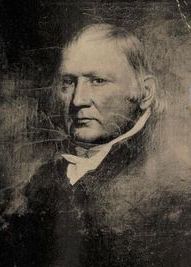
Mr. Anthony Iske
Seems that Mr. Anthony Iske invented each of the items I just listed.  Mr. Iske held close to 200 patents for a wide variety of devices beginning in 1860 and for the next 50 years.  His contributions to the Cabbage Hill community as well as the city of Lancaster are immense for an industrious immigrant who was born in Alsace, France in 1831.  At the age of 14 he became an apprentice at his grandfather's cabinetmaking business.  Four years later he was in charge of the shop.  In 1853 he had an invitation to build an altar for a new church in Lancaster, New York.  When he arrived in New York City he hopped on the wrong train and landed in Lancaster, Pennsylvania instead.  Just so happened that St. Joseph Catholic Church was building a new church and needed to build a main altar, two side altars and a pulpit.  A year later he completed the task as well as marrying one Felicite Ruhlman who had also immigrated to the United States from Alsace, France on the same ship.  Wasn't long before they had a child who died four days later.  But, over the next 10 years they had five more children, but only three survived to adulthood.  The family lived in the middle of the 400 block of High Street and Anthony had set up a furniture business there.  When the Civil War broke out he added coffins and an undertaking business to his workload.  With all that going on, he still was sought after to build church furnishings.  
Hospital Bed Mr. Iske invented. (Click on images to enlarge them.
At this time in his life he began to invent a variety of wood and metal devices such as an extension table, a dumping coal wagon, a fire escape and a hospital bed.  By 1860 he had moved into a home he built at 452 High Street.  Six years later he moved to 412 High Street where his family lived for the next 15 years.  In his backyard he built a workshop for making furniture and working on his inventions.  That house still stands today.  Patents followed for several dozen items such as a cigar press, a meat slicer and a reclining chair.  His son Albert joined him in the shop and gaining patents of his own.  In 1879 Anthony was forced to sell his house and property as well as his workshop to pay off lawsuits that occurred due to his patent and payment disputes.  He lost his workshop at 412 High,  
A Cork Driver invented by Anthony
and his son Albert.
but his resilience came through and two years later he had purchased a property in the first block of West Strawberry Street.  His new house was across from the Plow Tavern.  Within a year Anthony and his son Albert had built two additional buildings on the new lot.  Albert and his new family moved into one of the houses while Anthony and his wife moved into the house on the other end of the lot.  The building in the middle was their workshop.  They worked together on a fire ladder, a hay rake and various other items.  Then in 1889 they sold the property where Albert's family was living to the Christ Lutheran Church for its new building.  Albert and his family moved to the upper floors of the workshop at 12 West Strawberry Street.  
An invention for a door bell.
Not only did the inventions continue with an elevator, doorbell and trolley repair wagon, but Albert's family continued to grow.  So much so that they had to enlarge the upper floors of the workshop.  But, all wasn't good at the time.  They ran into financial problems and had to sell part of their property.  Luckily the new buyer rented the property back to them.  Anthony's wife, Felicite, died in 1898 and his daughter Emma married George Heim in 1900.  
Anthony Iske invention of a vegetable slicer.
The newly married couple purchased back the former Iske house on West Strawberry and Anthony was able to stay with them.  Even in his 70s and 80s he continued to tinker with perpetual-motion machines.  In early January of 1920 Anthony fell down the basement stairs at 20 West Strawberry and died from internal injuries 10 days later.  Anthony's life was a treasure chest of church, family and community.  After arriving in Lancaster by mistake, he sure made a remarkable life for himself.  Although he never became rich money wise, he became rich in many other ways and was an important part of the SoWe community.  It was another extraordinary day in the life of an ordinary guy.

Sunday, April 5, 2020

The "Soda Fountain Developer And Cherry Coke Hero: Part II - The Procedure" Story

It was an ordinary day.  Yesterday's story was about Dr. Samuel Fahnestock receiving a soda fountain patent in 1819 for a unit that included a wooden barrel, fitted with a pump and spout to dispense carbonated water, with the device being meant to be kept out-of-sight, under a countertop.  He also promoted a seltzer, soda and magnesia et soda at his doctor's office/apothecary.  He was able to keep mineral water in stoneware vessels to avoid the metal taste of keeping it in a metal vessel.  To be able to make this seltzer water in large quantities, he needed large amounts of water.  
The Train Station where Dr. Fahnestock's carbonated
water was used to make cherry cokes.
So, in May of 1825 he was granted an "Ordi- nance", which is a legal document, for the.....use of so much of the waters of the run passing down the run in Water Street, and also of the waters of a small stream running through the culvert under West King Street, as shall, or may be necessary for the use of certain water-works, which he, the said Samuel Fahnestock, contemplates erecting on his lot, in the city, fronting on said Water street, and composed of lots No. 335, 336, 337, 338, and to carry the same, by the right to the water of the run passing down the run in Water Street, and also of the waters of a small stream running through the the culvert under West King Street and into the main pipe in the run in Water street, where the same may meet the said main pipe, so sunk and fastened to the bottoms thereof, as that no fresh or flood can remove the same, the commencement or head of which pipes, in said run, shall be at some point between the bridge, across Orange street, and the fourteen feet alley running east and west, between Orange and West King street, and in the said stream or culvert, nor farther up than the run under the street; and etc., etc.   The ordinance goes on and on, but I believe you may have the idea that he wants to use all the water he can in the manufacturing of his seltzer water and patents he is working on in his nearby home.  It was a rather interesting read as long as you can get by all the unusual wording that was, and may still be, used by the government to grant the good doctor, or anyone, certain legal privileges.  The ordinance went on to give Dr. Fahnestock the right, if necessary, to make dams which can be easily removed if needed and which shall not exceed 12 inches in height on the run, known as "Roaring Brook", in Water Street.  He could also be held liable if he caused any of his neighbors damage to their property.  
I usually sat on the front, or second from the front,
stool to read my comic and drink my cherry soda.
This is the actual soda fountain from the train station.
The ordinance was to take effect April 15, 1825 A.D. and last for eighteen months after its passage.  In order to run the water where he needed it, he used wood pipes that were about 12 inches is size to convey the water to the lots he owned on Water Street.  The Ordinance allowed him to do so for 25 years.  Seems that Dr. Fahnestock died 11 years after he obtained the Ordinance and I can find no record as to what happened to those wooden pipes or his experiment.  Perhaps if I had the chance to look in the basements of the houses in the 300 block of Water Street, I may find the answer to my question.  But, that's not going to happen in my lifetime.  For me, it was just enough to know that he was responsible for the great cherry cokes that I enjoyed as a child.  It was another extraordinary day in the life of an ordinary guy.

Saturday, April 4, 2020

The "Soda Fountain Developer And Cherry Coke Hero: Part I - The Patent," Story

Preface: Those of you reading my story today might have never had a chance to visit a soda fountain for a drink or perhaps a float because you may be too young to know what a soda fountain might have been.  I can remember one favorite soda fountain in my life that I visited quite often in the days of summer as well as weekends during the school year.  As a child I lived a half-block from the Lancaster Railroad Station which had the best soda fountain in the city, as far as I was concerned; great cherry cokes and rootbeer floats.   I got to know the guy who worked there, since I usually spent my allowance at the soda fountain.  But, what made the place so extra-special was the big rack of comic books that sat right inside the door.  They were meant for purchase by those riding the trains, but I usually had to read a copy of each one before they were sold.  Superman and Archie were my favorites.  Most call the soda fountain the device that was used to dispense the carbonated drinks, but to my friends and I, the soda fountain was the counter you sat at on a shiny bar stool to drink your soda. We were something special the days we had a chance to do that!

It was an ordinary day.  Opened my morning paper to page A5 and began reading Jack Brubaker's "THE SCRIBBLER" column.  Title of his column today was "Doctor who invented the soda fountain lived in Lancaster.  Wow!  Guy by the name of John wrote to "The Scribbler" asking him if he ever did an article on Samuel Fahnestock, of Lancaster, who was credited with the first patent on a counter-top soda water dispenser around 1819.  No, "The Scribbler" had never done an article on Dr. Samuel Fahnestock, and yes, the doctor did patent at least one other item besides his "Mineral Water Apparatus," but it was that mineral water apparatus that was the first soda fountain system.  Well, I just had to find out a bit more about him so I began searching on my MacBook Air.  He had very little education until the age of fifteen when new systems were introduced and his progress was rapid.  The following year he began studying Latin and Greek and also studied under his father who was a doctor.  At the age of 18 he began a two year study plan with a Dr. Parrish and others from Philadelphia as well as attending lectures at the University of Pennsylvania from where he graduated in 1825.  While studying with Dr. Parrish he invented the celebrated "sector tonsillarum" or "tonsillatome."  Those are both used by surgeons throughout the world today.  He practiced medicine and surgery with his father for years, while marrying Maria Reigart, from Lancaster, when he was 25.  His medical knowledge was amazing and he created several treatments for scarlet fever and measles.  In 1833 he opened his own medical office and began several experiments.  His work was published in the Philadelphia Spirit of the Times as well as the Lancaster Intelligencer and Journal.  In 1839 his father died from crushed sand in his bladder.  In 1856 he began to investigate homeopathy which is a medical system based on the belief that the body can cure itself.  Four years later he was working at the Lancaster County Almshouse where he practiced homeopathy with great success.  
Dr. Samuel Fahnestock, cherry coke hero!
In 1863, after his mother's death, he moved to Marietta, Pennsylvania which is a small town along the Susquehanna River, near Lancaster.  After the Civil War he moved to Lancaster and began to treat diseases by statuvolence or self-hypnosis. But, there is a bit more to the story of Dr. Samuel Fahnestock that deals with more than being a medical doctor.  All during these years it was common for small-town residents and big-city dwellers to enjoy carbonated beverages at local soda fountains and ice cream saloons.  These places were often housed together with apothecaries and served as a meeting place for people of all ages.  The term "soda water" was first used in 1798 and in 1810 the first patent was issued for the mass manufacture of imitation mineral waters to inventors Simmins and Rundell of Charleston, South Carolina.  A 
soda fountain patent was first granted to Dr. Samuel Fahnestock in 1819.  Seems he had invented a barrel, fitted with a pump and spigot to dispense carbonated water, and the device was meant to be kept under a counter or hidden.  Viola!!  It was the soda fountain that I knew as a child.  But then in the 1970s fast food joints came along and destroyed my soda fountain.  So, I guess I can thank Dr. Samuel Fahnestock for my chance to sit on a round, spinning, padded bar stool with a cherry coke in front of me with a straw in it while reading a comic book I had borrowed from the rack by the door.  But, Dr. Fahnestock also promoted his seltzer, soda and magnesia et soda at his doctor's office and apothecary.  Seems he also had patented a system where he kept mineral water in stoneware vessels, instead of the traditional copper vessels, to avoid the metallic taste.  He claimed his beverages diminished thirst, lowered body heat and helped the stomach.  Some called his water "artificial mineral water."  To make sure he was the sole producer of his water he took several precautions.  But, that story will have to wait until another day.  It was another extraordinary day in the life of an ordinary guy.

Sunday, February 3, 2019

The "Working On The River! - The Ice Man: Part I" Story

Foreword:  I'm standing in the Columbia Crossing River Trails Center in Columbia, Pennsylvania.  As a student in high school I knew very little about the little town along the Susquehanna River known as Columbia, except for the fact that they traditionally had a top-notch basketball team.  Always seemed to beat our high school team until five years after I graduated and my brother, Steve, became a senior and he and his teammates finally beat the team from along the river.  Today, the quaint little river town is the perfect model of "Small Town America."  The more I explore this town I feared as a teenager, the more I discover how much they influenced the building of our nation.  The next three day's stories will deal with those that worked on what is known as the 16th largest river in the United states and played a major role in the start of our nation.

It was an ordinary day.  Standing in the display area of the Columbia River Trails Center, with my camera in hand, taking photographs of history.  The current exhibit at the center is called "Ice Harvesting On The Susquehanna River."  Deals with the time in history when refrigeration was a big problem for the majority of the population.  I can still remember going on vacation as a young boy to a small beach in Maryland known as Crystal Beach. My mom and dad, brother and myself, along with my Aunt Lillian and cousins Judy and George would spend two weeks every summer in a small cottage at Crystal Beach where we played in the sand, went swimming in the upper Chesapeake Bay and had some the most memorable times of our lives.  And, I can still remember the ice man that made a few stops each summer so we could get a block of ice or two to put in the icebox that was on the rear porch.  Only way we could keep our food and drinks cool in the hot summer weeks was by buying the blocks of ice.  Well, today I am finally getting a chance to see how that ice was harvested for our use.  The display in the Columbia Crossing River Trails Center comes from the vast collection of Mr. Lynn Smoker. a local historian.  The display contains ice tools from small ice picks to large ice plows, to signs that home owners would put in their window.  
And, not just one of each.  This gentleman has a huge collection which he began in 2005.  Most of the pieces in the collection are from the 19th century, since the 1880s were the peak of the ice industry.  The harvest on the nearby Susquehanna River usually began in mid-January, provided the ice was at least 6 inches thick and safe to walk on without cracking it.  To be able to have heavy equipment or horses on the ice, the ice needed to be at least 8 inches thick.  A hole was needed to start the process.  The hole was drilled in the ice and a tool was placed into the hole,  The hook on the end of the tool would catch on the bottom of the hole and someone would mark the depth on the tool.  After the tool was removed, a rule was used to check the thickness of the ice.  If it was a  suitable depth, the ice was cleared of debris and snow and a crisscrossed pattern was place on the ice.  
A variety of ice harvesting tools.
Workable units of ice were usually 25 to 50 pounds blocks.  Modern day clothing didn't exist so wool was the choice for winter weather.  At times the weather was brutal so the job was not for the weak or faint of heart.  The blocks were moved to the ice houses which lined the shore and packed in sawdust to keep it cold.  When needed it was delivered to households and local businesses.  Agricultural and meat-packing plants were other customers of the ice to keep their products fresh.  Ice boxes were the fridges of today and they held the blocks of ice to help refrigerate the home owner's food.  The harvested ice usually lasted until the end of the summer months, depending on the amount harvested and the thickness of the ice on the river.  
Ice chunks line the Susquehanna River last year.
Many of the people who worked to harvest the ice were the same people who farmed the land, since they didn't have as much to do in the winter months.  The ice delivery man had to be strong since he was lifting up to 50 pound blocks of ice all day long.  To keep your home in ice for that amount of time usually cost about 10% of your yearly income.   Eventually ice farms were used to freeze water in a controlled environment.  This ice was usually cleaner than river ice.  For those that couldn't afford an ice box and the cost of ice drank warm drinks and shopped more often so their food wouldn't spoil.  The display at the Center showed samples of everything from the saws used to cut the ice to the ice boxes used to keep it cold in your home much like the ice box I remembered from my summer vacations when I was a young boy.   Eventually most all households had electricity installed and purchased refrigerated cooling units, thus eliminating the ice harvesting.  Tomorrow I will take you on a visual tour of Mr. Smoker's vast display that I had the chance to view and photograph.  It was another extraordinary day in the life of an ordinary guy.  

Sunday, October 21, 2018

The "Celebrating 100 Years Of John Deere" Story

One of the original John Deere logos.
It was an ordinary day.  Reading in my latest Reminisce magazine a story titled "Retro Replay - Blast From The Past".  Story tells about John Deere & Company entering the tractor business in 1918 and therefore celebrating 100 years in business.  Quite a milestone for any company.  By now, if you have been reading my blog for any length of time, you probably know I am from Lancaster, Pennsylvania, known as the "Garden Spot of America".  
The home of the New Holland Company.
We here in Lancaster County tell of having some of the most fertile farmland in the United States.  Our local newspaper used the slogan "The Leading Newspaper in the Garden Spot of America" as early as 1919.  Actually it was back in 1702, when a Lutheran pastor who had traveled here, published his observations about our fertile farmland in his book "Nachricht von Pennsylvania" (Accurate Tidings from Pennsylvania).  
The story of John Deere.  Click to enlarge.
So, as you can see, we here in Lancaster know quite a bit about farm land and farm equipment.  We even make one of the best tractors in the world a few miles to the east of Lancaster in the small town known as New Holland.  New Holland Company was producing agricultural products to help the farming community in 1895.  But, I'm sure there are plenty of John Deere tractors plowing the lush fields of Lancaster County.  John Deere Company is located in Waterloo, Iowa.  
Mr. John Deere
They recently sponsored a Gold Key event where customers could watch the final assembly or their newly purchased tractor.  John Deere entered the farm tractor business in March 1918 when they purchased Waterloo Gasoline Engine Company.  And now, the Smithsonian's National Museum of American History will make 2018 as the year of the tractor.  The museum's 1918 green, yellow and red Waterloo Boy tractor was installed at the entrance of the business history exhibition.  John Deere also placed iconic tractors on display at the John Deere Tractor & Engine Museum in Waterloo, Iowa, the John Deere Paviion and John Deere World Headquarters in Moline, Illinois as well as the John Deere Forum in Mannheim, Germany.
John Deere plow that made him famous and wealthy.
 As far as the namesake of the tractor, John Deere was an American blacksmith and manufac- turer who was born in Rutland, Vermont and moved to Illinois where he invented the first commercially successful steel plow in 1837.  He later entered a business partnership with Leonard Andrus and purchased land for the construction of a new, two-story factory along the Rock River in Illinois.  
The more recognizable logo of the John Deere Company.
The factory was named the L. Andrus Plough Manufac- turer and produced about 100 plows in 1842 and around 400 the next year.  Many other partnerships followed until in 1918 he purchased the Waterloo Boy tractor facility and began selling the John Deere Model D tractor.   I remember watching an episode on Made In America, which was broadcast on the Travel Channel, and being told that the John Deere Company never repossessed any John Deere equipment during the Great Depression which was amazing!  
This photograph from the Reminisce Magazine shows the
John Deere Model GP which was manufactured from 1928
to 1935 and marketed as a general purpose machine.
Since its start in 1918 they have added an assortment of farm equipment to their inventory of products.  They now have factories throughout the world and employ 67,000 people worldwide, with about half of those employees in the United States and Canada.  The logo of the leaping deer has been used by this company for over 155 years, but with a few minor changes over the years.  
A more recognizable John Deere tractor.
And, the traditional logo color of green with the inside border being yellow makes the brand easily identifiable.  A year ago Deere & Company signed an agreement to acquire Blue River Technology which, through technology, will allow users of John Deere equipment to reduce the use of herbicides by spraying only where weeds are present.  My congratulations to the green and yellow company for their many years in the agricultural business.  It was another extraordinary day in the life of an ordinary guy.


I just had to put in a photo of the tractor made in Lancaster County, the New Holland tractor.

Saturday, September 8, 2018

The "I Want To Be Like Leonardo" Story

It was an ordinary day.  Looking over the dozen or so stories I have saved which I began at one time or another and never finished.  Some of the stories are a few years old while one I began two weeks ago and abandoned.  
Leonardo da Vinci, self-portrait, 1512
But, as I read a recent story about Leonardo da Vinci, written by Tulane professor of history Walter Isaacson, I found I have some of the same qualities as him.  He had so many projects that he had started during his lifetime and never completed that they make him almost human.  Almost!  If only I could have accumulated some of the impressive projects he abandoned, I too would be a genius.  Maybe!  Of course, the things he did complete, such as the Mona Lisa, put him in a class that holds very few other human beings.  There are other people who were considered to be a genius, but they were a genius in a particular arena while Leonardo was a genius in many disciplines.  But, he was also very human and his life offers an abundance of lessons for all of us.  The following are a few bits of wisdom, as listed by Mr. Isaacson, that we can learn from Leonardo that may help us in our life as humble pions.


  • Get distracted...it's OK to wander off on another tangent than what may have been you main intent, since it makes your mind richer in knowledge.
  • Go down rabbit holes...in one of his many notebooks he recorded 730 findings about the flow of water and listed 67 words that describe different types of moving water.  Another notebook of his shows that he listed 169 attempts to square a circle.  He did these things for the pure joy of learning.
  • Procrastinate...some of great intelligence and genius accomplish the most when they work the least.  While painting "The Last Supper" he would sometimes paint a stroke, put the brush down and return the next day to begin once more.  He liked to stop, gather all the facts and ideas and then return to his work.
  • Make Lists...wow!  I have notebooks filled with lists of things I want to do someday. Now, Leonardo says to put odd things on your lists.  Leonardo's lists have been said to be the greatest testament to pure curiosity the world has ever seen.  Mine haven't been revealed...yet!
  • Let the perfect be the enemy of the good...Leonardo abandoned a few of his paintings rather than produce work that was just average.
  • Retain a childlike sense of  wonder...at a certain stage in our life we stop wondering about normal everyday things.  We look at the sky and no longer wonder why it is blue.  We should never outgrow our "wonder year" according to Leonardo. 
  • Be open to mystery...on one of Leonardo's lists was found, "Describe the tongue of a woodpecker."  A woodpecker can extend his tongue three times the length of its bill.  When not in use it retreats back into the skull and wraps around the head and curves down to its nostrils.  Now there is absolutely no reason you need to know this, but now you do and are so the much better for it.
  • Let your reach exceed your grasp...imagine, as he did, how you could divert a river or devise a perpetual-motion machine or square a circle using only a ruler and compass.  There are some problems we will never solve...but learn why.
Now, Mr. Isaacson listed quite a few more lessons that Leonardo found valuable, but I found the eight I just listed to be the most important to me and my quest to be a genius.  Maybe it will happen in my second lifetime. But, then again, it probably will never happen.  It was another extraordinary day in the life of an ordinary guy.   

Thursday, August 2, 2018

The "Making My Summer Job Easier" Story

It was an ordinary day.  Finishing up my summer printing jobs at the high school where I used to teach and still do the in-house printing jobs.  The past few days has been rather humid in the print shop which creates problems for running the printing press.  The humidity caused the paper to curl which in turn causes feeding problems.  One summer about a thirty-five years ago the print shop was moved to a nearby vacant house the school district owned so the wing where the print shop was located could be upgraded.  The old house had no air conditioning and the fans that were used created as many problems as they solved.  I asked for a few window air conditioners, but that wasn't a high propriety for the school district.  It did make me wonder what printing companies years ago did to solve the high temperatures and humidity problems that could occur in summer months in the north as well as year round in more southern locations.  Just when was air conditioning invented?  It was in 1902 that a young man by the name of Willis Haviland Carrier was given the job of finding a solution for a printing company in Brooklyn that was having problems with the high humidity that caused expansion and contraction in its paper supply on the press.  They couldn't get the registration on their four-color printing press correct.  
Mr. Willis Carrier
The young mechanical engineer made schematic drawings for what would be the first successful air-conditioning system.  Mr. Carrier had just recently graduated from Cornell University and was working for the Buffalo Forge heating company.  The system he devised that year formed the basis of the air conditioner that is in use today.  Air was forced through a filter of a piston-driven compressor where it was pumped over coils that were chilled using coolant.  The cold air was then expelled into a closed space using a fan, cooling the room and stabilizing the humidity.  Oh, if I had only known that the year I had to print in that house.  I could have rigged a device to help with the humidity.  
In this artist's drawing, Mr. Carrier starts the engine that
will drive the world's first modern air conditioning system.
Yes, I know air conditioning  had already been invented... but the school district didn't want to put a Carrier air conditioner in the old house.  The impact of air conditioning can't be overstated.  I'm used to living in an air conditioned house in the hot summer months and while on vacation in the Caribbean I love to be able to leave he beach and head to a nice cool room.  And, as for running the press the past few months, I'm just glad the air conditioner worked for the majority of the time.  It was another extraordinary day in the life of an ordinary guy.   

Saturday, August 27, 2016

The "A Neat Addition For Your Smartphone's Camera: The Device & Samples" Story

It was an ordinary day.  Just opened the package that was left at the rear door a few minutes ago.  It was about two weeks ago that my friend Sue, who lives in State College, PA sent me an email telling me to open the link she shared to my Facebook Page.  Link was to a product the I knew I just had to have as soon as I read about it.  A company by the name of Lux HD450 had just released a super-premium line of auxiliary Smartphone lenses that bring professional image quality to today's Smartphone cameras.  The set of three lenses included a Macro, Wide Angle and Fisheye as well as a 3-in-one universal clip lens.  Checked out Amazon and found something very similar known as LIEQI.  Price really surprised me when I saw it; kit sold for $9.99.  
Snaps over the camera of the Smartphone.
Clicked order and within a few days I had my Smartphone lenses.  Guess I should tell you that I only got my iPhone half-a-year ago and it is my very first Smart- phone.  I just managed to learn how to use the features it offers and now I have something new to add to it.  I have been using my Sony DSLR for just about all my photographs I take, but after seeing my initial results, I may have to plan to take some with my Smartphone.  
I took this photo of my rear deck with my phone in the Pano mode.
Some comments for you about the kit I just received after giving it a try for a couple of days: (1) The fisheye lens doesn't give me the same result as my fisheye lens I used to have before I loss it on one of the Caribbean islands we visited.  I tried the square mode, but the circular effect I got with my old lens made it look more like the traditional fisheye.  
This is from the same spot with the camera in Photo mode.
(2) The wide angle gives a more distorted look than a DSLR wide angle lens, but most people won't notice.  I actually like the panoramic feature on the Smartphone just as much as the wide angle. (3) The macro lens is the one lens that is amazing.  It gives results that look as if they were taken with an expensive DSLR macro lens.  
This is with the new wide angle lens attached to the phone.
I'm not too impressed with what that lens can accomplish.
Took me quite a few tries before I partially mastered how close you must be to get results that are perfectly focused.  The results I got with my DSLR with my zoom/ close-up lens were decent, but not as detailed as the LIEQI macro.  And, the neat feature with the LIEQI is that if can be used on the Apple, Android or virtually any other Smartphone.  The bracket that comes with the lenses is easy to clip to the phone and I found that it was easy to line up with the lens on the phone.  I have included some samples that you can judge for yourself.  I plan to continue to use at least the macro for my photos I take.  Definitely worth the money it cost.  It was another extraordinary day in the life of an ordinary guy.  PS - Tomorrow I will take you on a photo shoot showing you before and after shots using my new Macro lens.


This photo and the one below were taken with the Fish-Eye lens.  Again, just Okay, but not real spectacular.
This was with the Macro lens.  It is remarkable!  You must move very close to the object since you can't zoom anything, but the results are very nice.  The following four photos are more examples of the lens.


Saturday, June 25, 2016

The "Technology That Fizzled" Story

The parking lot to the right once held the Hager's Pigeon-Hole
Parking Garage in downtown Lancaster, Pennsylvania.
It was an ordinary day.  Standing along Market Street in the city of Lancaster, PA trying to remember exactly where the Hager's Department Store Pigeon Hole Parking Garage was located.  If I close my eyes I can still see my dad pulling our car into the parking garage, exiting the car, the door of the garage closing and taking the car to an upper level without anyone in the driver's seat.  Pretty neat for 1956 when the store in downtown Lancaster build their Pigeon Hole garage at the corner of Grant and Market Streets behind their store on West King Street.  
Hager's Pigeon-Hole Parking Garage.  You can see
some of the car fins extending beyond the end.
The garage was ten stories high, higher than the department store, when it was built. Certainly was the talk of the town and everyone wanted to have their car parked in the lot at one time or another.  Pull your car up to the garage, hop out of it, watch your car be pulled into the elevator and begin to rise and then try to stand back and see which floor or location your car might have been taken.  Some cars stuck out of the garage more than others, since back in that era of car manufacturing, cars had big fins and these fins could be seen from the ground, sticking out of the garage.  The garage could hold 240 cars, but some cars were so big that they couldn't be handled by the mechanical transport system.  One such car was the huge Cadillac Fleetwood with large "wings" that were so wide it wouldn't fit into the unit.  
A drawing for the Sanders lift.
I can remember a location in front of the garage where we would stand and watch the entire operation.  But then, after a few years, the APS (automatic parking system) began to malfunction and at times you had a hard time retrieving your car.  The Pigeon-Hole theory of garage parking seemed to be pretty neat, but eventually it began to fade and Hager's Department Store demolished their garage in 1964.  The robotic parking valet, which was first designed by Vaughn and Leo Sanders, after working with a forklift in a lumber mill, was a great technological advancement, but it just didn't work. I can still visualize my dad's car going up the chute, being pulled by a chain onto the main line, and then dropped off in a parking space a few minutes later.  Perhaps, its time to bring back the Pigeon-Hole Parking Garage.  Certainly would solve the parking woes of many of the major cities in the USA.  It was another extraordinary day in the life of an ordinary guy.


Another look at a Pigeon-Hole Parking Garage from the 1950s-60s.


Wednesday, May 4, 2016

The "Please get rid of your gum and get your paper and pencil ready" Story

It was a ordinary day.  Carol was visiting with a friend so I had the TV to myself.  Doesn't happen very often during the day, so I pulled up the menu and found a show that was about the top discoveries that changed mankind.  Interesting show, but what really got me was when they hit the top five on the list.  It was like going back in time and teaching my Graphic Arts class all over again.  So I'll give you the five important discoveries in reverse order and make sure you remember them, since I may quiz you at a later date.(#5) The development of Cuneiform writing.  I remember teaching about Cuneiform writing and how it was perhaps the beginning of the written word in civilization.  The name comes from the Latin word cuneus meaning "wedge" owing to the wedge-shaped style of writing.  
  1. In cuneiform, a carefully cut writing implement known as a stylus is pressed into soft clay to produce wedge-like impressions that represent word-signs, known as pictographs, and later phonograms or "word-concepts" which is closer to our modern day understanding of a word.  The system was first developed by the ancient Sumerians of Mesopotamia around 3500-3000 BCE (Before Christian Era).  The earliest cuneiform tablets were pictorial but eventually developed into more complex word representations.  One no longer had to struggle with the meaning of a pictograph, since one could now read a word-concept using characters.  The characters used were greatly reduced over time from about 1,000 to 600.  Makes our alphabet of 26 letters seem small.  Cuneiform writing is certainly not easy to read and takes someone skilled with patience to accomplish the job.  
  2. (#4)  The Moon Rock was listed as the 4th most important discovery in civilization.  Rocks brought back from the moon on either a US expedition of one by a Soviet expedition have been measured by radiometric dating techniques.  
    They have ranged in age from 3.16 billion years to up to 5.3 billion years old.  The oldest ages of rocks from the Earth are between 3.8 and 4.28 billion years old.  Rocks from Earth and similar to Moon rocks in some regards, but very different in others.  When the first specimen of rocks was opened, it was said that the atmosphere was hushed and expectant.  The scientists were clad in surgeon's gowns and caps and carrying gas masks for use in case they should be exposed to any moon dust.  It was determined that moon rocks and dust hold no threat to life on earth and how no fossil life, living organisms and not organic material.  Much was determined about the moon by using the rocks that were brought back to Earth.  I Googled "Moon Rocks" and found you could bid on them on eBay.  
  3.  (#3)  So here's another topic that I covered in my Graphic Arts class in high school.  The discovery of the Rosette Stone.  It is reported that this stone is the Code Book of the universe.  It was discovered at Rosette in 1799 by Napoleon's army and proved the key to deciphering Egyptian Hieroglyphs.  
    The person who found it was Pierre Francois-Xavier Bouchards, a French officer of engineers.  It was sent to the Institut d'Egypte in Cairo and then taken to London in 1802.  While at the British Museum it was described as a priestly decree affirming the cult of 13-year-old Ptolemy V.  It tells of an agreement between Egyptian priest and the pharaoh on March 27, 196 B.C. and names honors bestowed on Macedonian Pharaoh Ptolemy V Epiphanes.  The stone itself is inscribed with a decree issued at Memphis, Egypt.  It appears in three scripts : the upper text is Ancient Egyptian hieroglyphs, the middle portion Demotic script and the lowest Ancient Greek.  Since it says basically the same thing in all three scripts, it is said to provide the key to modern understanding of Egyptian hieroglyphs. 
  4. (#2) The importance of Coinage.  The earliest coins appeared simultaneously in two places; China and western Asia Minor in the late seventy century B.C.  
    Whether they were invented by the Ionian Greeks or by the neighboring Lydians will probably never be known, but it was the Greeks who spread coinage throughout the Mediterranean.  The use of the barter system eventually came to an end with the discovery of coinage in the world.  Metals nowadays serve the main purpose of money in the form of coins.  
  5. (#1)  And, the most important discovery that changed mankind was the Bible.  It changed the course of history and was used in not only Christianity, but in Judaism and Islam.  Skeptics claim that the Bible has been changed, however, it is important to define the terms that apply to the source of our English Bible.  Autographs were the original texts written either by the author's hand or by a scribe under their personal supervision and could be changed if not understood by the writer of the document.  
    Manuscripts were the first printed documents that didn't arrive until 1456 with the invention of movable type which was attributed to Johann Gutenberg.  He produced the first printed Bible in Latin.  Up until that time the Bible was hand copied onto papyrus, parchment or paper.  You can easily see how some things could be changed by the monks and scribes who did the hand copying.  Translations also could have caused some changes when the Bible was translated in to different languages from the original Hebrew and Greek.  The first English translation was by John Wycliffe in 1380 and was prepared from the Latin Vulgate.  Heavens, I had Latin in school and I'm positive that I translated many of the words differently than they really were.  
So, these are the five events or discoveries that allegedly changed the world.  Whether you agree with it or not, they certainly were important.  And, I think I found a very interesting TV channel that I will be watching again.  It was another extraordinary day in the life of an ordinary guy.

Monday, March 14, 2016

The "The Fabric Of Lancaster: Part I" Story

This was Mill #2 of the Conestoga Steam Cotton Mill Complex.
Today it houses the Water Street Ministries for the homeless.
It was an ordinary day.  Standing in the 200 block of South Prince Street in Lancaster, Pennsyl- vania taking photos of both the east side and the west side of the block.  On one side sits the Water Street Ministries and on the other side sits the offices of the School District of Lancaster and the Carter and MacRae Elementary School.  The huge industrial style buildings were at one time filled with weavers instead of teachers, school children, administrators and homeless.  And, at one time the building on the west side was connected to the two buildings on the right with a double-decker overhead bridge at the second and third floor levels.  These three buildings were known as Mills #1, #2, and #3 and were the largest industrial complex in the city of Lancaster.  The Conestoga Steam Cotton Mill Complex was built between 1845 and 1910 and was one of the most important industries in the 19th century.  
Mill #1 which currently is Lancaster School District's Carter
and MacRae Elementary School. It stands on the east side
of Prince Street.
It was the first cotton mill in the United States to be powered by steam.  In the early 1840's steam boilers began to power steam engines which were used to power railroads and a variety of factories.  Before this new technology, water-powered mills were found throughout southeastern Pennsylvania.  A steam-power promoter, Charles James, from Rhode Island talked to a group of Lancaster businessmen who, in 1845, made a visit to inspect the steam powered factories in New England.  Wasn't long before they formed The Conestoga Steam Cotton Mill #1 and had Mr. James build a mill-complex with 6,000 spindles and 216 looms.  It took over a million bricks to build the mill.  When finished, it was the largest structure in the city of Lancaster.  
The building on the left was Mill #3 and is currently the
Administrative Offices of the School District of Lancaster.
Operations began in March of 1847 with a workforce of women who earned $1.25 per week.  By 1851 Mills #2 and #3 added 18,000 spindles and 550 looms under the name of John Farnum and Company which was based in Philadelphia.  The name Farnum is still well-known in Lancaster with a nearby street and public softball field bearing the name.  Four years later the company struggled and Mills #1 and #3 were sold at sheriff's sale to a Lancaster businessmen, but by 1862 Mr. Farnum had re-entered the scene and was sole owner of Mills #2 and #3. Then the Civil War proved to be a boon to the mills as they produced close to 80% of the tents, ground cloths, hospital sheets, wagon covers and tarps and 10% of the Navy's sail cloth.  By the 1880's Mr. Farnum's Conestoga Mills were Lancaster's largest employer with over 1,200 workers or 32% of the workforce.  
Just had to take a photo of Farnum Field.  In the distance
you can see the three Mills.  I have played on this field as
well as coached baseball on this field.  Many happy memories!
Then in the mid-1890's fabric production slowly moved to southern states due to cheaper labor and better access to cotton.  Mill #1 closed in 1895 and in 1910 was bought by Lorillard to be a tobacco company, but Mills #2 and #3 continued operations well into the 20th century.  These two remaining Mills were situated on the eastern edge of what was known as, and still is, Cabbage Hill.  The mills employed scores of German immigrants from the neighborhood which surrounded it in the early part of the 20th Century.  The equipment in the mills was technologically advanced for the time and the jobs were not overly physical with workers observing the machines as they spun, carded and wove the cotton into fabric.  Some were employed to maintain and repair the equipment.  The latest equipment had overhead shafts and pulleys with flat belts running down to looms on the factory floor.  The looms were six feet wide and covered much of the factory floor space as well as being extremely loud.  
The cupola of Mill #3 is seen as it seems aglow in the
blue sky behind it.  Beautiful rooflines add to the scene.
Those with lint allergies didn't last long.  In 1920 half of the wage-earners in the neighbor- hood worked at the mills where cotton was still king.  By now they were making $20 per week when an apartment rented for $12 per month.  Then the Depression of the 1930's hit and the mills cut back to one day a week with Farnum selling his interest in Conestoga Steam Cotton Mills to local investors and mill workers. By 1935 the plant was back to a 40 hour work week even though they were down to only 600 workers.  After WWII the mills changed ownership several times until closing in 1949 marking the end of the era of steam powered cotton mills in Lancaster.  Mill #2, after 100 years of production, was taken over by Water Street Rescue Mission, later named Water Street Ministries.  Mill #3 stood vacant until the Lancaster School District moved their District office into it.  Mill #1 is now the Carter and MacRae Elementary School.  The two-story bridge no longer connects the buildings on either side of Prince Street, but they are in beautiful shape.  Those who drive by the buildings would never guess that at one time they were the biggest industry in Lancaster City.  That is unless they had just read today's story.  It was another extraordinary day in the life of an ordinary guy.