|
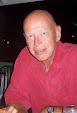
| Mr. Lawrence Tesler. one of the true pioneers of many important aspects of personal computing. |
Showing posts with label Technology. Show all posts
Showing posts with label Technology. Show all posts
Thursday, April 2, 2020
The "A True Pioneer Of Many Aspects Of Personal Computing" Story
It was an ordinary day. Preparing to type another story for my blog known as "Extraordinary Stories Form An Ordinary Guy." After deciding about the topic for the story, I begin to search for material I can use for the story. Different stories require different material as you might have guessed. For my recent story about peanut butter and marshmallow crackers I had to gather the box of crackers from above the pantry as well as grab the jars of peanut butter and marshmallow. I also pulled up the online edition of the latest Saturday Evening Post magazine which I also subscribe to in the print edition. Just something I enjoy about holding a printed newspaper or magazine or brochure rather then viewing it on a screen. In the magazine was a story about Ritz crackers. I then opened Blogger on my computer and pulled up my blog. After gaining entry into the site I open a new story post. I always begin each story with the same line, as you probably know by now. Then I begin my story for the day. At times I may begin with "Preface" which tells you about the background of what will become the main story or I may begin with a sentence I have copied from something printed already. To do that I open the original piece of writing and make sure it is legally possible to copy, then if it is legal, I will put my cursor at the beginning of what I want to copy and drag the cursor to the end of what I want to copy which will highlight the words in blue. I then hit the lower case "c" to copy. Then I place the cursor in my story where I want to place what I just highlighted, and hit the lower case "v". Some computers may be different I realize, but this is how I copy and paste something. I never realized that what I was doing had to have been invented or developed years ago by someone who knew programing.
In the case of cutting and pasting, the person who was responsible for that feature you and I use was Lawrence Tesler. Hey, with a first name like that, he just had to be inventive. Seems that Mr. Tesler recently died at his home in Portola Valley, California at the age of 74. As a young researcher for Xerox at the Palo Alto Research Center in the 1970s he helped develop today's style of computer interaction based on a graphical desktop metaphor and a mouse. In 1973, he and his buddy Tim Mott developed a program known as "Gypsy" which did away with the restrictive modes that made text editing complicated. I can still remember one day, years and years ago, when all teachers where I taught high school graphics and photography had an In-Service day where we learned to write programing for computers. People take years to learn to do that and we were expected to learn how to write programing in 6 hours? Texler worked at a number of Silicon Valley companies including Apple under Steve Jobs. But, it was at Xerox that he developed today's style of computer interaction based on graphical desktop metaphor and a mouse. It was while at Xerox that he also developed, along with Tim Mott, the program known as "Gypsy" which did away with the restrictive modes that had made text editing complicated. It was the Gypsy program that offered the "cut and paste" for moving blocks of text and the ability to select text by dragging the cursor through it while holding down the mouse button. It was in 1978 that he designed, with Adele Goldberg and Douglas Fairbairn, a portable machine called NoteTaker which was one of the forerunners to our laptops of today. Mr. Texler gave Mr. Jobs a demonstration on the Xerox Alto computer which lead to the Apple's Lisa personal computer and then its Macintosh. He went to work at Apple in 1980. While at Apple he founded their Advanced Technology Group which developed the hand-held computer. Tesler left Apple in 1997 to work for both Amazon and Yahoo. I should mention that while Mr. Tesler was a student at the Bronx School of Science, he developed, at the age of 15, a new method of generating prime numbers. He told his teacher that his method was a formula, but the teacher disagreed and said it was an algorithm, and could be implemented on a computer. Wasn't long before he was working with programming language. His story is way above my level of understanding, so I believe I should stop at this point in trying to explain all he has accomplished. I thank him for at least developing the method I use daily of cut-and-paste. couldn't live without it. It was another extraordinary day in the life of an ordinary guy.


Friday, March 13, 2020
The "America's Quiet Zone" Story
It was an ordinary day. Reading about a place in the United States where there is no Wi-Fi, no cell phone signals, no microwaves and no Bluetooth devices. And, its been that way for over 60 years. The town is called Green Bank which is in West Virginia. It is a town much like most towns 100 years ago. The story about the place begins with a young girl, Charity, who is a senior at Pocahontas County High School. Yes, she has an iPhone, but she uses it as a clock and a calculator. She makes all her phone calls to friends on her home landline. She rarely texts, at least anywhere inside the town limits. Doesn't have to worry about texting and driving. She can use her family's desktop computer, but it is via a broadband connection that is so slow that it takes minutes to load a YouTube video. The town has 143 residents who have gotten used to no Wi-Fi, since it is not only unavailable, but banned.
 Green Bank is also home to the Green Bank Observatory which holds the world's largest fully steerable radio telescope. The federal government established the National Radio Quiet Zone around the Observatory in 1958 which encompasses a 13,000-square mile area near the state's border with Virginia. Now, that's a lot of ground! The observatory has a telescope that could detect if your phone was in airplane mode on Saturn. And, how would anyone know that fact? Well, there is a sign outside its science center building that says so! The area might make you feel as if you were in the middle of Lancaster County's Amish territory.
 Phone booths sit at the corner of many driveways and paper maps are readily available at gas stations. Green Bank has created a different type of childhood that most children who don't live there wouldn't recognize. There is no being bullied or harassed online and fewer mental health problems without social media. It is what the town calls a unique kind of modern childhood. Being in the great outdoors actually means just that to the residents of the town and they report they have discovered a newfound sense of adventure. As far as Charity is concerned, she makes plans with friends via a landline phone or in person. After school she enjoys running before she has to tend to the family's goats, chickens and ducks.
 Then it's time to make dinner with her mom. When is the last time any teenager you know did all that...all in the same day? She does use the family's computer, but more as a word-processor. She even enjoys visits from her boyfriend where they can sit in the living room with her parents and talk, undistracted by technology. She even says that her parents would kill her if she was staring at her phone and not listening to them. But, in half a year she will leave home to head to West Virginia Wesleyan College. It will seem as if she's entering a different new world. Her parents have warned her about the risks of technology and hope she will adjust slowly to the new life. Perhaps she will be able to help her new friends move to a life much like she has experienced all her life. Her family has become a sort of savior to many of the families who live outside the quiet zone. The director of the Observatory, Dr. Karen O'Neil, reports that Charity's family has visitors from outside the quiet zone whose parents bring their teenagers to visit quite often due to being too stressed out from being on wireless all the time. Wow, what a novel idea! It was another extraordinary day in the life of an ordinary guy.


Wednesday, February 5, 2020
The "Trying To Remember Riding The Trolley" Story
Foreword: Talking with my friend Jere about the trolleys that ran in the city of Lancaster. I really don't remember ever seeing a trolley car or even the tracks along the streets of the city of Lancaster. Jere remembers riding on them from time to time until the tracks were finally removed from all the streets in and around Lancaster. Now, we are only a month difference in age with me being his junior, but I still can't believe I don't remember something as momentous as riding the trolley as a young boy. We lived a block away from each other while growing up, but never really knew each other until we entered first grade together in 1950. My story today will give you a look at trolley service in Lancaster County.
It was an ordinary day. Reading about the stagecoach route that took visitors between the county seat of Lancaster to nearby Millersville. Up until 1874, the 4.5 miles between the two locations was accomplished by riding the horse drawn stagecoach from downtown Lancaster to Millersville Normal School. It was the only way for students at Millersville to get back to the city of Lancaster. Then in 1874 a horse-drawn streetcar, or trolley, service began between these two terminals. In fact, special arrangements were made at the beginning and end of the school year by adding a baggage car so students could transport their luggage.
The trolley would leave from the Brunswick Hotel in downtown Lancaster and stop at the corner of South George and West Frederick Streets in Millersville. The trolley cars were stored, serviced and painted a few blocks away on Frederick Street at the trolley car barn. That building still stands today. The ride took about 30 minutes.
In 1891 the line was finally electrified. Then in 1899 the Conestoga Traction Company, or CTC, began operating throughout the county. At the peak of its service in 1913, forty trolleys ran through the city of Lancaster while serving 12 million passengers yearly. Four years later there were 38 different trolley companies that served southeastern Pennsylvania. The CTC used downtown Lancaster as the hub of seven main routes that traveled throughout the county. The trolleys were by this time the size of a city bus that traveled to surrounding towns and farm villages using a hub and spoke approach. More lines were added by building them or buying existing lines from competitors. By 1908 locations such as Columbia, Strasburg, Adamstown, Blue Ball, Leaman Place and Elizabethtown were all accessible by trolley.
Eventually the trolley ran through Amish farm country to Coatesville, Quarryville, Pequea, Manheim, Lititz, Ephrara and Terre Hill. The trolley ran on tracks located along the side of the road where automo- biles ran. The CTC transported human traffic as well as freight, milk and produce on its many routes. Special trolley cars, known as "combines" were built to carry passengers and freight together. One of the most popular trolley lines was the Rocky Springs Park line that carried patrons to the amusement park to the south of the city of Lancaster.
The Rawlinsville line ran only ten days a year to transport people to the annual Christian themed Rawlinsville camp meetings. There was a junction in Martic Forge, where my future wife lived, where the trolley line split off and climbed 552 feet over 1.25 miles as it left the gorges of the Pequea Creek on its way to Rawlinsville.
A stone abutment outside of Martic Forge is one of the few remnants of the original trolley line. The trolley tracks from years ago were much different than the railroad tracks of today. The tracks were laid in a more "casual" nature which at times caused "seasickness" when the cars swayed back and forth. The hilly areas of Lancaster County were famous for this effect. The last car to run from Pequea to Millersville was on October 15, 1930.
As buses began to replace trollies in Lancaster, the Conestoga Traction Company reorganized into the Conestoga Transpor- tation Company. Trolley lines all over the county began to stop service in the 1930s. By the late 1940s the CTC had only one trolley line running; the line to Rocky Springs Park. Then on September 21, 1947 that line closed also. Most trolley cars were burned, but a few still exist in museums with one car that runs a short one-block route every Sunday in the summer in the town of Manheim. I was 3 years old when the trolley was discontinued, thus my reason for not remembering ever riding on a trolley. Now, for Jere, his memory is much better than mine...or he's just saying he remembers to get one up on me. It was another extraordinary day in the life of an ordinary guy
It was an ordinary day. Reading about the stagecoach route that took visitors between the county seat of Lancaster to nearby Millersville. Up until 1874, the 4.5 miles between the two locations was accomplished by riding the horse drawn stagecoach from downtown Lancaster to Millersville Normal School. It was the only way for students at Millersville to get back to the city of Lancaster. Then in 1874 a horse-drawn streetcar, or trolley, service began between these two terminals. In fact, special arrangements were made at the beginning and end of the school year by adding a baggage car so students could transport their luggage.
 |
| Conductors wait for passengers at South George and West Frederick in Millersville. Circa 1908. Electirfied line. |
 |
| Trolleys were stored in this building in Millersville. |
 |
| The trolley routes in Lancaster County. |
 |
| The trolley station at Rocky Springs Park. |
 |
| The stone abutment outside of the Martic Forge. |
 |
| This is the trestle bridge at Martic Forge. The road to the left takes you to the house where my wife lived. |
 |
| Cattle graze near the trolley tracks in Martic Forge in 1905. |
 |
| The trolley traveling along the Pequea Creek. |
 |
| Northbound trolley car loaded with summer passengers in 1907. |
 |
| Trolley tracks are removed along King Street in downtown Lancaster on July 14, 1947. I was approaching my third birthday at the time. |
 |
| The trolley cars were pushed off the rails and burned. |
 |
| This is a 1926 trolley car that is still in use in Manheim, Pennsylvania. It runs a short one-block route every Sunday from June to September. The station is located at 210 S. Charlotte Street in Manheim, PA. |
 |
| This is one more view of the Square in Downtown Lancaster. This shows buses, and a trolley car right center. Notice the traffic tower that is circled next to the monument in the center of the Square. It was there from 1929-1943 to help with traffic. |
Wednesday, January 29, 2020
The "Life With Technology: Part II - A Teenager Living Without It!" Story
It was an ordinary day. Fooling around with my iPhone, trying to take a few photos of my passport and driver's license for an upcoming vacation. My phone seems to stay in my pocket more than out of my pocket, but then again...I'm not a teen anymore! Visits from our granddaughters is always interesting and fun, but they tend to have their iPhone in their hand every minute they are are awake. I know, they aren't the only teenagers who are like that, but they seem to miss so much of what goes on around them when they have their eyes glued to their phones. An article in the Lancaster newspaper's Education section a few weeks ago featured a story by a young girl named Deanna who was a high school senior at Garden Spot High School in Lancaster County. She titled her story "On life as a teenager without social media." My guess is she is about 18 years old and writes about how she managed to survive her public school career without social media. She makes the statement that she not only survived, but thrived without social media. I find it hard to imagine anyone 18 years old sitting down to eat, watch TV or even go out with their friends without a phone glued to their head. How she got through four years of high school without using social media is truly amazing. In the article she writes that she has to explain many times to friends why she can't message them on Snapchat. They often seem puzzled when she tells them her value as a person isn't dependent on how many followers she might have on social media. Oh, how she would have loved living in the era when I was in high school. Social media wasn't more than television, radio or the local paper. And being social was more about what movie everyone was going to see or who could we ask to go bowling with us rather than how many apps we had on our phone or how many followers we had accumulated. Do you realize that it was only about 20 years ago that mobile phones came into being. That seems like ages ago to someone in high school, but it is only a small part of my life. The teenagers of today never lived in a time when there weren't mobile phones. They never experienced a birthday or holiday when their most requested present had to be the latest version of some mobile phone. Today, more than 2 billion people use some sort of social media every single day. That number is roughly one third of the world's population. I'm one of them. Are you one, also? I look at, read and contribute to about a half-dozen sites daily. You're reading one of those sites right now! Now you see why Apple, Samsung, LG, Sony and hundreds more phone manufacturers are so wealthy. Deanna, in her story, writes that the US Department of Health and Human Services reports that use among teenagers is staggeringly high: more than 70% of teens use more than one social media site each day. I find that number low. But, social media is also one of the leading causes of mental health issues and identity crises in young people today. Pressure from peers to create social media accounts and have an online social presence is a big thing to teenagers. And, while the teens are trying their hardest to be "cool" online, many health professionals and even the teens parents are discussing the dangers and pitfalls of social media. Deanna tells about how hard it is to discover and develop you own unique voice and where you may stand among your peers. Social media doesn't make it any easier to discover your identity. She explains that she was late getting her first smartphone and as a result, was content with her life's direction by that time. She decided that Facebook, Twitter and Snapchat weren't for her. She does use her phone to text and call friends and classmates, but that's about it. Luckily, my two sons and daughter didn't have the extra pressure of social media as they were going through their teenage years. Drugs and alcohol were enough to try and conquer. But, two of my children now have teenagers and are experiencing what my wife and I had to do when they were teenagers, but only two-fold with social media added to the list. Deanna says she is likely to join the social media landscape some day, but wanted young people to understand that there is no stipulation that forces them to establish and maintain an online presence. She advises teenagers to be their own person, follow their own path and join only if you want to, when they want to. She is a strong individual and I commend her for her courage in fighting the urge to join social media. It seems she is one of the few who have chosen the path she has, but she will be stronger for it and will look back in years to come and realize what she accomplished in her life that she probably wouldn't have, had she been tied to social media for a lifetime. It was another extraordinary day in the life of an ordinary guy.
Tuesday, January 28, 2020
The "Life With Technology: Part I - Love It Or Hate It" Story
It was an ordinary day. Sitting in front of my desktop iMac sharing it with someone on the phone from Apple. I placed the call since I can't get rid of this stupid box that sits on the right side of my computer screen. How they can visit with me on my computer still amazes me, but on the other end of my phone is a guy telling me to do this or do that so I can get back to work again without the box getting in my way. I have made calls to Apple for help with my iPhone, my desktop computer as well as my MacBook Air laptop. And, every time I call, they know exactly what to do to correct my problem. One time it took close to an hour, since they had me upload the newest operating system which I should have done when it was first available, but I didn't think it was necessary to do so. I can still remember buying our first computer that drove me nuts. After using a typewriter for years and years to do just about everything, to have a computer that could do even more for me, but drove me insane in the process, was at times more than I could handle. Well, I survived and I know I will continue to survive, but its not always easy for a "senior" to do so. You may have noticed that some of the stories I have posted over the past month might have large type one day and small type the next. That's not on purpose, but because I haven't the slightest idea why it is happening. I know at one time I must have hit a specific key on my keyboard for that to happen, but since none of the keys light up when I make a mistake, I have no idea which key to blame. I know...I should get back on the phone with Apple, but they have to be getting tired of me calling. And, perhaps you enjoy reading 14 point one day and 10 point the next day. And, I'm not the only "senior" who has that problem. Yesterday I opened the "Together" section of my newspaper and there was my favorite author, Robert Olson, telling his readers how he hates his computer some days. He writes..."How it is a frustrating piece of junk, useless to the nontechnical person, and extremely irritating when I have a deadline to meet." My sentiments, exactly. And, its' not only the computer on my desk or the one I hold in my lap. It's the phone I can't figure out some times as well. And...the car dashboard and the microwave oven and the home alarm system and the desktop printer and the stupid dishwasher and...I could go on and on.
 I know it's me, but when I had an electric typewriter I had none of these problems. Of course, I couldn't send what I had just typed to a friend in another state, or somewhere around the world, unless I put the note in an envelope and put postage on it and gave it to my mailman. Might reach them in a week instead of a second. Now, I type my stories and with the push of a key you can read them, for which I thank you. But, I will survive and I do find it neat that if I don't spell a word correctly, my computer automatically corrects it for me. At least mosr of the time. And, I have become pretty good at typing without having to look at my keyboard. It was back in 1960 that Miss Morse, the old gray-haired teacher in my 11th grade typing class, taught me how to type. We used IBM electric typewriters and when you made a mistake you couldn't hit a back button and correct it. It counted against your words-per-minute which determined your grade for the class. I used to be able to type about 70 words-per-minute with very few mistakes and didn't have to look at the keyboard. Actually got a good ride in her class. While I sit here typing this story I am reading what my fingers are typing, but the fingers don't travel as fast as they once did. I realize that my computers aren't going away with the return of the manual typewriter, so I just have to suffer through the dreadful phone calls to Apple. Not that they aren't nice to me, but I can only imagine what they say to their other technicians after they get off the phone with me. And then I think what's coming! A car that you can climb in the back seat and it will take you somewhere by itself. A robot that will mow the grass and rake the leaves for you. Now that would be really neat. A camera built into a pair of glasses that will take a photograph of whatever you are looking at with a blink of your eye. A device you can hold in your hand and it will take a photo of yourself. Oh, yeah! We already have that, don't we. It was another extraordinary day in the life of an ordinary guy.

Friday, October 25, 2019
The "Uncharted Lancaster" Story
It was an ordinary day. Picked up the morning paper and there on the front page was a collage of nine small photographs in a square format. Held it up so my wife could see it and she said, "Looks like someone enjoys the same things you do!" Over half of the photographs displayed were about stories I have written about in the past ten years.
Story was titled "Uncharted Territory" and was about a fellow Tech Education teacher who creates scavenger hunts that explore county history. That's actually a great idea. Why didn't I think of that? Teacher's name was Adam Zurn and as of now has about a half-dozen self-guided scavenger hunt-like experiences as well as many articles about local history. For those that participate in one of his treasure hunts, he rewards them with items such as an ancient Aztec death whistle or maybe an Egyptian artifact or perhaps a gold coin. And, how does he do that? He uses a 3D printer, which he teaches about in his classroom, to produce duplicates of these rewards. I can remember a few years ago when I went back to the school where I taught for almost 35 years and watched the tech ed. teacher show his class how to use the 3D printer that they had just purchased. Not only where the student's fascinated, I was in awe of what I was seeing. Since then I have visited and watched them make miniature race cars that they had designed on paper and transferred to a computer program and then made on the 3D printer. Seems like Adam is using both his tech knowledge as well as his love of local history to create his adventures for anyone whom would like to try them. He creates links to find the location of the Lancaster County historic spot that he has researched. Once there, they are rewarded with a small token for their efforts in finding the place. Adam sometimes makes 3D printed plastic cases to hold clues at some locations to keep his adventurers on the right path.
Well, I pulled up his website on my computer and read about the adventures. At the end of the site was a place for comments. I sent him a comment and before long we had sent a few emails back and forth. Fellow much like myself in that we both taught the same subjects in school and we both have a love of Lancaster County history. If you think you may enjoy a scavenger hunt in Lancaster County, pull up https://unchartedlancaster.com and see what Adam has to offer you. I know I'm going to give it a try in the near future. That "Headless Horseman' is intriguing. It was another extraordinary day in the life of an ordinary guy.
 |
| Start of the story in the newspaper. |
 |
| The headless horseman |
Monday, September 30, 2019
The "LNP Living: Paper Trail - Part I" Story
 |
| Front page of the Living Section of LNP |
 |
| Front page of the September 9, 1944 evening newspaper. |
 |
| There was my birth announcement under WOODS. My mother and father are both deceased as is St Joseph's Hospital |
 |
| My birth announcement was also in the morning Intelligencer Journal. |
 |
| Every day saw stories of those serving in the armed forces of our country. Click on any image to enlarge it. You may be able to read it. |
 |
| Story about the recent epidemic of polio. |
 |
| How local schools decided to handle the proble. |
 |
| I was born during WWII so many stories were geared toward the war. This story talks about hunters only being able to get one box of shells, since most ammunition when to the armed forces. Had to be a good shot! |
 |
| Tobacco was a big crop for Lancaster County farmers. |
 |
| Advertisements geared toward the war effort. |
 |
| Another ad for the war effort. |
 |
| An advertisement for Armstrong Cork Company which was founded in Lancaster, PA |
 |
| An editorial cartoon. |
 |
| Another war cartoon. |
 |
| Yes, Blondie was around in 1944. |
 |
| This is the daily schedule for WGAL Radio station. Televisions were still too costly for most homes to have one. |
 |
| This is an advertisement for Rudy Vallee on WGAL radio. |
 |
| Movie advertisement from 1944. |
 |
| This is an advertisement for the York County Fair. This year's York County Fair just ended this past week. That's 75 years later than this advertisement. |
 |
| I can remember seeing highlighted cards for different baseball players many years later. |
 |
| Drawing of Ed McKeever who had just been named coach at Notre Dame College. |
 |
| If you're a baseball fan, these are the teams that existed in 1944. |
Wednesday, October 17, 2018
The "Mapping Out A Vacation" Story
It was an ordinary day. Looking at one of the latest items that my son, Tad, had printed at LNP or what at one time was call Intelligencer Printing Company. LNP prints maps for the National Park Service which is part of the U.S. Department of the Interior. The map which Tad just dropped off for me today is for Olympic National Park in the state of Washington. We talked about how he goes about keeping the colors in register, or lining up correctly, and how the map is trimmed and folded. I taught printing and photography in high school for many years and had the honor of having both my sons, as well as my daughter, in my classes. Both my sons work for printing companies with my oldest son being a pressman at Donnelly Printing Company while Tad does the same chore at LNP. Maps today aren't as big an item as they were before the advent of cell phones which now do the same thing as the printed map.
But, the maps that Tad prints for the National Park Service are much more that a map. On one side of the map is a pictorial titled "Explore Olympic" and shows and describes birds, fish, animals, insects, trees, plants, rocks, etc. that can be found on the "Coast", in the "Forests" and on the "Mountains". A beautiful illustration by John Dawson covers the entire side of the map. The other side of the map is a more traditional map which shows locations of Ranger Stations, campgrounds, self-guided trails, boat launches, picnic areas, lodges, food services and locations which are wheelchair accessible.
This side also has information on planning your visit to the park as well as getting around the park. The map is in full color and comes folded. All these procedures are accomplished on the offset press that prints it. Tad told me that they print over 400,000 of this particular map and also print maps for the Glacial National Park, Grand Canyon which requires a printing of 1.5 million maps twice a year, Morey Piers and the "Dutch Country" for Lancaster, Pa. Visitor's Board. More and more items are now found online, but there are certain items that still work best if they are printed and available for your usage. The printing industry has been hurt by online places you can visit, but there are still certain things that are better if printed on a press. It was another extraordinary day in the life of an ordinary guy.
 |
| Full-color map with illustrations by John Dawson Click on photos to enlarge. |
 |
| Opposite side of Olympic National Park map. |
Saturday, July 14, 2018
The "The Indian Head Test Pattern" Story
 |
| 1939 Television with a 12-inch screen. |
 |
| Bob Smith with Howdy Doody, a favorite for me. |
 |
| President Roosevelt opening the 1939 World's Fair on TV. |
 |
| The stars of Bonanza, on color TV. |
 |
| I assume most of you had a VCR or something similar. |
 |
| Oh, for the good old days! |
Subscribe to:
Posts (Atom)