Extraordinary Stories

1944 (1) Act of kindness (12) Acting (2) Adoption (4) Adventure (766) Advertisement (6) Africa (1) Aging (14) Agriculture (47) Airplanes (9) Alphabet (5) American Red Cross (1) Americana (116) Amish (43) Ancestry (5) Ancesty (2) Animals (43) Anniversary (4) Antigua (10) Antiques (14) Apron (1) architcture (1) Architecture (36) Art (175) Art? (8) Arts and Crafts (69) Athletics (6) Automobiles (40) Awards (7) Banking (2) Barn raising (2) Baseball (103) Basketball (3) Batik (1) Beaches (89) Becoming A Citizen (1) Bed & Breakfast (2) Bee Keeping (6) Beer & Breweries (2) Bikes (3) Birds (9) Birthdays (34) Blindness (1) Blogging (5) Bookbinding (5) Books (12) Boxing (2) Brother Steve (12) Buisiness (3) Business (5) Canals (1) Cancer (14) Candy (30) Caribbean Islands (9) Caribbean Villas (15) Cats (5) Caves (1) Census (1) Chesapeake Bay (61) Children (28) Chocolate (4) Christmas (57) Church Adventures (122) Cigars (1) Circus (3) Civil Rights (8) Civil War (6) Classic Cars (7) Climate Change (5) Clubs (1) Coin club (2) Coins (1) Collections (73) Comedy (3) Comic Books (5) Commercials (1) Comnservation (2) Conservation (41) Covered Bridges (3) Craftsmanship (12) Creamsicle the Cat (11) Crime (16) Crisis (312) Cruise Travel (6) Crying (1) Culture (4) Dancing (1) Danger (16) Daughter Brynn (58) Daughter-In-Law Barb (7) Death (5) Death and Dying (65) Destruction (2) Donuts (1) Downsizing (2) Dunking (5) Easter (3) Eavesdropping (1) Education (48) Energy (15) Entertainment (165) Entrepreneurial (62) Ephrata (1) Etchings (1) Eternal Life (4) Facebook (5) Factories (4) Fads (6) Family (261) Farming (37) Father (42) Father Time (68) Favorites (88) Firefighting (1) Flora and Fauna (28) Fond Memories (490) Food and Cooking (171) Food and Drink (111) Football (16) Forgetfullness (3) Former Students (10) Framing (30) Friends (359) Fruits and Vegetables (3) Fun (4) Fundraiser (6) Furniture (1) Games (7) Generations (3) Gifts (1) Gingerbread houses (1) Giving (8) Globes (1) Golf (3) Good Luck (2) Graduation (1) Grandkids (136) Grandparents (3) Grandview Heights (29) Great service (3) Growing Old (8) Growing Up (187) Guns (2) Handwriting (3) Hat Making (2) Hawaii (49) Health and Well Being (61) Health Care (4) Health Hazards (110) Heartbreak (7) Heroes (26) High School (142) History (777) HO Railroading (4) Hockey (4) Holidays (134) Home construction (7) Horses (2) Housing (3) Humorous (71) Hurricanes (1) Ice and Preservation (2) Ice Cream (8) Inventions (34) Islands (4) Italy (12) Jewelry (3) Job Related (62) Just Bloggin' (56) Just Wondering (19) Juvenile Diabetes (5) Labor (3) Lancaster County (542) Law Breakers (8) LDubs In-Laws (3) Lefties (1) Libraries (1) Life's Lessons (175) Lightning (1) Lists (72) Lititz (18) Locomotives (1) Lodging (1) Love (4) Magazines (2) Magic (1) Maps (2) Marching (2) Market (5) Medical (161) Memories (28) Middle School (3) Milk (2) Minorities (1) Money (3) Mother (54) Movies (6) Mt. Gretna (1) Music (118) My Brother (19) My Wife (260) Neighbors (7) New Year's Day (5) Newspapers (4) Nicknames (2) Nuisance (3) Obsolescence (5) Occupations (2) Old Age (1) oldies (1) Pain and Suffering (12) Panama Canal Cruise (13) Parish Resource Center (14) Patriotism (3) Penmanship (1) Pets and Animals (99) Photography (220) Pizza (1) Plastic (2) Playing Trains (2) Poetry (2) Politics (27) Polution (3) Postal Service (2) Predators (2) Presidents (11) Pride (4) Printing (81) Protesting (3) Public Service (65) Questionnaire (1) Quilts (1) Race relations (6) Rain (1) Reading (4) Records (2) Religion (10) Retirement (4) Revolutionary War (3) Robotics (1) Rock & Roll (4) Rodents (2) Saints (4) Sand (1) Scouting (2) Sex (1) Shakespeare (1) Shelling (2) Shopping (24) Simple Pleasures (122) Slavery (6) Small Towns (4) Smoking (1) Snickedoodle (1) Snow (1) Son Derek (27) Son Tad (33) Son-In-Law Dave (27) Soup (1) Spices and Herbs (1) Sports (139) Sports and collectibles (1) Spring Break (1) St. James (2) St. Martin/Sint Maarten (306) Stained Glass (3) Stone Harbor (4) Story-Telling (26) Stragers (2) Strangers (4) Strasburg Railroad (1) Stress (3) Stuff (4) Suicide (2) Sun (1) Surfing (1) Tattoos (4) Teaching (49) Technology (90) Television (6) Thanksgiving (2) The Arts (6) The Beach House (62) The Flag (1) The Future (5) The Shore (78) This and That (23) Timekeeping (7) Tools and Machines (25) Tours (2) Toys and Games (31) Track & Field (1) Tragedy (8) Trains (19) Transportation (18) Travel (16) Trees (2) Trending (2) TV Favorites (23) Underground Railroad (10) Unit of Measurement (1) USA (2) Vacation and Travel (545) Vehicles (80) Vison and Eyesight (2) War (14) Watches and Watchmaking (5) Weather (48) Weddings (3) White House (1) Wisdom (3) Yearbooks (12) York County (3)
Showing posts with label Stone Harbor. Show all posts

Sunday, August 4, 2019

The "The Jersey Shore: One Last Look...Could It Really Happen?" Story

It was an ordinary day.  Picked up a copy of the "Seven Mile Times" during a recent visit to Stone Harbor, New Jersey to eat at our favorite Italian restaurant, Marabella's Family Restaurant.  Leafing through the newspaper when I saw the headline on page 64 that read, "One Last Look - Behind the Walls of Villa Maria by-the-Sea."  
Nun's Beach located in front of Villa Marie on Seven Mile Beach.
It was five years ago that I wrote a story about the Nun's Beach Surfing Compe- tition and our visit to Villa Maria.  As I read the article it told the story of the coming  destruction of the 80-plus year old landmark in Stone Harbor.  This house on the waterfront is so beautiful and I image it must be heartbreaking for the nuns to even think about tearing down a piece of Stone Harbor history.  
Villa Marie by-the-Sea
This place has been a "home" for many nuns in the past, but after reading the fiscal hardships that face the order, I can see why they might have to come to the conclusion of demolition and building a much smaller building.  The tradition of the sisters of the Immaculate Heart of Mary spending the summer months at the shore began seven miles north of Villa Maria in 1913 in Sea Isle City.  
View of the Villa Marie in the 1930s.
The family of Sister Kathleen Rowan offered the use of their spacious summer home in Sea Isle to be used by the order.  The spiritual invigoration provided by the summer escape to the shore by the order made them realize they should look for a larger place along the shore.  
Another view of Villa Marie in 1955.
They eventually purchased the Hotel Carlton in Cape May Point and that was home for the sisters for almost 20 years.  But, storms caused problems with that site and in 1936 they began to look at Stone Harbor.  They found a site adjacent to 111th and 112th Streets for $2,000.  Can you imagine buying a property on the beach for that price today!  But, it was a time of instability and during the Great Depression.  
Picture Postcard of Villa Marie by the Sea in Stone Harbor, N.J.
Groundbreaking took place February 2, 1937 with the nearest home being on 96th Street.  Villa Marie, with a construc- tion price of $125,000, became the second largest structure in Cape May County, behind the Flanders Hotel in Ocean City, NJ.  
Groundbreaking for Villa Maria on February 2, 1937.
When ground was broken it impacted many people who obtained a much needed job.  
Garden with Stations-of-the-Cross.
During the winter of 1937 as many as 300 workers worked on the project.  It was a "godsend" to the community.  Initially the house had only small rooms and a chapel with offices, dining room, kitchen, laundry and assembly hall.  Hey, you're at the beach!  That's all that's needed!  Today there are 185 rooms.  It was considered a miracle that the construction took only 118 days.  The funding to maintain Villa Maria comes from each convent in the order.  The sisters were given the chore of maintaining the building.  
Lancaster Catholic High School art teacher
designed this T-Shirt for Nun's Beach competition.
They did every chore from painting to cooking to maintenance and cooking.  Villa Marie houses about 130 sisters who  typically attend ten-day retreats.  Six days are devoted to liturgy, meditation and prayer while the other four days are free to socialize with family and friends.  The final decision hasn't been finalized as far as destruction of the Villa Marie.  Perhaps they have plans to rebuild another retreat that is less costly to maintain, but will still allow them to enjoy the rejuvenation they experience while visiting the shore every year.  I'm sure many await their coming decision.  It was another extraordinary day in the life of an ordinary guy.


Thursday, September 20, 2018

The "Life In The Sand Dunes" Story

It was an ordinary day.  The second day of vacation at Stone Harbor, New Jersey.  Carol and I arrived yesterday after driving through a blowing rain for a bit over three hours.  After we arrived we headed to our destination along Second Street near the south end of what is known as the Seven Mile Island which is comprised of both Avalon and Stone Harbor.  We are guests for a week with my brother Steve and sister-in-law Kathy as well as nephew Matt and his wife Katie and their one-year-old son John.  
Access to the beach has been restricted.
As we pulled into the driveway, which is about 100 yards from the beach, we could see that the beach had been barricaded and the sand dunes had been drastically changed due to a week of bad weather and the prospect of another bad week and possibly the arrival of a hurricane by the end of our stay.  We unpacked, ate lunch and tried to plan the rest of the day.  
When we were able to use the pathways you had to
walk through waist deep sand dunes.
Some decided to try and reach the beach to see what damage might have been done while I decided against it since I am still recovering from back surgery and am wearing a supporting harness.  From the second floor balcony I could see the sand dunes and the fact that they are doing exactly what they were meant to do...that being a narrow ribbon of sand that is nestled between the high-tide line of the beach and the landscaping of the beachfront homes that butt up against it.  
Here you can see the height of the dunes in the background.
The sand in the foreground was deposited there by the waves.
Here you can see the sea grasses that helped stop the sand and ocean.
The dunes of the Seven Mile Beach rise close to 14 feet with a few higher areas and in most places they form a single ridge.  Beaches automa- tically know the level of the sea and at times tend to move either landward or seaward.  In Avalon and Stone Harbor the Army Corp of Engineers, the New Jersey Department of Environmental Management and both boroughs spend millions of dollars annually to try and keep the beach to hold its same position.  The success of holding its position is dependent on the whims of Mother nature.  Having a healthy dune line and wide beach can change dependent on the time between storms.  
Another view showing the sand that was
washed into the dunes from the ocean.
The dunes are the first line of defense in a storm.  They have to sacrifice themselves to absorb the incoming wave attacks.  Following a storm the dune is cut back, leaving a steep cliff face to a beach that tends to be eroded.  Dunes are very fragile, yet resilient.  The plants are an important part of the dune.  American beach grass is the native grass and is adapted to life in harsh conditions.  The grass thrives in conditions of shifting sand, sand burial and high winds.  Their strong root system is the key to their survival.  The plants actually need the over wash of the ocean to deposit seaweed which supplies nutrients to feed the grass.  One of the few things that negatively affects dune grass is people walking on it.  That will kill the dune grass and harm the structure of the dunes.  Its imperative to use walkways designed to allow passage to the beach.  
Other plants bloom amongst the sea grasses.
There are also other plant species that live in the dunes.  One, known as Seaside goldenrod, shows its late summer and fall yellow flowers that draw monarch butterflies to them as they head to wintering grounds in Mexico.  Other birds and small mammals use the dunes for food, shelter and nesting.  On the beach-face dunes, Ghost crab burrows are always abundant.  When fall arrives mass groupings of tree swallows feed in the coastal dunes.  
The bulldozer cleared the pathways for beach traffic.
These birds consume close to 2,000 insects each day.  During migration they also feed on berries that grow in the dunes.  In the winter the snowy owl can be seen in the dunes as they move south from their northern homes.  The dunes that we witnessed during our week stay were dunes that definitely had protected the homes along the west side of the dunes.  Large piles of sand covered the dune fences which told us that the wind and waves had forced the sand from the ocean floor onto the dunes.  The plant life also helped save the homes from destruction as they helped stop the water from advancing.  
Here a Ghost crab is clearing his home of sand.
On our fourth day of vacation we were able to access the beach and bulldozers arrived to push the sand that had covered the pathways with close to five feet deep sand mounds.  The sea is a beautiful creature, but can be destructive.  The destruction can be halted if towns can prepare by planning their sand dunes accordingly.  We certainly witnessed that feat during our vacation.  The planning saved the homes along the shoreline and the beach plantings were a big part of that planning.  Congratulations to all involved in the constant restoration of the sand dunes along beaches all over the World.  It was another extraordinary day in the life of an ordinary guy.
Every day of vacation was as this one.  The sea mist kept you from seeing more than perhaps 100 yards and the sun was absent from our vacation this year.  Very few people frequented the beach.

Tuesday, September 18, 2018

The "Stone Harbor's Wetlands Institute" Story

The Wetlands Institute in Stone Harbor as shown on their
Facebook page.  Click on photographs to enlarge them.
It was an ordinary day.  Visiting the Wetlands Institute in Stone Harbor, New Jersey.  It was back in 1992 that my wife Carol and myself, along with my parents, made our first visit to the Institute.  Enjoyed our visit so much that we bought one the the prints offered for sale that year for their Wings and Water Festival.  
One of the many poster hanging in our Wings & Water bedroom. 
Over the years since then we have purchased about a dozen other prints to help their Institute as well as to decorate one of the bedrooms in our house which we now call our Wings & Water Room.  My trip today is to see once again the wonderful job that this non-profit organization, which was started in 1969, does to help protect the wetlands and its wildlife in Stone Harbor.  
Panorama showing some of the Wetlands.
The Wetlands Institute sits on 6,000 acres of protected wetlands which you must drive through as you cross from the mainland to the Seven Mile Island which is shared by the towns of Avalon and Stone Harbor.  The staff at the Institute is amazing!  
A few of the waterfowl visiting the Wetlands.
When I arrived I paid for my ticket and sat in on a short film telling of the Institute and the wetlands before our guide took the dozen or so guests on a walking tour of the wetlands.  We got to examine many of the plants and foliage and learn how each affects the environment of the wetlands.  
One of many metal enclosures placed over areas
where Diamondback turtle eggs were located.
This helps keep predators from eating the eggs.
As we walked we saw small bright blue metal labels at various locations along the trail.  We were told they were locations where female Diamondback turtles had laid eggs.  They were marked so when they begin to hatch the staff can gather them before they are eaten by other rodents or birds.  They are kept at the Institute until they are large enough to be released into the wetlands.  We walked the metal walkways that cover the wetlands as our guide talked about the birds we could see and the other wildlife that might me in the wetlands under and around us. A few of the birds that call the wetlands home are mute swans, American black ducks, snowy egrets, Canadian geese, red-wing blackbirds and swamp sparrows.  
A small crab that our guide picked up to show us.
We stopped at one point and our guide picked up a crab to show the size of the one claw it had.  The claw was half the weight of the crab.  As we looked out over the expansive wetlands we were told that the majority of all the wildlife, from fish to crustaceans, in this area will begin its life in these wetlands.  Interesting trip and well worth the time for anyone wanting to experience the wetlands.  It was another extraordinary day in the life of an ordinary guy.


The only Monarch butterfly I saw.  Migration starts in a few weeks at the Wetlands.
A small Diamondback turtle in their research center.   
An octopus in the research center.
One final photo before I departed.
   

Monday, September 17, 2018

The "Historic Life Saving Station" Story

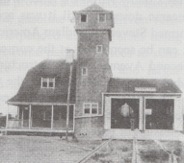
Tatham's Life Saving Station
It was an ordinary day.  Standing with my camera at the corner of 117th Street and Second Avenue in Stone Harbor, New Jersey taking a photo of the oldest building in Stone Harbor.  The building was at one time the Tatham's Life Saving Station that dates back to the late 1800's.  
The square tower and double-bay
garage of the life-saving station.
It was in 1789 that the U.S. Lighthouse Service was established to maintain America's lighthouses and sea markers, warning ships of nearby dangers.  By 1831, the Lighthouse Service began to provide rescue craft where some of the most hazardous conditions prevailed.  In 1848 a new lifesaving organization was started and taken over in 1871 by Sumner Kimball.  Three years later members were held to Mr. Kimball's strict rules and regulations.  A network of coastal stations were organized along the eastern coast of the United States.  Each station had a six-man crew.  It was in 1871 that the Tatham Lifesaving Station was begun in a small building in Stone Harbor.  Then in 1895 architect George R. Tolman designed and built the Duluth style station along what at the time was the waterfront in Stone Harbor.  The building was fitted with a square tower and added to the National Register of Historic Places on October 8, 2008.  
Old photo showing the metal tracks from the garage
leading into the sand in front of it.  
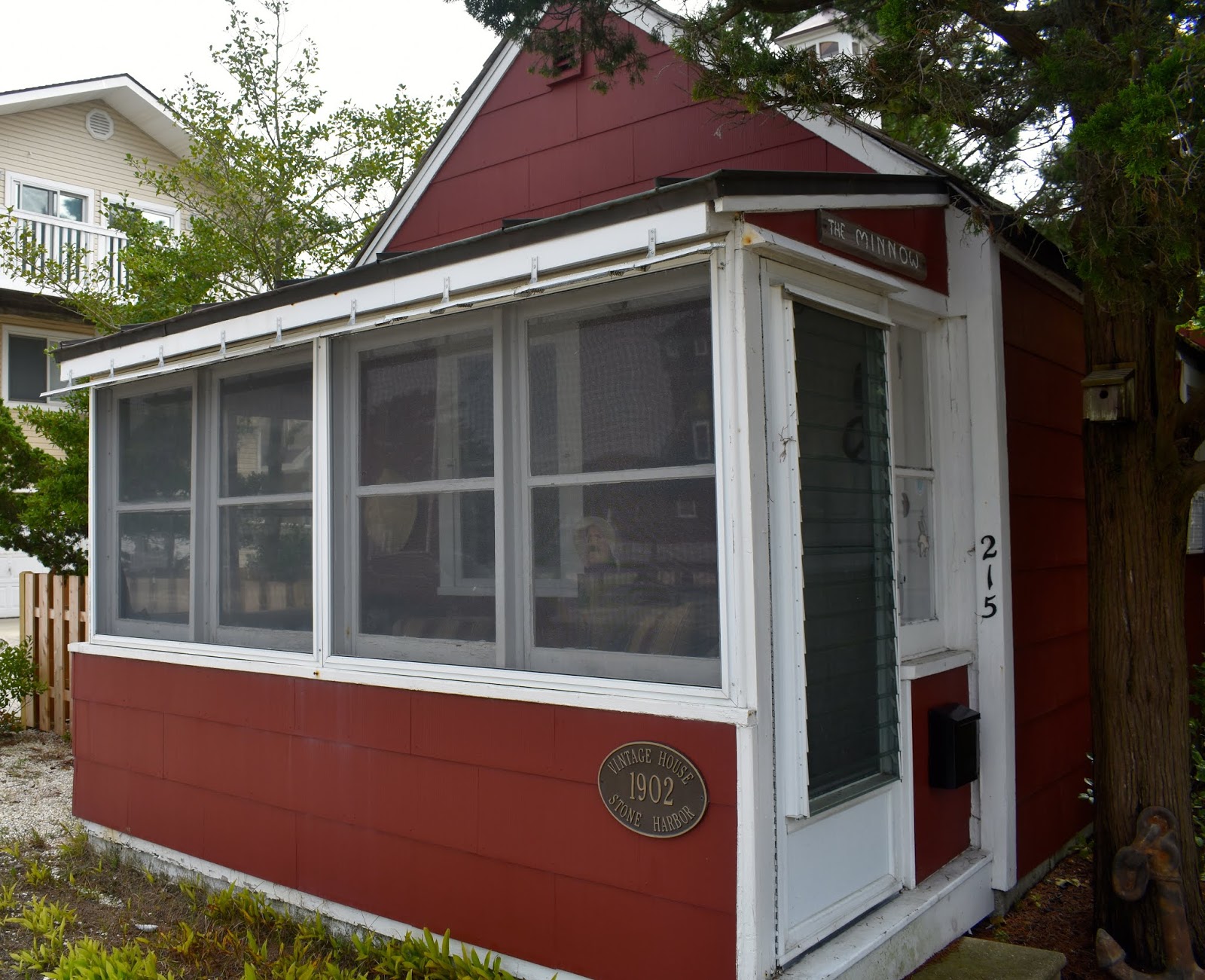
It is the oldest building in Stone Harbor and was known as Life Saving Station #36.  Later it was known as Coast Guard Station #132 and now serves as American Legion Post 331 as well as a museum honoring the history of the Life Saving Service, the Coast Guard and our military.  Closeby to it, at 215 117th Street and built in 1902, stands what is known as "The Minnow" which served as the Life Saving Station keeper's home.  
The nearby "keeper's house" known as "The Minnow".
Both the Life Saving Station and keeper's house carry plaques listing them as Vintage Houses in Stone Harbor.  It was back in the mid to late 1800s that fishing and whaling vessels made their home in and near Stone Harbor.  Actually, the first life saving station was on 80th Street around 1849, but was eventually re-located to the 117th Street location because of its proximity to the Hereford Inlet.  
One of the early  boats from the Life Saving Station.
During WWII Tatham's Life Saving Station was used by Coast Guardsmen who patrolled what is known as the 7-Mile Beach to help prevent enemy attacks.  After WWII ended, the station became deserted until it was acquired by the American Legion Post and turned into a meeting location and museum.  I found one photograph of the place when it was the Life Saving Station and had metal rails leading to the water in front of it which were used to pull the life-saving boats from the garage into the water.  I assume that most cities and towns in the United States have tales to be told about how they began and my story today gives you a glimpse as to how Stone Harbor began years ago.  It was another extraordinary day in the life of an ordinary guy.
The metal plaques telling of the history of the building.