Extraordinary Stories

1944 (1) Act of kindness (12) Acting (2) Adoption (4) Adventure (766) Advertisement (6) Africa (1) Aging (14) Agriculture (47) Airplanes (9) Alphabet (5) American Red Cross (1) Americana (116) Amish (43) Ancestry (5) Ancesty (2) Animals (43) Anniversary (4) Antigua (10) Antiques (14) Apron (1) architcture (1) Architecture (36) Art (175) Art? (8) Arts and Crafts (69) Athletics (6) Automobiles (40) Awards (7) Banking (2) Barn raising (2) Baseball (103) Basketball (3) Batik (1) Beaches (89) Becoming A Citizen (1) Bed & Breakfast (2) Bee Keeping (6) Beer & Breweries (2) Bikes (3) Birds (9) Birthdays (34) Blindness (1) Blogging (5) Bookbinding (5) Books (12) Boxing (2) Brother Steve (12) Buisiness (3) Business (5) Canals (1) Cancer (14) Candy (30) Caribbean Islands (9) Caribbean Villas (15) Cats (5) Caves (1) Census (1) Chesapeake Bay (61) Children (28) Chocolate (4) Christmas (57) Church Adventures (122) Cigars (1) Circus (3) Civil Rights (8) Civil War (6) Classic Cars (7) Climate Change (5) Clubs (1) Coin club (2) Coins (1) Collections (73) Comedy (3) Comic Books (5) Commercials (1) Comnservation (2) Conservation (41) Covered Bridges (3) Craftsmanship (12) Creamsicle the Cat (11) Crime (16) Crisis (312) Cruise Travel (6) Crying (1) Culture (4) Dancing (1) Danger (16) Daughter Brynn (58) Daughter-In-Law Barb (7) Death (5) Death and Dying (65) Destruction (2) Donuts (1) Downsizing (2) Dunking (5) Easter (3) Eavesdropping (1) Education (48) Energy (15) Entertainment (165) Entrepreneurial (62) Ephrata (1) Etchings (1) Eternal Life (4) Facebook (5) Factories (4) Fads (6) Family (261) Farming (37) Father (42) Father Time (68) Favorites (88) Firefighting (1) Flora and Fauna (28) Fond Memories (490) Food and Cooking (171) Food and Drink (111) Football (16) Forgetfullness (3) Former Students (10) Framing (30) Friends (359) Fruits and Vegetables (3) Fun (4) Fundraiser (6) Furniture (1) Games (7) Generations (3) Gifts (1) Gingerbread houses (1) Giving (8) Globes (1) Golf (3) Good Luck (2) Graduation (1) Grandkids (136) Grandparents (3) Grandview Heights (29) Great service (3) Growing Old (8) Growing Up (187) Guns (2) Handwriting (3) Hat Making (2) Hawaii (49) Health and Well Being (61) Health Care (4) Health Hazards (110) Heartbreak (7) Heroes (26) High School (142) History (777) HO Railroading (4) Hockey (4) Holidays (134) Home construction (7) Horses (2) Housing (3) Humorous (71) Hurricanes (1) Ice and Preservation (2) Ice Cream (8) Inventions (34) Islands (4) Italy (12) Jewelry (3) Job Related (62) Just Bloggin' (56) Just Wondering (19) Juvenile Diabetes (5) Labor (3) Lancaster County (542) Law Breakers (8) LDubs In-Laws (3) Lefties (1) Libraries (1) Life's Lessons (175) Lightning (1) Lists (72) Lititz (18) Locomotives (1) Lodging (1) Love (4) Magazines (2) Magic (1) Maps (2) Marching (2) Market (5) Medical (161) Memories (28) Middle School (3) Milk (2) Minorities (1) Money (3) Mother (54) Movies (6) Mt. Gretna (1) Music (118) My Brother (19) My Wife (260) Neighbors (7) New Year's Day (5) Newspapers (4) Nicknames (2) Nuisance (3) Obsolescence (5) Occupations (2) Old Age (1) oldies (1) Pain and Suffering (12) Panama Canal Cruise (13) Parish Resource Center (14) Patriotism (3) Penmanship (1) Pets and Animals (99) Photography (220) Pizza (1) Plastic (2) Playing Trains (2) Poetry (2) Politics (27) Polution (3) Postal Service (2) Predators (2) Presidents (11) Pride (4) Printing (81) Protesting (3) Public Service (65) Questionnaire (1) Quilts (1) Race relations (6) Rain (1) Reading (4) Records (2) Religion (10) Retirement (4) Revolutionary War (3) Robotics (1) Rock & Roll (4) Rodents (2) Saints (4) Sand (1) Scouting (2) Sex (1) Shakespeare (1) Shelling (2) Shopping (24) Simple Pleasures (122) Slavery (6) Small Towns (4) Smoking (1) Snickedoodle (1) Snow (1) Son Derek (27) Son Tad (33) Son-In-Law Dave (27) Soup (1) Spices and Herbs (1) Sports (139) Sports and collectibles (1) Spring Break (1) St. James (2) St. Martin/Sint Maarten (306) Stained Glass (3) Stone Harbor (4) Story-Telling (26) Stragers (2) Strangers (4) Strasburg Railroad (1) Stress (3) Stuff (4) Suicide (2) Sun (1) Surfing (1) Tattoos (4) Teaching (49) Technology (90) Television (6) Thanksgiving (2) The Arts (6) The Beach House (62) The Flag (1) The Future (5) The Shore (78) This and That (23) Timekeeping (7) Tools and Machines (25) Tours (2) Toys and Games (31) Track & Field (1) Tragedy (8) Trains (19) Transportation (18) Travel (16) Trees (2) Trending (2) TV Favorites (23) Underground Railroad (10) Unit of Measurement (1) USA (2) Vacation and Travel (545) Vehicles (80) Vison and Eyesight (2) War (14) Watches and Watchmaking (5) Weather (48) Weddings (3) White House (1) Wisdom (3) Yearbooks (12) York County (3)
Showing posts with label Printing. Show all posts

Wednesday, April 8, 2020

The "Is There A Comparison Between The Black Death And COVID-19?" Story

It was an ordinary day.  Reading an article telling about the invention of the platen press and movable type which were said to have been a "game changer" at the height of the Renaissance, since it allowed both religious and classical texts to be disseminated through the population at large.  During my high school Graphic Arts classes, I taught both the historical background as well as the mechanical background of the art of printing.  Johannes Gutenberg invented movable type in the mid-1400s which gave printers the capability to print multiple copies of printed pieces which made the printing press the instrument through which the cultural revolution of the Renaissance spread through the population instead of being contained among the elite.  
The letterpress which used movable type to print documents.
The press also allowed printed pieces to be printed in languages besides Latin, which allowed common people to understand them.  Ordinary people could now access the texts containing the most important works of literature in human history through open libraries and personal collections, rather than being reliant on the interpretations of the church.  The Renaissance was a period of explosive artistic and scientific growth for Europe between the 14th and 17th centuries.  Europe was trapped for a thousand years in social and cultural mire after the collapse of the Roman Empire.  The Renaissance marked a resurgence of innovation that set the stage for advances made over the following centuries that led us to the modern world as we know it today.  Though the press and movable type were important, the Black Death helped start the era.  Many historians theorize that the devastating pandemic known as the Black Death may have helped create an environment in which social change began to flourish.  The Black Death killed between 30 to 50 percent of Europe's population which put the feudal structure on which Europe's hierarchy depended in a precarious position.  Labor became more valuable and the average individual had better economic means as well as greater social mobility.  
The city of Florence, Italy.
Before the Black Death struck, life was focused on the afterlife, while afterwards they became more focused on achieving personal betterment and well-being in life.  It was said to have been the advent of humanism.  Florence, Italy was the center of the Renaissance.  Leonardo Da Vinci, Michelangelo, and Sandro Botticelli were from the Tuscany region, but Florence was the key city to gaining an understanding of how the Renaissance changed the underlying institutions of Medieval Europe.  Military might wasn't the only factor with architecture and art now being important.  The great thinkers of the city began to give us the works we remember them for today.  The Renaissance wouldn't enjoy such a lofty place in history if it were not accompanied by the achievements in art and science that took place.  
Artistic achievement was reached during the Renaissance.
Artistic achievement was funded by the wealthy Catholic Church which is why we see so many religious themes in the art of the era.  The great thinkers of the era made contri- butions to the astronomical, botanical anatomical and mechanical discoveries of the Renaissance.  Conflict at times was created between the church and these indivitduals such as Galileo after his discovery that the sun was the center of the solar system, not the Earth.  The Renaissance was so important in our history and perhaps had it not been for the Black Death, it may have never happened.  Will future generations be reading much the same thing about our civilization and COVID-19?  Only time will tell.  It was another extraordinary day in the life of an ordinary guy.

Thursday, November 7, 2019

The "The Rule Of Age 10!" Story

It was an ordinary day.  Googling "Rules of life" to see what may appear on my desktop.  Some rather interesting, but perhaps strange, topics appeared on the page after page of results.  Topics such as: The Age 55 Rule, The 10 Rules of Change, 10 Rules for Writing Numbers and Numerals, Ten Basic Rules of Netiquette or Internet Etiquette, The Rule of #1,  The Giver "Rules" Flashcards, The New Rules of War, 10 Rules Of The Playground, The Rule of 72 and one that I found most intriguing...The Rule of Age 10.  Naturally had to click on the last rule I have listed and came to a page that featured a story that was posted in Reader's Digest's The Genius Section.  "The Rule of Age 10" has a subtitle of Want to find the key to happiness?  Think about what excited you most when you were in fifth grade-and do it now.  My first line of attack was to call my good friend Jere whom I have known since 1st grade and ask who we had as a fifth-grade teacher.  Seems it was Mrs. Ryder, the mom of one of our classmates.  
The 1st grade class at M.J. Brecht Elementary School in 1950.
Jere is front row right and I am top row left.  Marilyn in in white
dress, front row center. Click on image to enalarge.
I tried and tried to think of what interested me in 5th grade and I couldn't think of a darn thing, except the neighbor girl named Marilyn.  So, I then tried to think of what I may have done during summer vacations on either side of 5th grade and then..Bingo, it hit me!  It was the Christmas before I entered 5th grade that my Aunt Doris bought me an Army Pup tent as a gift.  The following summer I set it up in the back yard, used my small printing outfit I had received for my birthday that September and I was in the printing business.  Lancaster Press sat next to our backyard and the workers would throw their used slugs (metal lines of type cast on a Linotype machine) in a bucket by the back door.  It was very convenient to my yard and I would "borrow" a few of them, ink them with my large ink pad and press them on the sheets of paper I had taken from my dad's desk.  Presto...I was printing!  Little did I know how much that influenced me, since I later went to Millersville State Teacher's College where I became a teacher in the Graphic Arts, or printing.  Little did I realize that my entire life was influenced by that summer when I was about 10 years old.  Called my friend Jere once again and asked him what he did that summer, besides get into trouble with me.  
Jere and I standing in front of our old elementary school
a few years ago.  Our 1st grade classroom was bottom right.
He recalled heading to the Railway Express Station near our homes every day to be with his father who worked there.  His mom worked elsewhere so Jere had to go with his dad to the train station for the day.  No big deal, since he loved the train station.  At times I would join him to watch the trains or grab a coke from the cooler at the Railway Express office.  Jere eventually went to Millersville and began his teaching career with me at the same school we graduated from a few years earlier.  But, he worked part-time at the Historic Strasburg Railroad as a fireman on one of their historic steam engines.  
Friends for 70 years, Jere and Larry
Jere also constructed one of the neatest HO railroad systems you'll ever see.  All because he was influenced by the railroad when he was about 10 years old.  Wow!  Seems that the writer of the story in The Reader's Digest, called "The Rule of Age 10", researched many others and sure enough it was the "Ah, Ha" moments at the age of 10 that influenced hundreds of people's future employment, be it a full time job such as mine or a part-time occupation such as Jere's.  The author of the story, Bruce Grierson, wrote that the trend was so striking that after he had finished his writing, he started telling everyone who was floundering in midlife, "Try to remember what you were all about when you were 10. If you kept a diary, dig it out.  If you're still in contact with friends from that era, call them up.  Ask them who you were.  It is 10 years of age when you graduate from being just anyone to visualizing what you may enjoy to do with your life.  You may not realize that, but it seems to be true.  You will experience the biggest surge of intellectual horsepower in your lifetime.  So, as a parent of a child about 10 years old, make sure you turn on the high beams in your child's life and reveal the road ahead.  It may really be what they will become in the future.  That is if you believe what you just read.  It was another extraordinary day in the life of an ordinary guy. 

Saturday, October 5, 2019

The "The End Of The Road For The Big Brown Box" Story

It was an ordinary day.  Finally heading home from Lindenmyr Paper Company in Mount Joy, Pennsylvania with the big brown box in the back.  No big deal to most of you, but to me it was the end of a long summer of miscues.  All began in mid-June when my friend Mike and I got together to work on the in-house printing needs for the Manheim Township School District.  We print just about everything and anything that they may need for the next school year.  Hall passes, envelopes, excuse cards...you name it and we probably printed it in the high school print shop where I taught Graphic Arts and Photography for 33 years.  I've been retired now for twenty years and Mike, who taught Elementary and Middle School for almost as long, has been working with me in the summer months for close to 35 years now.  We always begin the summer months going to all the schools as well as the District Office to get orders for what they will need for the next school year.  We then make a list of all the paper needs and I place a call to a local paper company, Lindenmyr, with the order.  A few days later the paper arrived late afternoon and I found it the next morning when I arrived.  I placed all the paper around the room on counters and desks with the offset press plate for that particular job on top of it.  It was at that time that I found I had one big brown box of large 9" x 12" Kraft envelopes remaining with no plate for it.  I questioned Mike and we were stumped.  A few days later I found I needed more paper for a few new jobs sent to us so I placed another call to the paper company.  Placed that order and told them I was going to return the big brown box of envelopes they had sent me for a credit.  
The big brown box of 9"x12" Kraft envelopes.
Girl on the other end of the line didn't say anything for a few seconds and then said, "We don't sell any envelopes in big brown boxes!"  I told her they were delivered with the rest of what we ordered.  She told me to bring them back and when I went to get the second smaller order I gave the big brown box to the fellow at the "Will Call" door.  He didn't have a credit slip for me, but I figured I'd be getting one in the mail.  Weeks later and summer was drawing to a close as we began to deliver the jobs that we had printed for all the schools.  I delivered all the high school materials and when the secretary saw everything she asked, "Where's the big brown box of envelopes I sent to the shop at the beginning of the summer?"  Ah, Ha!  Seems that a custodian brought the big brown box to the shop after the delivery had arrived and placed it on the top of all the other paper.  I just assumed it had come from the paper company, but I had assumed wrong.  Now what.  The secretary gave me another big brown box of envelopes which I printed and I then called the paper company to ask what might have happened to the big brown box I had returned two months earlier.  They would be back to me soon, they said.  In the meantime I checked and found that the school had never received a credit for the big brown box I had returned.  So...I called and attempted to explain to the girl at the order desk what had happened.  She told me she was transferring me to Tammy, the Operations Manager.  Shortly I was telling her what you just read.  I also told her we have been buying paper from Lindenmyr for years and years.  She promised me she would find out what happened to the big brown box and get back to me.  The rest of the day passed and I just about gave up hope of hearing from Tammy.  Nest day, just before noon I was sitting in my chair at home watching "The Price Is Right" when the phone rang.  Read Lindenmyr on the screen and I answered.  I answered, "Hello", and I heard, "I found the big brown box and you can pick it up at the "Will Call" door at your convenience.  I thanker Tammy and grabbed the keys to the car.  Tomorrow I will return the big brown box of unprinted envelopes to the high school office and the problem will have been solved.  You know...it might be a good time to retire...permanently!  It was another extraordinary day in the life of an oridnary guy.

Sunday, September 29, 2019

The "Finding A Home For My Guillotine Papercutter" Story

Letterpress printing stands along North Queen Street.
It was an ordinary day.  Parked the car in the parking garage and headed to the 300 block of North Queen Street in the city of Lancaster, Pennsylvania to visit the 7th Annual Lancaster Printer's Fair.  The fair is meant to bring to life the art of letterpress printing which has a long and storied history in Lancaster.  Ben Franklin and his partner James Chattin founded the New Printing Office in Lancaster in 1751.  Franklin moved back to Philadelphia a short time after, but the office remained open and was the start in 1754 of a successful run under William Dunlap.  One of the main reasons I decided to go to the fair was to visit the .918 Club and the Heritage Press Museum which is in the 300 block of North Queen Street.  
Items needed to print on the letter press are:  metal frame
called a chase, hand-set type in the center of the chase,
wooden blocks called furniture around the type and held in
place with metal pieces called quoins.  Also can be seen are:
key (left center) to turn the quoins and a metal job stick with
hand-set metal type in it. (top center)
The Museum was founded in 2004 and attracts tourists from all over the world.  While there you can participate in a live printing operation and see how letterpress printing took place long ago.  I entered the Museum and instantly recognized the smell of printer's ink.  Some of you may recall that I have written many times about teaching high school graphic arts, or printing, for over 30 years.  When I first began teaching my shop had two full sized hand-operated platen presses and a few table-top platen presses.  My students would have to set type by hand, place the set type in a square metal frame called a chase and lock it in place using different sizes of wood called furniture by using metal locking devices called quoins.
Mike operates the letterpress.
That all was done of a metal "stone" call the composing stone.   The chase would then be placed in the inked press and paper would be hand-fed, one piece at a time.  The hands-on experience was a remarkable way to teach the art of typesetting and printing to high school students.  And...they loved it!  Eventually letterpress began to wain when offset printing became popular.  The two floor model letterpresses were eventually given to the museum after it opened in 2004.  Wasn't long before I found my way to the area where the presses and composing stone was located and I found Mike talking to a visitor of the museum.  After helping him print a few items, he turned his attention to me.  A big smile told me he remembered me from the past.  Mike taught Graphic Arts in York, Pennsylvania about the same time I was teaching at Manheim Township High School.  
The guillotine paper cutter I will
donate to the .918 club in the future.
We talked about the equipment they had and I then offered to donate my guillotine paper cutter when I no longer need it.  I still do the in-house printing for the school district and still need the cutter which sits in my garage.  Why it's in my garage is a story for another time.  Mike found Ken, another Graphic Arts teacher from Octorara High School and I told them about the cutter and they both agreed they would be glad to come and get it when I was ready to give it up.  I often thought about joining them someday and use my knowledge of letterpress printing once again to tell how "it used to be way back then."  When I returned home I looked at both of the guy's business cards they handed me and thought how neat it would be to be a "Master Printer & Printer in Residence."  Maybe sometime soon?  It was another extraordinary day in the life of an ordinary guy.  PS.  If you are wondering what .918 means, it is the height of a piece of type from the face of the letter to the bottom on the piece of type in inches.

Outside the Museum in Lancaster, PA
This year's program booklet for the Printer's Fair.

Monday, September 2, 2019

The "Freedom To Secure The Blessings Of Liberty: Part II" Story

It was an ordinary day.  Standing in LancasterHistory.org's Stoudt Gallery taking photographs of some of the 26 front pages of Lancaster's Newspaper that are on display in the gallery.  The exhibit is titled "Not Too Rash, Yet Not Fearful: 225 Years of Journalism in Lancaster County" and has displayed the front page of some of the most memorable newspapers ever printed in Lancaster, Pennsylvania.  Some of the pages carry different mastheads, but all were printed in Lancaster by the same company.  Mastheads such as "Intelligencer Journal", "New Era", "The Lancaster Intelligencer", "Lancaster Journal" or "Sunday News" all brought news of the city, state and world to the residents of Lancaster County and surrounding area.  The earliest front page is from Wednesday, July 15, 1795 while the latest front page is dated Tuesday, July 1, 2014.  I have posted half of my favorite choices today and will post the remainder tomorrow.  I realize it may be hard to read some of the copies since they were rather hard to read the original, but the main idea of the story and the accompaning photographs may help you understand why I have chosen that particular front page.  It was another extraordinary day in the life of an ordinary guy.


The first issue of the Lancaster Journal was published June 18, 1794.  The Lancaster Journal was founded by William Hamilton and Henry Willcocks during George Washington's second term as President.  One thing that jumps out at you is the use of the "medial s" which can be seen in the TREATY story.  It appears to look like an "f".  I'm sorry for the quality of the photo, buy it was much the same way before I took the photograph.  The newspaper was published once a week and was four pages in length.  Mr Hamilton began as an apprentice in the Philadelphia print shop of Benjamin Franklin's grandson before journeying to Lancaster in 1794.  Click on image to enlarge. 
This issue of the paper included a lottery which was used to raise money for a variety of  items without needing governmental intervention.  On this page can be found an advertisement for the "Grand State Lottery for Promoting Internal Navigation."  Prizes were drawn over a series of days, ranging from $500 to $40,000 or in today's dollars, $5,925 to $474,072.  The lower right section of the paper is dedicated to what appears to be multiple "miracle cures" from a local doctor named T.W. Dyott.  Dr. Dyott is selling "Anti-Bilious Pills."  It was said that President Abraham Lincoln's son, Willie, died from a strong case of bilious fever.
The Hager Building is one of the first instances of an illustration or photo on an Intelligencer front page.  It stood at the corner of King and Market streets and was constructed throughout 1910 and 1911.  It was designed by C. Emlen Urban who was responsible for numerous pieces of historical architecture in Lancaster.  The original Hager Store opened in 1821 and was further west on King Street.  The store continued to exist as seen in the newspaper until 1968 when it was purchased by rival business Watt & Shand before closing in 1977.  
Among the most famous transportation disasters of the 20th century was the crash of the LZ 129 Hindenburg on May 6th, 1937.  The airship lasted only 14 months.  Of the 97 people aboard the evening flight from Frankfurt, Germany to Lakehurst, New Jersey, 13 passengers and 22 crew died when it went up in flames upon arrival.  Led Zeppelin used the famous photo as the cover of the band's first album.
The front page of the New Era on August 15, 1945 told of the end of WWII.  The night before President Harry Truman had declared that Japan had surrendered, just a week after the United States deployed two nuclear weapons on Hiroshima and Nagasaki.  It was four years earlier that Japanese forces bombed Pearl Harbor on December 7, 1941.  Hundreds of thousands of soldiers returned home and unemployment grew. Lancaster's Armstrong Cork Company's military contract was terminated and 1,800 people lost their jobs.  
Martin Luther King Jr. stepped out of this room at the Lorraine Hotel in Memphis, Tennessee and was met with an assassin's bullet.  The date was April 4, 1968.  It was the day before that he delivered his "I've been to the Mountaintop" speech.  It took more than an hour for the ambulance to transport King to a nearby hospital where he died at the age of 39. In Washington D.C. nearly 20,000 rioters took to the streets for days in what would be called the biggest occupation of an American City since the Civil War.  President Lyndon B. Johnson gave a short speech to the nation calling King the "Apostle of Nonviolence" and saying that "the spirit of America weeps for a tragedy that denies the very meaning of our land".  On April 9 a service was held at Ebenezer Baptist Church in Atlanta followed by a procession of 100,000 that culminated at King's alma mater, Morehouse College. 

Sunday, September 1, 2019

The "Freedom To Secure The Blessings Of Liberty: Part I" Story

My first photograph at LancasterHistory.Org.
It was an ordinary day.  Snapping a photograph of a Monarch butterfly that was enjoying the flowering bushes outside the entrance to LancasterHistory.Org.  The photograph was the first of many I snapped during the next hour or so at the Historical Society in Lancaster, Pennsylvania.  
LancasterHistory.org
Decided it was a good day for a visit to see what new items might be on display at the beautiful building at the corner of President Ave. and Rt. 23 in the city of Lancaster.  A few years ago my wife bought me a membership to the Historical Society and ever since I have been a frequent visitor to see the ever-changing displays at the historical society.  I showed the attendant my membership card and headed to one of the display rooms.  
1875 Washington printing press.
The current featured exhibit is titled "Not Too Rash, Yet Not Fearful: 225 Years of Journalism in Lancaster County."  Perfect for me, since I enjoy reading the local newspaper as well as having taught printing in high school for almost 35 years.  So, with camera in hand and my membership card in its plastic sheath around my neck, I entered Ryder Hall & Stoudt Gallery.  The next hour was spent reading all the wall posters and examining the large 1875 Washington printing press.  A few years ago I visited the newspaper office in downtown Lancaster and had a private tour of their small window museum and posted a story about my adventure.  Some of the same items are part of this display, but the main part of the display in front of me today is the first page copy of some of the most memorable dates in the history of Lancaster.  There are 26 front pages which can be viewed with a paragraph or two explaining the lead story on the front page.  It is as if I were back in high school learning about the events that formed our nation and were important to the local residents of Lancaster County.  Follow along for the next three days as I take you through history as seen by a resident of Lancaster.  It was another extraordinary day in the life of an ordinary guy.

PS - Tomorrow will show several front pages from the newspaper along with an explanation of what was on the cover.


Sculpture of Johannes Guttenberg who was a German blacksmith,
inventor, printer and publisher who started the Printing Revolution
 with his invention of movable type in Europe in 1439. His system
allowed for the mass production of printed books, including the Bible,
 radically changing the way people received and shared information.
The access to written information permanently altered the structure
of society.
The top photograph shows a type drawer of wooden capital letters to be used in typesetting.
The bottom drawer has wooden letters of varied sizes used for headlines.
Eventually metal type replaced wooden type and then the Linotype came into
existence.  The Linotype machine looked like a traditional typewriter and
yielded a metal line of type which could be used to set a paragraph for a story.
In 1942 lines of type could be produced using this teletypesetter.  Its keyboard
operated much faster than a Linotype keyboard. 
The metal lines of type were locked in a metal frame known as a chase such as seen in
this photo.  On top of this frame was placed a heavy mat that was pressed onto
the type.  It hardened and was peeled from the type.  Then semi-circular
lead plates were made that could be fastened on the printing press. (See below)
This is a composition material that is pressed on a layer of type
and would form a mold of the page.  
The above mold would be placed in a circular form and this lead
mold would be made.  This would be fitted onto the press.
It was still known as letterpress since this plate would be inked
and pressed onto paper.  Next came offset printing.
This is an aluminum plate that was made by exposing its surface
behind a negative.  Light went through the negative onto the metal
surface and the light would harden the surface of the plate.   After
the plate was developed it yielded what you see above.  This
would be attached to the press and ink and water would run over it before
it hit the paper.  Known as offset printing.


The top photo shows a newsroom reporter's ID card.  John was a reporter for the
Lancaster New Era and this ID identified him as a legitimate member of the press
and authorized him to report on issues related to American combat forces during WWII.
The middle photograph shows Lancaster's Penn Square welcoming home the
troops after we won the war in 1945.  The bottom photograph shows the Victory
Slavage Float in the Lancaster Flag Day Parade on June 14, 1945.  The wagon
was used to collect salvage for the war effort.

Sunday, August 11, 2019

The "The Demise Of The Local Bookstore: Part III - The First Book" Story

It was an ordinary day.  Reading information that tells what was the first item printed as well as when was the first book printed in the American Colonies.  They are two different answers since Johannes Gutenberg is given credit for printing the first item when he printed the Gutenberg Bible in the 1450's.  It was around 1439 in the city of Mainz, Germany that Mr. Gutenberg created the European movable type press.  He also developed the first oil-based ink that was more durable than the previously used water-based ink.  
Johannes Gutenberg's Bible
When he printed the Gutenberg Bible he began the European printing age.  The first copies of the Bible sold quickly to monasteries, university and wealthy individuals all over Europe.  It was in 1456 that Johannes borrowed money from Johann Just in order to pursue his Bible project.  Gutenberg went into debt and Just was given control of Gutenberg's workshop.  Gutenberg managed to start a second print shop and began printing the Bibles in another town in 1459.  The Gutenberg press made mass production possible for the first time in history.  By the early 1500's there were about half a million books that had been mass produced on a wide range of topics.  
Pages from the Gutenberg Bible
The printing press is given credit for making the Renais- sance, the Scientific Revolution and the Protestant Reforma- tion possible.  Martin Luther printed his Ninety-Five Theses for distribution.  Today there are 49 surviving copies of the original Gutenberg bible.  It is believed that he printed about 180 Bibles.  Gutenberg may not have been a very successful businessman, but he is thought to be one of the most influential people in history.  Now, there are those who think that The Epic of Gilgamesh, which is the oldest-known written story that can be called a book, is the first book.  It was written sometime prior to the 18th century B.C. on clay tablets.   But, Gutenberg's Bible, printed on a moveable-type printing press, is still the first book in the world.  
The Bay Psalm Book by Stephen Daye
As far as the first printed book in the American Colonies, that would have to be the Bay Psalm Book that was printed in 1640 by Stephen Daye who was the first printer of the Massachusetts Bay Colony in Cambridge, Massachusetts.  The original copy is owned by The John Carter Brown Library at Brown University and is one of 11 copies of the first edition known to exist and one of only four perfect copies.  
This is the cover of the first Bay Psalm Book
This copy of the book is in its original binding with the title page signed by principal editor, Richard Mather.  Stephen Daye printed the book on a press that had been imported to the colonies in 1638 by the Reverend Jesse Glover.  For the colonies, to have an actual printing press meant they were not wholly dependent upon outside sources.  The press was imported about 20 years after the Mayflower arrived in the New World.  Of the 11 first edition copies of the Bay Psalm Book that are in existence, only five are in complete condition with four of those considered "perfect" copies.  The Old South Church in Boston had two copies.  Whether you consider Johannes Gutenberg the father of printing or Stephen Daye, both played an important part in the many books that fill the shelves of bookstores all over the world.  And, to me, digital books, which I enjoy on my Kindle, will never replace the printed word which was developed years ago.  It was another extraordinary day in the life of an ordinary guy.

Monday, July 15, 2019

The "News At It's Best": Part II" Story

8 West King Street which is where the
Lancaster Newspaper has been printing
my entire life.  I will miss visits to the
place, but am hoping the move will bring
a better and more up to date newspaper.
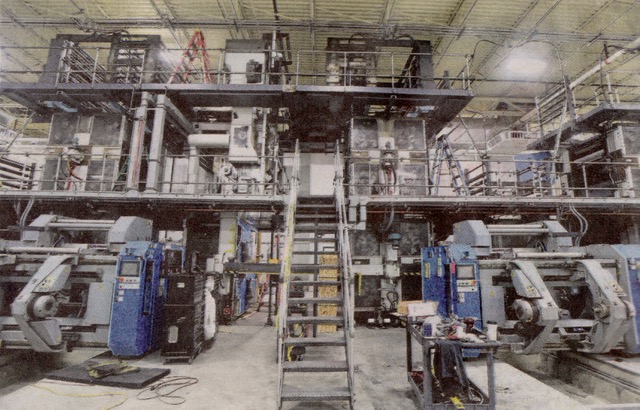
It was an ordinary day.  Reading about the return to Lancaster County of a state-of-the-art printing press on which the Lancaster Newspaper will once again be printed.  Since May of 2015 the Lancaster newspaper has been printed in Mechanicsburg, Pennsylvania which is about an hour from Lancaster.  Late night news happenings very seldom make the morning news due to the distance factor and time required to get the newspaper "to press" on time for early morning delivery.  The newspaper which is printed in Mechanicsburg is top quality and I enjoy the format, but it is too far from the Lancaster County readers.  Bringing back the printing of the newspaper to Lancaster County should increase the readership.  Steinman Communications, owners of the Lancaster Newspaper, are moving the printing of the newspaper to a 48,000-square foot leased building on Hempstead Road which is to the north-east of the city of Lancaster.  
The printing press that was housed
at 8 West King Street.  I visited many
times and enjoyed watching the
operation of the press in the making
of the Lancaster newspaper.
Moving the printing back to Lancaster will make it easier to include late breaking news once again.  The state-of-the-art press, which was said to be a quality used press made available due to other printing operations consolidating around the country, will be run by 30 to 40 employees, thus opening new positions for Lancaster residents.  With the new press will also come access to online local archives that date to 1795.  I'm anxious for both operations to take place in the near future.  But, that is not the only news about Lancaster Newspapers in Downtown Lancaster.  It was recently reported that the newspaper will move from their ages-old building at 8 West King Street, were they have been since 1906, to a new location at 101 N. Queen Street, a block-and-a-half away from their old home.  The new location will be more efficient and more physically attractive.  Their new location will be known as 101NQ.  They will be located on the second level of a new building that is now under construction in a 40,000-square-foot space.  It was said to be an exciting new chapter for the Lancaster Newspaper.  Those associated with the physical printing of the daily newspaper will be moved to the Hempstead Road facility.  Good things are coming to Lancaster and its news outlet.  I can hardly wait!  It was another extraordinary day in the life of an ordinary guy.


Photo that was in the newspaper showing the new press at the Hempstead Road building.

Wednesday, May 8, 2019

The "Lancaster Newspapers From The Past" Story

It was an ordinary day.  Checking out front pages of the "Lancaster Journal" from the late 1790s and the early 1800s.  Back in late January I wrote a few stories telling that the Lancaster Newspaper was celebrating the 225th Anniversary of their newspaper.  
A variety of Nameplates from Lancaster's Newspaper. Click to enlarge.
Many newspapers have come and gone during the last 225 years, but Lancaster's paper has survived in one the United States' first inland cities.  Throughout 2019 the newspaper will publish a memorable front page every Sunday.  I thought it would be interesting to save all the historic front pages and share some with you.  Today I will give you a story or two from papers that were printed in 1795, 1805, 1809, 1814, 1820 and 1831.  You may have a hard time reading them since they were hard for me to read and I lost more detail in publishing them for you.  So, here are a few interesting items from Page 1 or each of the papers.  It was another extraordinary day in the life of an ordinary guy.


The nameplate for the newspaper was The Lancaster Journal and was in a font with serifs as well as slightly italic.  Under the nameplate, the motto read: Not too RASH - yet not FEARFUL - Open to all PARTIES, but not influenced by ANY.  The masthead read:  LANCASTER: Printed by WILLCOCKS & HAMILTON, at Euclid's Head, in King-Street, nearly oppofite Mr. Stofft's where Subfcriptions are taken in at Fifteen Shillings per Annum, Effays, and Articles of Intelligence thankfully received, and all manner of Printing performed with Fidelity, Accuracy, Elegance and Expedition.  This is No. 5 dated WEDNESDAY, July 15, 1795 and is VOL. II.  At the time, the letter "f" was substituted for the lower case "s".  The entire front page of this 4-page paper was dedicated to the "TREATY, of AMITY, COMMERCE AND NAVIGATION, between His Britannie Majefty and the United States of America, by their President, with the advice and confent of their Senate. Click on page to enlarge.  May still be hard to read!!

This front page is from 1805 and shows an ornate Old English font with a new motto which read: We are all Republicans, we are all Federalists: Etc.  This was widely regarded as a call for unity in the wake of the bitter partisanship the 1800 election.  Sound familiar to anyone?  On this page 1 was a notice from two competing Philadelphia druggists who were seeking customers in Lancaster County.  Both offered a long list of herbs and medicines available over the counter.  A few of the patent medicines were listed such as: Patent Antibilious Pills, Worm Destroying Lozengers, Gout Cordial and Jesuit's Drops.  A new business opening was also listed on this page known as Pennsylvania Arms.  Another advertisement was:  Clocks and Watches repaired at the shortest notice, and warranted.
This front page is from 1814 and features the "Grand State Lottery for Promoting Internal Navigation."  Prizes were drawn over a series of days, ranging from $500 ($5,925 in today's dollars) to $40,000 ($474,072 in today's dollars.  Once again, the lower right section of the paper is dedicated to what appears to be multiple "miracle cures from a local doctor named T.W. Dyott.  He offers pills to stop bilious fever which caused a fever, nausea and vomiting.  It was said that President Lincoln's son died from bilious fever.   Below that ad was another from Dr. Robertson for his "Celebrated Stomachic Elixir of Health."

Thursday, April 4, 2019

The "Real Books, Made Of Paper" Story

It was an ordinary day.  Spent a few hours in front of my desktop iMac working on the Manheim Township Middle School 2019 yearbook.  After that long a time staring at the screen, even though it is rather large, and listening to all the annoying pings, I was so glad not to have to look at it anymore. For a long time!  For the majority of the population of the world, this is probably a daily routine for you.  How can you do it?  Hard on the eyes?  It just has to be and soon there will be a specific eye malady with a name something like "Ping In Screen Syndrome" (PISS).  I work on the yearbook for hours to make a salary that I will eventually use to head to a Caribbean Island where I will relax on a white sand beach with aqua water in front of me.  And, I will read a book to relax!  Maybe a couple books, depending on how long we stay in paradise and what might pass by me on the beach that deserves a look.  And...I know it makes no sense...the book I read will me on my Kindle.  I used to read real, honest to goodness paper books years ago, but as I aged I found it harder to see the type size that is used for paperback novels.  
What's your choice?  Real books or an e-reader?
So, I found that I can enlarge the type font and change the type style to suit my eyesight.  It makes reading so much more enjoyable when you can see the words on the page without squinting.  I've had a Kindle for at least a dozen years, buying my second one before a vacation in 2018.  At first it just didn't seem right, not having a paper book to be able to turn the pages.  I had a really neat book mark that was my constant friend from book to book.  All of a sudden it was put to rest.  At first, when I got my second Kindle, I had trouble finding where I had stopped reading the day before.  So, I made sure I always stopped at the end of a chapter.  When you read James Patterson quite a bit, you know that it only takes a minute or two to read a chapter.  I have read of a few avid readers who have given up their Kindle, since they long for paper pages after spending hours at a time viewing a computer screen where they work.  At times I feel guilty not switching back to paper books, since both my sons are pressmen who are responsible for the printed word.  They rely on people to read printed material to keep their jobs.  I do read the daily morning newspaper while at home, but when on vacation I rely on my laptop to get the daily local news. But, I like to save stories from time to time and find it easier to take a scissors and cut them out than have to cut and paste and then send the job to the printer.  In 2010 the founder of MIT Media Lab predicted that e-books would overtake the printed book in 5 years.  But, guess what.  In 2015, e-book sales dropped 11%.  My biggest concern about reading e-books is the fact that I have to order them online.  As soon as I do that, someone is tracking what I am reading, for a day or two later, I get a notice telling me I may like to read this author or that author.  And, I just may give one of them a try.  But, I hate that nothing is just for me anymore.  Everyone knows my every move.  If I could find some of my favorite authors in large print books, I may give it a try.  Only problem could be the size and weight of the book due to the larger sized type. So, until someone can come up with a way for me see the type easier without special glasses, I will order my books online and use my Kindle.  The biggest advantage is that I only need a small pocket in my suitcase to hold my Kindle.  My wife knows that and always has a half dozen paperbacks sitting next to my suitcase for me to pack, since her suitcase is already packed with a dozen other paperbacks.  At least she is keeping our sons employed.  It was another extraordinary day in the life of an ordinary guy.

Thursday, January 24, 2019

The "Oh! The Sweet Smell Of Printer's Ink: Part III - Hail To The Chief" Story

It was an ordinary day.  Posting my third story related to the 225th Anniversary of LPN, Lancaster, Pennsylvania's newspaper provider.  Today's story deals with the many Presidential visits to Lancaster that the newspaper has covered over it's lifetime.  A few of the stories tell of  Presidential arrivals at the Lancaster airport which has limited commercial flights that land and depart due in part to size restrictions, but is still considered the fourth busiest airport in the state.  But, at times large planes do land at the Lancaster Airport.  One such plane was Air Force One which landed at Lancaster Airport in October of 2004 with President George W. Bush aboard.  Read on to see some of the Presidents and Presidential hopefuls who have arrived by plane, train or automobile and made the newspaper the next day.  On August 14, 1849 President  Zachary Taylor made a visit to Lancaster as reported in The Lancaster Intelligencer.  His visit was brief, staying in town for one day at the Swam Hotel which was located at Queen and Vine Streets.  Lancaster did not provide a welcoming attitude for the President, even though he was said to have come down with a digestive ailment due to the local water and the entire visit was labeled as "dull".  It was also reported in the paper that a half-hour after he left town the President and his visit were both forgotten.  According to The Lancaster Intelligencer, on July 5, 1913 President Woodrow Wilson made a visit to Lancaster.  He had made a train stop the day before in Gettysburg to celebrate the 50th Anniversary of the Battle of Gettysburg.  Upon arrival in downtown Lancaster, to a sparse crowd due to no previous notice of his arrival, President Wilson shook hands with those who climbed onto the train platform to greet him.  
President Franklin D. Roosevelt arrives in downtown, 1934.
The Lancaster New Era reported on May 31, 1934 that President Franklin D. Roosevelt spoke from the caboose of his train which was headed from Gettysburg to New York.  They published his full remarks including the part where he told those in attendance at the Lancaster Train Station that he always thought of Lancaster County as one of the great agriculture counties of the nation.  After his brief speech on the platform of the train's caboose, he gave a wave and went back into the train as they left the station.  
Presidential candidate John F. Kennedy makes a visit.
 The Lancaster New Era also reported that Presidential candidate John F. Kennedy arrived in Lancaster in September of 1960 to over 10,000 where he give a speech from a flatbed truck in front of the Fulton Bank in downtown Lancaster.  Shortly before he gave his nine-minute speech, a 64-year-old women was trampled by the large crowd and was taken inside the bank.  Kennedy demanded that his motorcade stop so he could enter the bank to comfort her.  He apologized before heading back to his motorcade.  Her only request was that Kennedy notify her sister of the accident.  I was in attendance at the rally that day in 1960.  I skipped school to attend the rally that I will never forget.  
Richard Nixon talks with Amish during a visit to Lancaster.
On October 19, 1970 the Intelligencer Journal reported on President Richard Nixon's arrival at the Lancaster Airport to the north of the city of Lancaster.  He arrived to what was said to be anywhere between 5,000 to 40,000 people who listened to Nixon talk about Republican candidates running for re-election.  His speech helped a few candidates, but also did not influence others.  Four years later one of those candidates had to inform the President that he had lost the support of the party.  Calls of "Four more years" filled the air at Millersville University On October 28, 1984 when President Ronald Reagan came to talk to a raucous crowd of 9,000.  103 year-old H. Louise Souder and 19 year-old Julie Templin both attended the rally.  Mrs. Souder sat in front of the President while Ms. Templin presented him with a bouquet of roses.  Julie was a Millersville student who was a leukemia survivor and Louise served as the chaplain of the Women's Republican Club of Lancaster.  Julie asked the Prez for a hug and he complied.  The event was reported in the Lancaster New Era on October 29, 1984.  "Bush's vow to end the U.S. drug epidemic draws cheers at CV" ran across the front of the Lancaster New Era on March 22, 1989.  George H.W. Bush had just won the Presidential election a few months before he arrived in Lancaster to talk at Conestoga Valley High School about drug abuse.   The newspaper stated that after his speech at the school he made a visit to talk with Amish and Mennonite leaders to find how they prevented drug abuse in their communities.  
President George W. Bush arrives at Lancaster Airport.
Finally on October 26 of 2004, the Lancaster New Era said that President George W. Bush arrived at the Lancaster Airport to talk with supporters and detractors.  His Air Force One was the largest plane to ever land at the airport in it's history.  The crowd and airplane drew my attention as I stopped to see the event.  From his platform at the airport he probably could see the 30 protesters who were standing in the "Free Speech Zone" as they were surrounded with 72 American flag-covered coffins who represented the Pennsylvanians who had lost their lives in the Iraq War.  Now, there was one more event that was reported on September 5, 2008 in the Lancaster New Era.  
Barach Obama speaks to the crowd at Buchanan Park.
I'm the one in the blue shirt directly above his head.
About 15,000 Lancastrians arrived at Lancaster's Buchanan Park to see the Democratic Party's newly nominated candidate for President.  I can still remember that evening as if it happened yesterday.  My wife, Carol, and her friend Debbie accompanied me as we parked a few blocks from the park and wound our way into the park.  Obama spoke to the crowd as he stood near the tennis courts in white shirt and black pants.  Just getting to see the three politicians in person was a moving and unforgettable experience in my life.  Perhaps those who live nearby and are reading this story may remember, along with me, the excitement and history that goes with the sighting of a special personality.  It as another extraordinary day in the life of an ordinary guy.