Extraordinary Stories

1944 (1) Act of kindness (12) Acting (2) Adoption (4) Adventure (766) Advertisement (6) Africa (1) Aging (14) Agriculture (47) Airplanes (9) Alphabet (5) American Red Cross (1) Americana (116) Amish (43) Ancestry (5) Ancesty (2) Animals (43) Anniversary (4) Antigua (10) Antiques (14) Apron (1) architcture (1) Architecture (36) Art (175) Art? (8) Arts and Crafts (69) Athletics (6) Automobiles (40) Awards (7) Banking (2) Barn raising (2) Baseball (103) Basketball (3) Batik (1) Beaches (89) Becoming A Citizen (1) Bed & Breakfast (2) Bee Keeping (6) Beer & Breweries (2) Bikes (3) Birds (9) Birthdays (34) Blindness (1) Blogging (5) Bookbinding (5) Books (12) Boxing (2) Brother Steve (12) Buisiness (3) Business (5) Canals (1) Cancer (14) Candy (30) Caribbean Islands (9) Caribbean Villas (15) Cats (5) Caves (1) Census (1) Chesapeake Bay (61) Children (28) Chocolate (4) Christmas (57) Church Adventures (122) Cigars (1) Circus (3) Civil Rights (8) Civil War (6) Classic Cars (7) Climate Change (5) Clubs (1) Coin club (2) Coins (1) Collections (73) Comedy (3) Comic Books (5) Commercials (1) Comnservation (2) Conservation (41) Covered Bridges (3) Craftsmanship (12) Creamsicle the Cat (11) Crime (16) Crisis (312) Cruise Travel (6) Crying (1) Culture (4) Dancing (1) Danger (16) Daughter Brynn (58) Daughter-In-Law Barb (7) Death (5) Death and Dying (65) Destruction (2) Donuts (1) Downsizing (2) Dunking (5) Easter (3) Eavesdropping (1) Education (48) Energy (15) Entertainment (165) Entrepreneurial (62) Ephrata (1) Etchings (1) Eternal Life (4) Facebook (5) Factories (4) Fads (6) Family (261) Farming (37) Father (42) Father Time (68) Favorites (88) Firefighting (1) Flora and Fauna (28) Fond Memories (490) Food and Cooking (171) Food and Drink (111) Football (16) Forgetfullness (3) Former Students (10) Framing (30) Friends (359) Fruits and Vegetables (3) Fun (4) Fundraiser (6) Furniture (1) Games (7) Generations (3) Gifts (1) Gingerbread houses (1) Giving (8) Globes (1) Golf (3) Good Luck (2) Graduation (1) Grandkids (136) Grandparents (3) Grandview Heights (29) Great service (3) Growing Old (8) Growing Up (187) Guns (2) Handwriting (3) Hat Making (2) Hawaii (49) Health and Well Being (61) Health Care (4) Health Hazards (110) Heartbreak (7) Heroes (26) High School (142) History (777) HO Railroading (4) Hockey (4) Holidays (134) Home construction (7) Horses (2) Housing (3) Humorous (71) Hurricanes (1) Ice and Preservation (2) Ice Cream (8) Inventions (34) Islands (4) Italy (12) Jewelry (3) Job Related (62) Just Bloggin' (56) Just Wondering (19) Juvenile Diabetes (5) Labor (3) Lancaster County (542) Law Breakers (8) LDubs In-Laws (3) Lefties (1) Libraries (1) Life's Lessons (175) Lightning (1) Lists (72) Lititz (18) Locomotives (1) Lodging (1) Love (4) Magazines (2) Magic (1) Maps (2) Marching (2) Market (5) Medical (161) Memories (28) Middle School (3) Milk (2) Minorities (1) Money (3) Mother (54) Movies (6) Mt. Gretna (1) Music (118) My Brother (19) My Wife (260) Neighbors (7) New Year's Day (5) Newspapers (4) Nicknames (2) Nuisance (3) Obsolescence (5) Occupations (2) Old Age (1) oldies (1) Pain and Suffering (12) Panama Canal Cruise (13) Parish Resource Center (14) Patriotism (3) Penmanship (1) Pets and Animals (99) Photography (220) Pizza (1) Plastic (2) Playing Trains (2) Poetry (2) Politics (27) Polution (3) Postal Service (2) Predators (2) Presidents (11) Pride (4) Printing (81) Protesting (3) Public Service (65) Questionnaire (1) Quilts (1) Race relations (6) Rain (1) Reading (4) Records (2) Religion (10) Retirement (4) Revolutionary War (3) Robotics (1) Rock & Roll (4) Rodents (2) Saints (4) Sand (1) Scouting (2) Sex (1) Shakespeare (1) Shelling (2) Shopping (24) Simple Pleasures (122) Slavery (6) Small Towns (4) Smoking (1) Snickedoodle (1) Snow (1) Son Derek (27) Son Tad (33) Son-In-Law Dave (27) Soup (1) Spices and Herbs (1) Sports (139) Sports and collectibles (1) Spring Break (1) St. James (2) St. Martin/Sint Maarten (306) Stained Glass (3) Stone Harbor (4) Story-Telling (26) Stragers (2) Strangers (4) Strasburg Railroad (1) Stress (3) Stuff (4) Suicide (2) Sun (1) Surfing (1) Tattoos (4) Teaching (49) Technology (90) Television (6) Thanksgiving (2) The Arts (6) The Beach House (62) The Flag (1) The Future (5) The Shore (78) This and That (23) Timekeeping (7) Tools and Machines (25) Tours (2) Toys and Games (31) Track & Field (1) Tragedy (8) Trains (19) Transportation (18) Travel (16) Trees (2) Trending (2) TV Favorites (23) Underground Railroad (10) Unit of Measurement (1) USA (2) Vacation and Travel (545) Vehicles (80) Vison and Eyesight (2) War (14) Watches and Watchmaking (5) Weather (48) Weddings (3) White House (1) Wisdom (3) Yearbooks (12) York County (3)

Monday, April 16, 2018

The "Unchallenged King Of Tabletop Sports!" Story

It was an ordinary day.  Downsizing!  Yeah, I'm preparing for a move sometime in my future. But then, aren't we all?  Not sure where I'm moving to or when, but I thought I should prepare for something, sometime.  Now I have to tell my wife about the move.  Starting my downsizing by cleaning out my green metal filing cabinet that holds close to 100 file folders that I have in alphabetical order telling what's inside the folder; you know...Air Purifier, Airplane Tickets, APBA Journals, etc.  
APBA was played with cards the size of a playing card.
Here are different year sets of APBA cards held in boxes.
Wait!  I haven't looked through that last folder for ages, so I pulled out the APBA Journal folder and started to go through it.  Gonna be tough to get rid of this, I thought to myself.  For those reading this that have no idea what the APBA Journal might be, it is, or should I say was, a 16-page newsletter that was published in Durham, North Carolina and tells about people who play APBA.  
Mr. J. Richard Seitz began to sell his game this year.
APBA dates back to the 1930s when a bunch of high-school buddies in Lancaster, PA played a simulation baseball table-top game invented by one of them, J. Richard Seitz.  His game was loosely based on an old tabletop baseball game called National Pastime.  But, unlike any previous board game, it combined the randomness of dice with the on-field performances of individual players.  The guys called themselves the American Professional Baseball Association; thus APBA.  
The cover of the APBA Journal.  This issue
features a story about Mr. Seitz who is seen
on the cover of the Journal.  The three-page
story was written by none other than me.
When Dick Seitz entered the Army in the 1940s he took the game with him.  He played his game with his comrades in the barracks at Fort Eustis, Virginia.  After the war Mr Seitz had a variety of jobs, but still continued to improve his game.  Then in 1951 he decided to share his creation with the world.  He offered his game, which he had playing cards for each member of the 16 major league teams, plus playing charts, for $10.  Sales were so brisk that in 1957, after making more money the year before selling games than working elsewhere, he began his career in APBA.  I discovered the game in the late 1960s and just loved it.  I started my own league with 7 other guys in Lancaster County, PA which eventually grew to 12 guys.  
A full-page advertisement for my miniature
stadium that I made and sold.  I called my
company WBBB which was Woods Baseball
Boards.  I sold close to 20 before I stopped
production of them fearing someone might
electrocute themselves while playing on it,
and sue me.  Click on page to enlarge.
In the early 1970s I discovered the APBA Journal and in no time was writing stories for it.  Wasn't long before I made my own miniature baseball stadium onto which I rolled my dice while playing.  A few guys liked it and said I should make them and sell them.....so I did.  Wood framework with a green felt field on which I silkscreened base-paths and bases.  The bases were miniature lights which I could turn on when there were players on base.  Had a scoreboard in center field that I used my kids lite-bright pegs to keep score.  Stadium was about 24 inches square and about 10 inches tall.  Advertised them in the APBA Journal and they were a success.  The editor of the APBA Journal asked me, since I lived in Lancaster where Mr. Seitz had built his game company, to visit the company and do an interview with J. Richard Seitz.  
This photo shows the game board, dice, playing
pieces and the boards that told you what happened
to the player after you rolled the dice.  My stadium
was more fun to play on that the game board seen here.
I placed the call and made an appointment with the President of APBA.  And, the APBA Journal that I pulled from my file folder as I was downsizing holds that interview.  It covered almost 3 pages of the 12 page newsletter with a large photo I took of the President on the cover.  I'm positive that you aren't interesting in reading it, but I'm not sure I can get rid of it; or any of the other 30 or so old APBA Journals.  So, I decided to put the folder back in the metal filing cabinet and begin my downsizing another day.  Heavens, I'm not moving tomorrow so what's the rush. And, I still haven't told my wife my plans of where we might be moving yet! It was another extraordinary day in the life of an ordinary guy.

Sunday, April 15, 2018

The "Illness-Free Plane Travel Tips" Story

It was an ordinary day.  Talking with my wife about the swine flu outbreak that occurred in 2010.  During the spring of that year we traveled to our favorite vacation spot, St. Martin.  But, before we traveled to the island, we decided to prepare ourselves for the airplane ride just in case someone on the plane might have had a case of the flu.  We both got a flu shot, a prescription from our family doctor for the Tamaflu and Carol baked a batch of Flu-fighter cookies.  The cookies included ginger which has an antiviral compound, cranberries which have antioxidants, oats which are rich in selenium that helps your body fend off free radicals, walnuts which have zinc that prevent viruses from reproducing in your body and yogurt which boosts your ability to absorb helpful vitamins and minerals.  
Choose a window seat and stay put whenever possible.
And our final precaution before we boarded the plane was to buy masks to wear over our nose and mouth while on the plane if we happened to suspect that someone on the plane might have had the flu.  We searched every drug store and pharmacy in the Lancaster area, but couldn't find any masks.  A day or two later I went to our local Walmart to get our Tamaflu prescription and happened to be walking through the hardware department when I saw them.  
Do you know whom might have touched these before you?
Two masks meant to be worn when sanding something or removing insulation.  BINGO!  Well, we felt rather funny wearing them, so we kept them in her pocketbook while on the plane...just in case.  We luckily didn't need them, but we felt our precautions were what might have saved us.  During the years that we have been traveling overseas or to the Caribbean, we have found ways that we feel have kept us from getting sick from illnesses that might strike us while on the airplane.  
Do they ever clean these trays?
Some of the tips we picked up on different websites, while others we have developed ourselves.  I will share some with you so as to keep you from getting any illness that can be caught while flying to your destination.  First, pick a window seat if at all possible, and stay put.  Seems that people in window seats come into contact with fewer passengers because they leave their seats less often than those sitting near, or on, the aisle.  Plus, anyone who may have been in the restroom might touch your seat as they pass by to steady themselves and who knows what they touched last when leaving the restroom.
And, how many germs are in this place?
Carol, if not seated by the window, will sit in the center seat...and she stays put.  I can't remember more than one time that she had to leave her seat and that was to walk a few yards back and forth due to just having surgery before we traveled and her doctor told her to walk to avoid any blood clots.  Then there is the issue of reading the magazines in the bin in front of you.  Has someone who just left the plane touched the magazine and had the flu?  Or had they used the rest room and not washed his hands before grabbing the magazine to read it?  And what about the tray in front of you.  Do they ever wash them?  At times we get on a plane that had just landed half an hour before and there's no way they cleaned those trays.  A couple of other tips for you that may help you from getting sick.  
Carol and I feel safe when flying with these!
One is called the "Two-row-rule."  This rule tells you not to sit within two rows of an infected passenger if possible.  Another is the "Projectile rule."  The main transmission vehicle for viral infections such as the flu are the droplets of saliva and mucous that an infected passenger might eject.  These droplets are usually at least five micrometers in diameter, therefore rarely travel far before landing.  If those droplets happen to be from someone who has just passed you in the aisle...another reason to sit by the window!  Make sure you have a small bottle of hand santizer and use it often.  I do remember getting ill one time over all my years of travel.  I then proceeded to give it to my wife and before long we were both at an island doctor.  Not fun to be sick while on vacation.  And, no matter how careful you are to avoid sickness, a bit of luck is still required!  That and a mask from the hardware department and, a couple of Carol's Flu-fighter cookies.  It was another extraordinary day in the life of an ordinary guy.

Saturday, April 14, 2018

The "Two New Family Members At LDubs" Story

2017 and a kitten has arrived at the back door.
It was an ordinary day.  Feeding the new additions to our home.  The two kittens were constant visitors at our back door for a few weeks before Christmas of 2017.  Then a few days after Christmas when the outside temperature was close to "0" Carol opened the door to put some food out for the hungry kittens and grabbed the male kitten and brought him into the house.  We kept him confined to one room in the house for a week or two and finally allowed him to explore the house.  We then enticed the second kitten into the house and after a day or so took her to have her spayed.  
"The Gray Lady" reaching for the camera.
In order for her to recover before we re-introduced the kittens once again, Carol had a good friend, who loved cats and had quite a few of her own, take her to her home to recover from the surgery.  By now we had named the two kittens.  
The handsome boy "Snickerdoodle"
The male was named after the cookies Carol was baking at the time he was brought into the house, Snickerdoodle, while the female was named according to her demeanor and smallness... and naturally coloring...The Gray Lady.  Shortly, Snicker- doodle
  was taken to the vet for neutering and brought to our home to recover.  Wasn't long until the two were reunited once again.  
The Gray Lady loves to sit on her mom's lap.
We are not sure if they are brother and sister, but they certainly are different in coloring as well as size.  Doesn't matter since they are the best of friends.  They are still exploring the house and learning new places to hide and nap.  The Gray Lady is the smaller of the two and more sociable while Snickerdoodle is much larger and a handsome guy, but still somewhat afraid.  
Playing "Footsie"
They love to play with the myriad of toys we have purchased for them and love to tussle.  They do tend to get a bit rough and usually Snicker- doodle gets the short end of the deal, but The Gray Lady did have to make a trip to the vet a few weeks ago when we noticed her one front paw was swollen.  
Snickerdoodle hiding from his sister.
Seems she was bitten or clawed and the vet had to lance her paw to drain fluid from it and give her a shot and pills to help with her recovery.  

They are a never-ending storm of activity.  We get tired just watching them play.  The Gray Lady loves to sleep on your lap while Snickerdoodle is now just discovering that he can jump.  
This looks innocent, but what follows is mayhem!
The only trouble we have with them is they decide to play "rough" most mornings at 5:00 AM and we need to "shush" them from the bedroom so we can get another hour of sleep before feeding time.  I already have a slew of photos, but not wanting to be like a new parent, will only post a few photos for now.  It was another extraordinary day in the life of an ordinary guy.


The Gray Lady sleeping in Carol's lap.

Friday, April 13, 2018

The "Memories From A Past Friend" Story

It was an ordinary day.  Sitting in my leather recliner reading the morning newspaper.  Turned the page and there at the top left of page 4 was the headline, "Everthing Must Go."  Studied the photo of a gentleman straightening out his 500-plus collection of mugs and then it struck me.  "Carol, I know this guy in the paper.  I think I taught school with him."  Sure enough, after reading the photo's caption I realized it was Jim Siglin who taught metal shop at Manheim Township High School when I started teaching at the school in the fall of 1967.  Just had to read the story to see what Jim might be up to these days.  Found that he had been collecting mugs since taking a trip to Bar Harbor, Maine in the summer of 1966.  
Shelves display about a third of Jim's mugs
He now would like to find a good home for his collection, since the retirement home he will be moving to in the near future is too small to hold not only the mugs but the many other collections he has spread through his home on the west side of Lancaster.  
Photo of Jim and I taken in his home in Lancaster, PA.
The newspaper article gave his phone number so I picked up the phone and called him.  After about half an hour of reminiscing he told me to stop the next day so he could show me the collection.  I hung up and told Carol of our visit the next day to see Jim and his wife, Peg.  "You're not bringing all those mugs home with us you know!" she said.  "You know I wouldn't do that," I responded.  Her comeback was, "I do...and that's exactly why I told you what I did."  A little less than 24 hours later I was in his "Man Cave" taking photos of some of his most memorable mugs.  Some are rather large while a few wouldn't even be worth drinking from since they are so small.  The following photos will show you a few of his, and my, favorites.


This ceramic mug was the first mug collected by Jim and Peg.  It came from Bar Harbor, Maine in 1966.
This is the final mug they added to their collection.  It is from The Dobbin House Tavern in Gettysburg, Pennsylvania.
This Alaska Mug came from a shop near Mt. McKinley.
This was one of my favorites since it came from Lancaster's Rocky Springs Park.
This one caught my eye, since I too have visited English Harbor on the island of Antigua.
Naturally have to add a few Amish mugs to his collection since they can be found just about anywhere in Lancaster County.  Jim said the one on the left was the least amount of money he paid for any of his mugs.  Still has the $.10 tag on it. 
Jim and Peg bought this mug when they visited Austria.
This mug is from a stop in Maine.
One more location that Carol and I have traveled to during the past few years.  Jim bought this one in Curacao.
The next three are mugs look as if they are missing something.  After you pour hot water in them you can see the remainder of the scene on the side of the mug.  This came from Dyersville, Iowa where the movie "Field Of Dreams" story originated. 
After filling it with hot water, you can see the players appearing through the corn.
This mug came from China.  Here you can see a Dragon while below you can see...
The Great Wall of China after Jim had filled the mug with hot water.
This mug came from the Crazy Horse Museum in South Dakota.
By adding hot water you can see Crazy Horse riding off into the sunset.

I did get a chance to see some of Jim's other collections he has spread throughout his home.  He had a collection of old matchbook covers, a collection of magnets, a collection of framed artwork from around the world and even a framed collection of dollies.  Interesting visit with a good friend from the past.  Jim told me that he did find someone to take his collection.  An Amish farmer called and asked if he could see the collection and perhaps take it from Jim.  He wanted to add it to his collection of over 1,500 mugs he already had.  Jim felt it would be in a good home if it went with the Amishman.  He did save one for me though.  The following is a photo of the mug he saved for me.  A big thanks to Jim for thinking of me!  It was another extraordinary day in the life of an ordinary guy.


The Manheim Township mug that Jim gave to me.  

Thursday, April 12, 2018

The "If Only Walls Could Talk: Part II" Story

The 1793 single-keyboard Tannenberg Organ.
It was an ordinary day.  Followed my guide Josh through the door into the west gallery of the Single Brothers' House in Lititz, Pennsylvaia.  My trip to the Lititz Moravian Church today was two-fold: to see where General George Washington had set up a Military Hospital during the Revolutionary War as well as learn about one of the 18th century's best  Master organ builders, David Tannenberg.  I recently saw a co-worker of mine when we both worked at Manheim Township High School.  I found she volunteers in the office at the Lititz Moravian Church and after a request to make a visit, I am being shown both of my requests by her nephew, both in the same location.  
Organ pipes are beautiful.
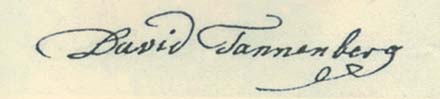
My story yesterday told of Washington's Military Hospital in the Brothers' House while today I will tell you about Mr. Tannenberg and give you a closeup view of a few of his famous organs while standing in the same Brothers' House.  The first of the two Tannenberg organs is in the west gallery of the Brother's House or what is also called the Brethren's House.  The second Tannenberg organ is in the first floor chapel and is a beautiful masterpiece of 18th century technology.  David Tannenberg, born on March 21, 1728 in Berthelsdorf, Upper Lusatia, was schooled in Moravain communities and traveled to the Moravian community in Zeist when he was 20 years old.  Shortly he made a decision to join a group of Moravians who were bound for the New World.  
This photograph shows black keyboard and four stops.
The group set out on February 20, 1749 and arrived in New York on May 12.  Wasn't long before he headed to Bethlehem, Pennsyl- vania and on July 15 of the same year was married to Anna Kern in what came to be called the "Great Wedding", 
since 27 other couples were married at the same time.  He became a joiner, which is an artisan who builds things by joining pieces of wood, and began to build homes in Bethlehem.  
This photo shows the foot pedal that can me manually
pumped to play the organ.
On August 8, 1752 he and his family moved to nearby Nazareth, PA, but returned to Bethlehem a few months later due to the possibility of attacks by the native American tribes that lived nearby.  In late 1757 David began to train with renouned organ builder Johann Gottlob Clemm who was from Germany, but moved to Pennsylvania in 1733.  In 1759 Clemm moved with the Tannenbergs back to Nazareth.  Mr. Clemm died on May 5th 1762 so Tannenberg was now on his own.  
The 1765 4 stop organ can be seen from floor level.  Part
of the second floor had to be lowered to make room for it.
He learned more about the trade from Georg Andreas Sorge who was using more modern organ building techniques and eventually David combined both the old and new techniques to make some of the best organs in the New World.  On August 16, 1765 Tannenberg moved with his family to Lititz, a Moravian Community, where he remained for the rest of his life.  
Some of the pipes can be seen from above the organ.
As Tannen- berg's fame as an organ builder spread, he needed an assistant and hired 30 year old Johann Philip Bachmann. With Bachmann's help, Tannenberg was able to build fourteen or fifteen organs in the last ten years of his life.  He died May 19th, 1804 two days after suffering a stroke while installing the organ he had built for Christ Lutheran Church in York, PA.  
A view from the second level.
His last organ was said to be his 42nd organ he had constructed.  He was buried in Lititz at the Moravian God's Acre Cemetery, but has since been moved to Prospect Hill Cemetery on North George Street in York, PA.  The organs I am photographing today are some of his earliest treasures.  My first subject is the smaller of the two organs and was originally made for the Moravian Church in Graceham, Maryland in 1793.  It was used continuously until 1957 when it was sold for $3,000 to the Lititz Moravian Church.  It is totally original, but was reconditioned in 1984 and again in 2011.  The keyboard is beautiful as is the entire pipe structure.  
The beautiful organ pipes.
The pitch of the organ is nearly one whole tone lower that modern pitch.  The organ can be manually pumped by the player using a metal foot pedal on the right side or by another person using a leather pull-strap located on the left side of the case.  I'm sorry to say I didn't have a chance to hear it.  The second Tannenberg, built in 1870, is located in the Chapel of the Brothers House.  It was moved to the Moravian Church in South Bethlehem, but returned once again to Lititz in 1910 where construction was needed to make it fit.  It stands about a half-level higher than the Chapel floor.  A majestic sight it is when entering the Chapel.  
Reverse keyboard with foot pedals and stops.
The keyboard is reversed color keys, as is the other organ.  Complete restoration took place on this organ in 1980-83.  The contrast between what appears to be mahogany and the white wood is beautiful.  It has 10 stops as well as a full foot keyboard.  I did not get to hear this organ either, but will make an effort to hear both being played in the near future.  My guide Josh gave me some of the basic facts about both which made it easier to understand the workings of both historic organs.  I left the Brother's House with the knowledge I had hoped to gain by my visit today.  It was another extraordinary day in the life of an ordinary guy.


A closer look at the keyboard.
Hand-carved finials on the top of the music rack add the extra touch to the organ.
Stops are hand-turned.
The brass tops of the organ pipes reach to the heavens.
David Tannenberg's nameplate can be found on all his organs.
     PS - A side note to my story comes from a small pamphlet that Josh handed to me as I departed the church office after my tour.  In the pamphlet it tells that the landmark church spire was also designed by David Tannenberg.  A disastrous fire in 1957, which I have written about in an earlier story, destroyed the spire and belfry which had been used by the famous Lititz Trombone Choir to announce the deaths of church members, church festivals and significant days of the church year.