It was an ordinary day. Reading about a place in the United States where there is no Wi-Fi, no cell phone signals, no microwaves and no Bluetooth devices. And, its been that way for over 60 years. The town is called Green Bank which is in West Virginia. It is a town much like most towns 100 years ago. The story about the place begins with a young girl, Charity, who is a senior at Pocahontas County High School. Yes, she has an iPhone, but she uses it as a clock and a calculator. She makes all her phone calls to friends on her home landline. She rarely texts, at least anywhere inside the town limits. Doesn't have to worry about texting and driving. She can use her family's desktop computer, but it is via a broadband connection that is so slow that it takes minutes to load a YouTube video. The town has 143 residents who have gotten used to no Wi-Fi, since it is not only unavailable, but banned.
Green Bank is also home to the Green Bank Observatory which holds the world's largest fully steerable radio telescope. The federal government established the National Radio Quiet Zone around the Observatory in 1958 which encompasses a 13,000-square mile area near the state's border with Virginia. Now, that's a lot of ground! The observatory has a telescope that could detect if your phone was in airplane mode on Saturn. And, how would anyone know that fact? Well, there is a sign outside its science center building that says so! The area might make you feel as if you were in the middle of Lancaster County's Amish territory.
Phone booths sit at the corner of many driveways and paper maps are readily available at gas stations. Green Bank has created a different type of childhood that most children who don't live there wouldn't recognize. There is no being bullied or harassed online and fewer mental health problems without social media. It is what the town calls a unique kind of modern childhood. Being in the great outdoors actually means just that to the residents of the town and they report they have discovered a newfound sense of adventure. As far as Charity is concerned, she makes plans with friends via a landline phone or in person. After school she enjoys running before she has to tend to the family's goats, chickens and ducks.
Then it's time to make dinner with her mom. When is the last time any teenager you know did all that...all in the same day? She does use the family's computer, but more as a word-processor. She even enjoys visits from her boyfriend where they can sit in the living room with her parents and talk, undistracted by technology. She even says that her parents would kill her if she was staring at her phone and not listening to them. But, in half a year she will leave home to head to West Virginia Wesleyan College. It will seem as if she's entering a different new world. Her parents have warned her about the risks of technology and hope she will adjust slowly to the new life. Perhaps she will be able to help her new friends move to a life much like she has experienced all her life. Her family has become a sort of savior to many of the families who live outside the quiet zone. The director of the Observatory, Dr. Karen O'Neil, reports that Charity's family has visitors from outside the quiet zone whose parents bring their teenagers to visit quite often due to being too stressed out from being on wireless all the time. Wow, what a novel idea! It was another extraordinary day in the life of an ordinary guy.
Friday, March 13, 2020
Thursday, March 12, 2020
The "The Wisdom Of The Written Word" Story
It was an ordinary day. Just submitted the latest 2020 yearbook to Jostens Yearbook Company for the Landis Run Intermediate School in the Manheim Township School District which is located in Lancaster County, Pennsylvania. The school was opened eight years ago and I have been responsible for the yearbook since the school opened. This year's book had a theme of "Friends" which was conveyed by using quotes about friends and friendship on the class pages which numbered close to 35 pages. One of the school's language teachers had her students search for a favorite quote about "Friendship" and submit it for publication in the yearbook. They had to document who authored the quote and include their name which were both placed next to the quote in the yearbook. Quotes couldn't be more than a certain length or the yearbook company couldn't print them. One evening while working on the yearbook, I too spent an hour or so looking up quotes from famous people. Always fun as well as inspirational to view the thoughts of some of the most famous people in the world be they living or deceased. Check out the following quotes which I have documented with whom spoke or wrote the quote. Perhaps you will find one or a few that have meaning for you. It was another extraordinary day in the life of an ordinary guy.
The only thing more dangerous than ignorance is arrogance. Albert Einstein
We are all born ignorant, but one must work hard to remain stupid. Benjamin Franklin
I hear and I forget. I see and I remember. I do and I understand. Confucius
Don't cry because it's over. Smile because it happened! Dr. Seuss
There's nothing sadder in this world than to awake Christmas morning and not be a child. Erma Bombek
Many people will walk in and out of your life, but only true friends will leave footprints in your heart. Eleanor Roosevelt
I like you just the way you are. Fred Rogers
It's frightful that people who are so ignorant should have so much influence.
George Orwell
The only thing worse than being blind is having sight but no vision. Helen Keller
When people are intimidated about having their own opinions, oppression is at hand. Jimmy Carter
Kindness is the language which the deaf can hear and the blind can see. Mark Twain
Education is the most powerful weapon which you can use to change the world.
Nelson Mandela
The greatest discovery of all time is that a person can change his future by merely changing his attitude. Oprah Winfrey
A wise man speaks because he has something to say; a fool because he has to say something. Plato
Let us not take ourselves too seriously. None of us has a monopoly on wisdom.
Queen Elizabeth II
A friend is a person who goes around saying nice things about you behind your back.
Ralph Waldo Emerson
As individual fingers we can easily be broken, but all together we make a mighty fist.
Sitting Bull
When tyranny becomes law, rebellion becomes duty. Thomas Jefferson
Doing little things well is a step toward doing big things better. Vincent Van Gogh
The trouble with practical jokes is that very often they get elected. Will Rogers
I have often repented speaking, but never of holding my tongue. Xenocrates
Your preciousness lies in your essence; it cannot be lost by anything that happens. Zhuangzi
Tell me, and then again show me, so I can know. Zora Neale Hurston
A friend knows the song in my heart and sings it to me when my memory fails.
Donna Roberts
The only thing more dangerous than ignorance is arrogance. Albert Einstein
We are all born ignorant, but one must work hard to remain stupid. Benjamin Franklin
I hear and I forget. I see and I remember. I do and I understand. Confucius
Don't cry because it's over. Smile because it happened! Dr. Seuss
There's nothing sadder in this world than to awake Christmas morning and not be a child. Erma Bombek
Many people will walk in and out of your life, but only true friends will leave footprints in your heart. Eleanor Roosevelt
I like you just the way you are. Fred Rogers
It's frightful that people who are so ignorant should have so much influence.
George Orwell
The only thing worse than being blind is having sight but no vision. Helen Keller
When people are intimidated about having their own opinions, oppression is at hand. Jimmy Carter
Kindness is the language which the deaf can hear and the blind can see. Mark Twain
Education is the most powerful weapon which you can use to change the world.
Nelson Mandela
The greatest discovery of all time is that a person can change his future by merely changing his attitude. Oprah Winfrey
A wise man speaks because he has something to say; a fool because he has to say something. Plato
Let us not take ourselves too seriously. None of us has a monopoly on wisdom.
Queen Elizabeth II
A friend is a person who goes around saying nice things about you behind your back.
Ralph Waldo Emerson
As individual fingers we can easily be broken, but all together we make a mighty fist.
Sitting Bull
When tyranny becomes law, rebellion becomes duty. Thomas Jefferson
Doing little things well is a step toward doing big things better. Vincent Van Gogh
The trouble with practical jokes is that very often they get elected. Will Rogers
I have often repented speaking, but never of holding my tongue. Xenocrates
Your preciousness lies in your essence; it cannot be lost by anything that happens. Zhuangzi
Tell me, and then again show me, so I can know. Zora Neale Hurston
A friend knows the song in my heart and sings it to me when my memory fails.
Donna Roberts
Wednesday, March 11, 2020
The "In Memory Of Dr. John D. Eshleman" Story
It was an ordinary day. Reading a popular poem from the late nineteenth century by the Victorian era English poet and author William Ernest Henley titled "Invictus". The word is Latin for "unconquered" and the speaker in the poem proclaims his strength in the face of adversity. The poem was written in 1875 and published in 1888 in his first volume of poems, Book of Verses, in the section Life and Death (Echoes). Now, the reason why I became interested in this particular poem was the fact that I saw it as part of an obituary in the Lancaster Newspaper this morning. It was the ending of an obituary for a very well respected doctor in Lancaster, Pennsylvania, Doctor John D. Eshleman. After reading the poem and learning about the author, I began to understand why it was the final part of the Doctor's obituary. William Ernest Henley was born in Gloucester in 1849 and was the oldest of six children to Mary and Joseph Henley. At the age of 12 he suffered from tuberculosis of the bone that caused an amputation of his left leg below the knee. His early life was punctuated by periods of extreme pain. The one-legged Henley was the inspiration for Rober Louis Stevenson's character Long John Silver. Being that the poem was part of the Life and Death section of Henley's first volume of poems, it was a perfect choice to end the obituary of Lancaster's well-respected Doctor. Just before the poem by Henley in the obituary was a note that read: In place of flowers or condolences, the family adds that you please consider paying it forward by doing something kind for someone else. Then the following ended the stirring obituary:
"Invictus"
By William Ernest Henley
Out of the night that covers me,
Black as the pit from pole to pole,
I thank whatever gods may be
For my unconquering soul.
In the fell clutch of circumstance,
I have not winced nor cried aloud.
Under the bludgeoning of chance
My head is bloody, but unbowed.
Beyond this place of wrath and tears
Looms but the Horror of the shade,
And yet the menace of the years
Finds, and shall find me, unafraid.
It matters not how strait the gate,
How charged with punishments the scroll,
I am the master of my fate,
I am the captain of my soul.
![]() |
| William Ernest Henley |
It was another extraordinary day in the life of an ordinary guy.
Tuesday, March 10, 2020
The "Recreating The Illusion Of Depth" Story
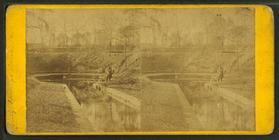
It was an ordinary day. Looking at a photograph of one of my favorite pieces of photographic history; the stereoscope. Years ago I had a very sizable collection of photographic pieces and the stereoscope was one of those. Stereoscopic photography recreates the illusion of depth by utilizing the binocularity of human vision. Because our two eyes are set apart, each eye sees the world from a slightly different angle.
Our brains combine these two different eye-images into one, a pheno- menon that enables us to "see" ever so slightly, around the sides of objects, providing spatial depth and dimension. Stereoscopic views consist of two nearly twin photographs, one for the left eye, one for the right eye. Viewing the side-by-side images through a special lens arrangement called a stereoscope helps our brains combine the two flat images and "see" the illusion of objects in spatial depth. Photographers around the world produced millions of stereoscopic views between 1850 and 1930. The main reason for the over abundance of views was the fact that Queen Victoria and Prince Albert received the gift of a stereoscopic viewer at the Crystal Palace exhibition in 1851. Wasn't long before American jurist Oliver Wendell Holmes called for the establishment of "special stenographic collections just as we have professional and other libraries." Most everyone bought a stereoscope and began to take photos. Local history, current events, portraitures, architecture, disasters and even war were documented. By the 1890s leading publishers such as Underwood & Underwood as well as the Keystone Company produced topical and documentary series covering landscape, travel and the growth of cities. One of the most prolific photographers of stereoscopic images was Robert N. Dennis who lived between 1900 and 1983. In 1939 he had an exhibit in New York City for the 100th Anniversary of photography's discovery that featured stereographs from his collection. Then, New York Public Librarian Sylvester Vigilante, suggested the Library purchase Mr. Dennis' entire collection, which they did. With the $5,000 Mr. Dennis bought his wife a fur coat and moved from Brooklyn to the northern suburb of Pelham. Today, if you happen to see a stereoscope photograph, turn it over and see if "Robert Dennis Collection/N.Y.P.L. might be on it. As I read more about Mr. Dennis, I found a sizable amount of his stereoscope images online of my hometown of Lancaster, Pennsylvania. If you ever visit a flea market or antique store, check out the photo stands and see if they might have any stereoscopic prints. Examine the rear to see if they might have been made by Mr. Robert Dennis. May want to purchase one to say you have a part of photographic history. And, if you can find a stereoscope, place it in the holder and check out the 3D image that results. One of my regrets of selling my entire photographic collection was getting rid of my stereoscope and the dozen or so steroscopic photos I had. None where from the famous Mr. Robert Dennis, but they were still interesting to view in the stereoscopic unit. It was another extraordinary day in the life of an ordinary
![]() |
| Conestoga River at 2nd Lock - Click on images to enlarge them. |
![]() |
| Conestoga River at 1st Lock |
![]() |
| East King Street on Market Day |
![]() |
| Fulton Hall aka Fulton Opera House |
![]() |
| Lancaster Crematorium |
![]() |
| Liiden Hall School for Girls |
![]() |
| Lititz Springs Park |
![]() |
| North Queen Street |
![]() |
| Lancaster's Penn Square |
![]() |
| Presbyterian Church |
![]() |
| Lancaster County Prison |
![]() |
| Railroad tracks south of Lancaster |
![]() |
| Houses of West Lancaster |
![]() |
| Woodward Cemetery |
Monday, March 9, 2020
The "We Will Survive - Won't We?" Story
It was an ordinary day. Just opened the front door to accept a package from the Postal Service. Ordered a box of exterior light bulbs a day ago for the outdoor lights we have on our back deck. Opened the box to make sure they were what I really wanted and across the interior box read: "Made In China". Carefully opened it, examined the bulbs, placed one in the string of lights outside our rear door and washed my hands. The final step I just listed was my wife's idea, since we had no idea if someone may have touched the bulbs or box and then came down with the Coronavirus.
Are we being too careful? Are we paranoid? I DON'T KNOW!! Every day we hear more and more about how many people in each state of the United States has contracted the disease which at times can kill you; especially those older citizens which would include both my wife and I. We're still struggling with going on or canceling our upcoming vacation to St. Martin, since we aren't sure how reliable hospital care might be on the island if we would need it. But...haven't we gone through this a few other times in our life? We have lived through the AIDs epidemic, the EBOLA epidemic, the Influenza scare and a variety of other medical problems in our life. We've been lucky so far, so why worry now? Don't we have some resistance to the current virus after all these years of living? We've lived through quite a few quarantines in our lifetime as have many others have. If a quarantine is issued by the airline or by the island of St. Martin, that is something we have no control over and would naturally have to stay put in Lancaster. But, exactly what is a quarantine and for how long does it usually last? There are two listings under the word in the dictionary. One is the enforced isolation of patients suffering from a contagious disease in order to prevent the spread of disease while the other is isolation to prevent the spread of infectious disease. The word is primarily a verb, but can be called a noun in rare circumstances. The noun usage is what Carol and I have to worry about in reference to our trip. As I press the keys on my MacBook Air, a quarantine (noun) has just been announced for all of Northern Italy due to the Coronavirus. President Trump doesn't believe the Coronavirus is anything we who live in the United States have to worry about, just as President Wilson did when the Spanish Flu arrived in 1918 and infected an estimated 500 million people worldwide - about one-third of the planet's population, and killed an estimated 20 million to 50 million victims, including some 675,000 Americans. Yesterday morning's newspaper highlighted books about pandemics of the past such as (1) MALARIA - "The Fever": How Malaria Has Ruled Humankind for 500,000 Years" by Sonia Shah, (2) SMALLPOX - "Pox Americana: The Great Smallpox Epidemic of 1775-82" by Elizabeth A. Fenn, (3) THE PLAGUE - "A Distant Mirror: The Calamitous 14th Century" by Barbara Tuchman, (4) INFLUENZA - "Flu - The Story Of The Great Pandemic of 1918 and the Search for the Virus That Caused It" by Gina Kolata, (5) EBOLA - "The Hot Zone: The Terrifying True Story of The Origins of the Ebola Virus" by Richard Preston, (6) CHOLERA - "The Ghost Map: The Story Of London's Most Terrifying Epidemic - and How It Changed Science, Cities, and The Modern World" by Steven Johnson, (7) AIDS - "And the Band Played On: Politics, People, and the AIDS Epidemic" by Randy Shilts. All these book about previous pandemics offer context, history and scientific information about the spread of disease. Our country needs someone who has perhaps read all, or most of, these books and can use the knowledge they have gained from their reading to help lead our country out of any crisis, but I believe that's not going to happen anytime soon! Im afraid I will miss my vacation this time around and hope that at least I can survive to give it another try in the future. It was another extraordinary day in the life of an ordinary guy.
Sunday, March 8, 2020
The "Slavery Through USA History: Part II - U.S. Senator Hiram Rhodes Revels!"
It was an ordinary day. Reading the story of Hiram Rhodes Revels, the first African-American member of the U.S. Congress. It was 150 years ago that Democratic senators attempted to block his appointment to the Senate by Mississippi Republicans. Oh, how times have changed!
At the time of his appoint- ment, members of the state legislature selected senators instead of by popular vote. Mr. Revels had served as an alderman in Natchez, Mississippi after tours of duty as a minister, teacher and chaplain for the Union Army. As expected, he was met by protests from the minority Democrats. The New York Times reported that the galleries were packed when quarreling erupted in the chamber as to whether to allow a black senator to be admitted into the body. Racist language could be heard amongst the outcries of the Democrats. It seems that many argued that he wasn't a U.S. citizen long enough to be in the Senate. Democratic senators argued that the Civil Rights Act of 1866 had given the Mississippi alderman only four years of citizenship, even though he had been born a free man in 1827. Republicans disagreed and said that the Senate ought to vote Mr. Revels in and begin a new age of representation from African Americans. On February 25, the vote was taken and Hiram Rhodes Revels became the first African-American member of the United States Congress! The vote wasn't even close at 48 yays to 8 nays. But, the name calling he had to endure during the two days of protest would have been more than enough to make one throw up their hands and claim defeat, but not Mr. Revels. He took his oath, took his seat and the Senate adjourned for the weekend. A welcome respite. Two Mississippi Senate seats had been filled that session with the other going to Jefferson Davis, the president of the Confederacy during the Civil War! Harper's Weekly ran a political cartoon that featured Davis as Iago, the traitorous villain of Shakespeare's Othello, looking on at Revels taking nthis place in the chamber: "For that I do suspect the lusty moor hath leap'd into my seat: the thought whereof doth like a poisonous mineral gnaw my inwards."
But, Senator Revels only served for about a year, with his term ending on February 8, 1871. He did get to sit on a Committee that heard arguments over a clause that would have desegregated Washington D.C. schools. He addressed the committee arguing against an amendment to strike the clause, saying that if the Nation encourages this prejudice against the colored race, can they have any hope that Heaven will smile upon them? He spoke of the oppression that African Americans all over the country had to withstand in housing, church, transportation and education. He pleaded his fellow Senators to consider how desegregated schools could help empower African Americans "without one hair upon the head of any white man being harmed." He lost the vote! It wasn't until 1954 that segregation was outlawed. Hiram Rhodes Revels was the first of a small group of southern black congressmen during the Reconstruction Era. A few years after Revels served, Blanche Bruce, another African American, was elected to the Mississippi Senate, but Mississippi hasn't elected an African American U.S. Senator since. Only ten have served in the history of the country as of today. Will it ever change? It was another extraordinary day in the life of an ordinary guy.
![]() |
| U.S. Senator Hiram Rhodes Revels |
![]() |
| Harper's Weekly cartoon. |
Saturday, March 7, 2020
The "Slavery Through USA History: Part I - Pres. Washington Was A Slave Owner!"
It was an ordinary day. Reading an article written by Professor Benjamin Railton about our nation's painful past. He tends to believe that to understand our current national climate, we should understand out nation's past, both good and bad. A few months ago the New York Times Magazine's 1619 Project examined the consequences of slavery in the United States. This study brought about another study titled the Woodson Center's 1776 Project which is a collaboration between a number of African-American journalists, entrepreneurs and academics. The latest project is to offer alternative perspectives that celebrate the progress America has made on its promise to deliver equality and opportunity for all. The 1776 Project strives to distinguish between criticisms of America's past and celebrations of its promise. One striking illustration of the defining interconnection between slavery and America's origins is our nation's founding father George Washington's choice to have slaves during his Presidency. You did know that General George Washington had slaves (plural), didn't you! Washington was inaugurated and began serving his first term in our nation's capital of Philadelphia, Pennsylvania in 1789. The capital would remain in Pennsylvania until ten years later when it was moved to its present location. As far as slavery at the time, Pennsylvania was distinct from the rest of the nation, having passed the 1780 Act for the Gradual Abolition of Slavery, a law which, along with a 1788 Amendment, made it illegal for a non-resident slave-owner to hold slaves for longer than six months after which time they would become free. So, what did Washington do about his slaves? He argued that he should not be subject to that law; but fearing that his slaves would nonetheless be freed, he devised a plan to rotate all slaves back to Virginia just before they reached that six-month time period. That way he could keep them enslaved. But, one of those African slaves, one Miss Betty Only "Ona" Judge Staines, decided she wasn't going to cooperate since she wanted to be free. Her story was published in a book titled "Never Caught: The Washingtons' Relentless Pursuit of Their Runaway Slave, Ona Judge. Story goes something like this:
As a group of slaves were packing to head back to Virginia, Ona realized that if she went back she would never get her liberty. After she escaped, President Washington devoted considerable time and resources in trying to find his "property." Ona even made an offer through an intermediary that she would return if she were promised freedom upon Washington's death. No way would Washington go for that! She remained a fugitive for the rest of her life. Her quest for freedom reflects how thoroughly intertwined slavery and America were at the time. But, her quest for freedom and liberty personifies America's revolutionary and founding ideals does it not? Wasn't she endowed by her Creator with certain unalienable Rights such as "Life, Liberty and the Pursuit of Happiness."
This does sound familiar, doesn't it? Her patriotic act of escaping tyranny is what our country was founded upon, is it not? Another such slave was Crispus Attucks. In my city of Lancaster, Pennsylvania we have an assembly area named after him. He gained recognition and perhaps fame when he was shot and killed at the March 5, 1770 event that came to be known as the Boston Massacre. He is often described as "the first casualty of the American Revolution." A few days ago marked the 250th Anniversary of that Massacre and it is only right that we remember this fugitive slave on this day in history. He too ran away from slavery at the age of 27 when's master, William Brown, placed an advertisement in the newspaper seeking his return. He became a sailor as well as a rope maker in Boston's seaport. Both these black heroes shared the same passion to be free and did their best to attain that wish. Can you blame then? It was another extraordinary day in the life of an ordinary guy.
![]() |
| Ona Judge |
![]() |
| Crispus Attucks |
Friday, March 6, 2020
The "And Yet Another Generation Of Baseball Player" Story
![]() |
| The new Hempfield Knight with his mom. |
Thursday, March 5, 2020
The "St. Maarten's Holocaust Surviror - Lionel Romney (1912-2004)" Story
It was an ordinary day. Perusing one of my many favorite Facebook pages known as "WE ARE ST. MAARTEN ST.MARTIN". It is a site that is frequented by many who live on the island known as St. Martin/Sint Maarten. The St. Martin side of the island is French while the Sint Maarten side of the island in Dutch. The Administrator of the site is good friend Barbara Cannegieter and I enjoy the many old postcards she posts from time to time. A few days ago I came upon a posting on the site by Alita H. Singh who is listed as the Moderator. Extremely interesting story titled St. Maarten's Holocaust Survivor - Lionel Romney (1912-2004). It tells of International Holocaust Remembrance Day being an International Memorial Day and being on January 27. The day is to remember the tragedy of the Holocaust that occurred during World War II. It commemorates the genocide that resulted in the deaths of 6 million Jews and 11 million others by the Nazi regime and its collaborators. Many of those killed or indelibly marked by this atrocity were many people of Caribbean descent, Free Masons, Seventh Day Adventists, LGBTQ and many more. St. Maartener Lionel Romney was a survivor of the concentration camp Mauthausen. He kept silent on his experiences for over 40 years. Lionel's daughter, Mary Romney-Schaab, a professor with multiple degrees finally decided to write about her father's experience. What follows is the word for word story that was published on Facebook that tells the horror of war and the aftermath of those that suffered through it. I contacted Barbara and asked if I may post it and she said as long as I give credit for what has been written I could do so. Following is the story written by Mary Romney-Schabb and posted online by Alita H. Singh. I would like to thank both for the amazing, yet tearful story, about a survivor of the Holocaust. I should also say that Mary Romney-Schaab is finalizing her own book about her father's experiences during WWII. The book is titled: "An African Caribbean in the NAZI Era-From Papiamentu to German". If and when I hear of it's publication, I will post a note on my blog. PS -The 34 Comments from friends, relatives and readers of this Facebook page gave praise and Thank-You to Alita for posting it. I, too, want to thank her. This has been copied and pasted below. I did sort it into paragraph form with an indentation for easier reading. It was another extraordinary day in the life of an ordinary guy. Read on...
Lionel’s ship hit a mine and sank on June 17, 1940, between Sicily and Tunisia. The crew was rescued by the Italian Navy and taken prisoner. The Italian Prisoner of War (P.O.W.) camps were humane, and the prisoners there were relatively well-treated. Through 1940 until 1944, Lionel was held in various Italian P.O.W. camps, but as the allied front advanced northward through Italy, the Germans and the Italians were in retreat. That is when the Germans came and took the prisoners to relocate them so they wouldn’t be freed and perhaps join the Allied Forces. Lionel and the others were loaded into trains bound for concentration camps. He knew this was bad and said, “We goin’ to hell, now.”
The camp Lionel was deported to was called Mauthausen, and it was located in Austria. There were labour camps, death camps, prison camps, but Mauthausen was the only camp that was officially designated as a “Death through Work Camp.” In other words, it was the only one that was designed to work the prisoners to death. The work they were to do was mining a quarry, cutting and carrying large blocks of granite.
Lionel grew up on St. Maarten and some of his relatives are here still, siblings, cousins, nieces and nephews. He knew Emilio Wilson and others of that generation. When he migrated to Curaçao, Aruba and Venezuela to work in the refineries, he was still quite a young man. By his mid-twenties he began to work as a Merchant Marine, sending money back home all the while.
In June 1940, he was boarding a Greek ship loaded with coal in Cardiff, Wales. Lionel was 28 at the time, and the decision to sign on to this particular ship turned out to be pivotal – it put him on a path to near destruction. The merchant sailors were careful in those war-torn years (1939-1945) to avoid getting in the middle of the conflicts at sea. So when the chance to board a ship headed for Argentina came along, they were happy to sail far away from European waters. But the captain and/or ship owners deceived the crew and instead of heading to South America, they sailed right into the Mediterranean Sea. Greece, it seems, not Argentina, was the destination for their cargo.
Lionel’s ship hit a mine and sank on June 17, 1940, between Sicily and Tunisia. The crew was rescued by the Italian Navy and taken prisoner. The Italian Prisoner of War (P.O.W.) camps were humane, and the prisoners there were relatively well-treated. Through 1940 until 1944, Lionel was held in various Italian P.O.W. camps, but as the allied front advanced northward through Italy, the Germans and the Italians were in retreat. That is when the Germans came and took the prisoners to relocate them so they wouldn’t be freed and perhaps join the Allied Forces. Lionel and the others were loaded into trains bound for concentration camps. He knew this was bad and said, “We goin’ to hell, now.”
The camp Lionel was deported to was called Mauthausen, and it was located in Austria. There were labour camps, death camps, prison camps, but Mauthausen was the only camp that was officially designated as a “Death through Work Camp.” In other words, it was the only one that was designed to work the prisoners to death. The work they were to do was mining a quarry, cutting and carrying large blocks of granite.
The able-bodied were forced to carry stone blocks each weighing 50 kilos (110 pounds) on their backs, up a stairway of 186 steps. This was known as the Stairway of Death and is rather famous in Holocaust history. Many people died there, simply through torture or starvation. Records show that between 100,000 and 195,000 people were put to death at Mauthausen through such cruel labour along with malnourishment. Others perhaps were too weak to work and were exterminated upon arrival. Those records are not as clear.
Why did the Nazis need the Mauthausen stone? Ironically, it comes down to geography and vanity – Hitler’s vanity. Mauthausen, Austria, sits on top of a deposit of very beautiful, light-coloured granite, and Hitler was born in the nearby city of Linz. He wanted to create, at his birthplace, a new capital of Europe – a beautiful city of granite in his own honour after, of course, he conquered the entire continent. Towards this end, Lionel and the other prisoners were forced to work until they died. If they needed added motivation, the captives were forced over the edge of the cliff above the quarry – falling 50 metres to their deaths. Sometimes they jumped of their own accord, unable to carry on. Other times the prison guards coerced them to push each other over the edge. This was known as “parachute jumping” in the Nazi literature; it was a tactic they used to demoralize the prisoners.
Lionel Romney was at Mauthausen Concentration Camp from June 1944 until May 1945 when the camp was liberated by Americans troops. How did he manage to survive those eleven months when so many others did not? That is an open question, but certainly many factors came into play.
He had a lot of languages, and he was a very fast learner. He may have been allowed to survive because he could communicate between the Germans and the other prisoners. English was his first language and of course he had Dutch and Papiamentu. He could understand German and learned to speak it because those languages are so similar, but he also had Spanish, and so in Italy, he could follow that because it’s all so similar. He was assigned to work, not in the quarry itself, but as a lumberjack, and that was a bit of luck, but it might also have been due to his language skills. While he was cold working in the forest, he wasn’t pushed beyond his limits.
There is also a mention in a report that Romney may have received extra food as a lumberjack. This information comes from an American Navy pilot who had been shot down over Austria and interned at Mauthausen, Lt. Jack Taylor. His 30-page testimony is very well known in WWII history, and it’s from that testimony that Lionel Romney’s presence at Mauthausen is documented, although, through Taylor, quite some misinformation about him was entrenched into the record. Taylor recalled meeting Romney, but referred to him as an American, although of course at that time he was Dutch. He also reported that no one knew what became of Romney, which in those days was almost a code phrase for “he probably died.” This same information has been repeated in books and on the U.S. Holocaust Memorial Museum website. In the book "Hitler’s Black Victims", by Dr. Clarence Lusane (available at the Philipsburg library) there is about a half paragraph about Lionel Romney which ends with: “It is unknown whether Romney survived.”
Romney didn’t die, though; he lived and was liberated in 1945. He went to the Netherlands and then emigrated to the U.S. He had an aunt in New York that helped him get back on his feet and he stayed there for the rest of his life. He met and married Mary’s mother and, in the 80s, he was naturalized, becoming a U.S. citizen. He worked for decades as a maintenance worker for a building in the garment district of New York City. He worked there with a gentleman that had been in Auschwitz Concentration Camp, and perhaps there were some conversations there – but the details of that we’ll never know.
Wednesday, March 4, 2020
The "Wednesday With The Saints: Revisited" Story
It was an ordinary day. Reading an online newsletter sent to parishioners of St. James Episcopal Church in Lancaster, Pennsylvania. One of my favorite entries is called "Wednesday with the Saints." Small stories told each week about a saint, be they well-known or never heard of before, which highlights the life, and at times the death, of a particular saint that may be related to a specific church season. The latest edition of "Wednesday with the Saints" gives thanks for lay catechists and martyrs Agnes Tsao You Sing, Agatha Lin Zhao and Lucy Yi Zhenmei. These three were martyred in China in the mid-nineteenth century for refusing to renounce the christian faith. The three women were raised within Chinese Christian families and saw no conflict between their identity as Christians and their identity as Chinese women. Others thought differently! The following are my brief synopsis of each woman.
Agnes Tsao Kou Ying: She was born in the small village of Wujiazhai in Guizhou Province in 1821. She was orphaned at a young age and had to work to support herself. She married at 18, but her in-laws treated her poorly due to her Christian faith. Her husband died after two years of marriage and she took shelter with an elderly Christian widow who taught her more about Christianity. In 1852 missionary priest Fr. Auguste Chapdelaine heard of her education in the scriptures and Christian doctrine and invited her to accompany him to the province of Guangxi to catechize women and children. Within four years they were arrested and tortured to death. Agnes died a martyr on January 22nd, 1856.
Agatha Lin Zhao: She was born in 1817 and was the only cild of Christian parents. Her parents arranged a marriage for her, but at the age of 18 she asked to be released from the betrothal so she could dedicate herself to work in the church as a single laywoman. Her parent's family line would be broken due to this request, but they agreed to her wish. She earned a university degree and then returned to her home to run a school for girls. In 1857 she was arrested for teaching her Christian beliefs, but claimed she had been preparing the girls to be good wives. When she refused to renounce her Christian faith, she was executed on January 28th, 1858.
Lucy Yi Zhenmei: She was born to a Catholic family in Suchuan, China on December 9, 1815. Keenly interested in theological and historical studies, she began university studies, but her health and family circumstances did't permit her to continue. When her father died she lived at home with her mother and brother and worked to support her family. She also assisted in the parish by teaching at the local school and by catechizing women and children. She did all this for free, feeling the need to give something back to her church. In 1862 she accompanied Father Wen Nair to open a new Christian mission, but this was poorly welcomed by the local authorities. Father Wen Nair and Lucy, along with three others, were arrested and sentenced to death without a formal trial. Lucy was executed by beheading on February 19, 1862.
Horrible deaths of all three just because they were Christians. And, after reading, do you believe this could still happen today? It was another extraordinary day in the life of an ordinary guy.
![]() |
| The death of Agnes Tsao Kou Ying |
Agatha Lin Zhao: She was born in 1817 and was the only cild of Christian parents. Her parents arranged a marriage for her, but at the age of 18 she asked to be released from the betrothal so she could dedicate herself to work in the church as a single laywoman. Her parent's family line would be broken due to this request, but they agreed to her wish. She earned a university degree and then returned to her home to run a school for girls. In 1857 she was arrested for teaching her Christian beliefs, but claimed she had been preparing the girls to be good wives. When she refused to renounce her Christian faith, she was executed on January 28th, 1858.
Lucy Yi Zhenmei: She was born to a Catholic family in Suchuan, China on December 9, 1815. Keenly interested in theological and historical studies, she began university studies, but her health and family circumstances did't permit her to continue. When her father died she lived at home with her mother and brother and worked to support her family. She also assisted in the parish by teaching at the local school and by catechizing women and children. She did all this for free, feeling the need to give something back to her church. In 1862 she accompanied Father Wen Nair to open a new Christian mission, but this was poorly welcomed by the local authorities. Father Wen Nair and Lucy, along with three others, were arrested and sentenced to death without a formal trial. Lucy was executed by beheading on February 19, 1862.
Horrible deaths of all three just because they were Christians. And, after reading, do you believe this could still happen today? It was another extraordinary day in the life of an ordinary guy.
Tuesday, March 3, 2020
The "Everyone Stand Up And Be Counted" Story
It was an ordinary day. Waiting for my Census form to arrive in the mail. In the United States of America, the U.S. Constitution mandates that the country conduct a count of its population every 10 years. The results determine the number of seats each state will have in the U.S. House of Representatives and are used to draw congressional and state legislative districts. The other part of our Congress, The Senate, has each state receiving two Senators no matter the size of the state. The Census asks nine questions such as information as to how many people are living or staying at a particular residence and whether the home is owned of rented. The Census also asked the age, sex and race of each person in the home. All answers can be given in either English or Spanish. The mailing of the Census forms will take place soon and I should have it no later than April 1, which is known as Census Day. If I care to respond this year by phone or online, I may do that instead of mailing the form.
Some residents of the United States may receive a visit from a Census taker. If they are a college student living on campus or if they may be a senior living in a retirement community, they may be visited by a census taker. If they do not speak English, another visitor will return who speaks Spanish. Now, suppose you receive a Census form in the mail and shortly after someone comes knocking on your door. What should you do? The person at the door must provide you with identification of whom they are and what they are doing. But, suppose you haven't read about the Census in the newspaper or heard about the Census on TV or online, then what do you do? Should you trust the person at the door? If I get my form in the mail, I will certainly not give any information to someone at my front door. In my home town of Lancaster, Pennsylvania, committees have been established to make sure everyone is counted. In Lancaster we have a few sub-groups such as the Amish and other Plain sects, immigrants, refugees and low income residents whom may not have a home address. The committees will handle those people. I also read that there are full and part-time jobs available for people to help take the Census. They pay between $16.50 to $20 an hour. Wow, not bad! The very first Census was taken in 1790. This year's Census will be used to support community initiatives involving legislation, the quality of life and consumer advocacy. Decisions on building factories, offices and stores will also be based on the Census. I can promise you that Lancaster doesn't need anymore stores than it already has, being that there are many empty ones already. Public safety and emergency services could be affected by the Census as well as home construction and revitalization of old neighborhoods. And what happens if you are not counted? I have no idea! Someone certainly will slip through the Census, but perhaps they prefer it that way. It was another extraordinary day in the life of an ordinary guy.
Monday, March 2, 2020
The "To Go...Or Not To Go? That Is The Question" Story
It was an ordinary day. Sitting in my lounge chair reading the morning newspaper when I said to my wife who was sitting nearby, "Listen to this! The airlines are beginning to issue statements as to how they will handle flight reservations due to the coronavirus. One of the airlines listed in the article I just read was American. They already suspended flights to China, South Korea and Italy, but will not charge anyone who needs to change flights or delay travel due to the coronavirus." Now, that may make it easier for us if we find that our flight to Sint Maarten may be canceled due to Sint Maarten not allowing flights from the United States to land at their airport to try and help prevent the spread of the virus to their country. We made arrangements about a year ago to return in the spring to our favorite destination in the Caribbean, but have now become concerned about our chances of missing our trip this spring. Seems that a few other airlines are following the same procedures that American is taking. But, for Carol and I, the flight is just one part of our problem. I called our travel agent who helped us plan our flight and asked about the insurance we purchased when we bought our flight tickets. She checked with the company and told us that the airlines had reported to them that they would transfer flights or allow us to change our reservation to another time without a penalty. If not, they would cover the cost as part of the policy we purchased. The final part of our problem is the rental on St. Martin that we made a partial payment on about a year ago. So, I emailed the travel agent whom we have dealt with for the past 20 years and has helped us change our reservations in the past without any charge. I explained our problem to her and she in turn told us that it is too early to worry about anything yet. She is an optimist to say the least. But, she is also a very caring person and has done so much for us in the past from changing our location when she found the owners of the rental we were scheduled to stay in decided they wanted the couple of weeks we had planned on staying there. She got us a very nice place with a better location for the same price we had planned to pay for the first location. Also found my car key fob in the safe of the rental we stayed in last year and mailed it to me free of charge. You can't ask for a better agent! But, this coronavirus has us worried, no matter what others may say about it. Do we really want to visit a location 1,500 miles away that may have a number of infected people? Are their medical facilities capable of handling a large number of infected residents and visitors? Would Carol and I, being just visitors to their home, be treated as they would their own residents if we became ill? Today's paper did say that the this virus, much like many others, does not survive in warm climates and I must admit, the island is warm year round. Could it not last long on the island had it surfaced at all? Have you noticed all the question marks I have been using? We will hate to miss our trip to our favorite location, but should we take the chance the virus creates for us? We just don't know. I guess it will be a waiting game and at least we know we will not lose any money because of those who we have worked with for many years. I guess it could be like committing suicide to take the chance not knowing the answers to many of our questions. So, we will play the waiting game, hoping that all will be well, but knowing the chances of that happening are rather slim. It was another extraoridary day in the life of an ordinary guy.
Sunday, March 1, 2020
The "Someone Is Still Hiding Something! What Is It?" Story
![]() |
| Jonathan Luna |
![]() |
| Hard working lawyer. |
![]() |
| The crime scene in Lancaster County, PA |
![]() |
| Jonathan Luna's gravestone. |
PS - The LNP Newspaper updated the story a few days ago by saying the District Attorney had 20 days to make its case or the records would be made public. The newspaper wanted the records made public so they can put the story in the newspaper in hopes of selling more papers and possibly solving the case while the DA wanted the records private so it doesn't hinder the investigation into the 2003 murder. After 17 years of no action, does the DA really think the case could be hindered? It is now a known fact that the Coroner's files are in the Lancaster County Courthouse basement. Why can't we know what is in them? And, how did Jonathan Luna really die? Someone is still hiding something! What is it?
PPS - Two days ago the local judge ruled the files would remain sealed. What's next? Someone is still hiding something! What is it?
Subscribe to:
Posts (Atom)