Extraordinary Stories

1944 (1) Act of kindness (12) Acting (2) Adoption (4) Adventure (766) Advertisement (6) Africa (1) Aging (14) Agriculture (47) Airplanes (9) Alphabet (5) American Red Cross (1) Americana (116) Amish (43) Ancestry (5) Ancesty (2) Animals (43) Anniversary (4) Antigua (10) Antiques (14) Apron (1) architcture (1) Architecture (36) Art (175) Art? (8) Arts and Crafts (69) Athletics (6) Automobiles (40) Awards (7) Banking (2) Barn raising (2) Baseball (103) Basketball (3) Batik (1) Beaches (89) Becoming A Citizen (1) Bed & Breakfast (2) Bee Keeping (6) Beer & Breweries (2) Bikes (3) Birds (9) Birthdays (34) Blindness (1) Blogging (5) Bookbinding (5) Books (12) Boxing (2) Brother Steve (12) Buisiness (3) Business (5) Canals (1) Cancer (14) Candy (30) Caribbean Islands (9) Caribbean Villas (15) Cats (5) Caves (1) Census (1) Chesapeake Bay (61) Children (28) Chocolate (4) Christmas (57) Church Adventures (122) Cigars (1) Circus (3) Civil Rights (8) Civil War (6) Classic Cars (7) Climate Change (5) Clubs (1) Coin club (2) Coins (1) Collections (73) Comedy (3) Comic Books (5) Commercials (1) Comnservation (2) Conservation (41) Covered Bridges (3) Craftsmanship (12) Creamsicle the Cat (11) Crime (16) Crisis (312) Cruise Travel (6) Crying (1) Culture (4) Dancing (1) Danger (16) Daughter Brynn (58) Daughter-In-Law Barb (7) Death (5) Death and Dying (65) Destruction (2) Donuts (1) Downsizing (2) Dunking (5) Easter (3) Eavesdropping (1) Education (48) Energy (15) Entertainment (165) Entrepreneurial (62) Ephrata (1) Etchings (1) Eternal Life (4) Facebook (5) Factories (4) Fads (6) Family (261) Farming (37) Father (42) Father Time (68) Favorites (88) Firefighting (1) Flora and Fauna (28) Fond Memories (490) Food and Cooking (171) Food and Drink (111) Football (16) Forgetfullness (3) Former Students (10) Framing (30) Friends (359) Fruits and Vegetables (3) Fun (4) Fundraiser (6) Furniture (1) Games (7) Generations (3) Gifts (1) Gingerbread houses (1) Giving (8) Globes (1) Golf (3) Good Luck (2) Graduation (1) Grandkids (136) Grandparents (3) Grandview Heights (29) Great service (3) Growing Old (8) Growing Up (187) Guns (2) Handwriting (3) Hat Making (2) Hawaii (49) Health and Well Being (61) Health Care (4) Health Hazards (110) Heartbreak (7) Heroes (26) High School (142) History (777) HO Railroading (4) Hockey (4) Holidays (134) Home construction (7) Horses (2) Housing (3) Humorous (71) Hurricanes (1) Ice and Preservation (2) Ice Cream (8) Inventions (34) Islands (4) Italy (12) Jewelry (3) Job Related (62) Just Bloggin' (56) Just Wondering (19) Juvenile Diabetes (5) Labor (3) Lancaster County (542) Law Breakers (8) LDubs In-Laws (3) Lefties (1) Libraries (1) Life's Lessons (175) Lightning (1) Lists (72) Lititz (18) Locomotives (1) Lodging (1) Love (4) Magazines (2) Magic (1) Maps (2) Marching (2) Market (5) Medical (161) Memories (28) Middle School (3) Milk (2) Minorities (1) Money (3) Mother (54) Movies (6) Mt. Gretna (1) Music (118) My Brother (19) My Wife (260) Neighbors (7) New Year's Day (5) Newspapers (4) Nicknames (2) Nuisance (3) Obsolescence (5) Occupations (2) Old Age (1) oldies (1) Pain and Suffering (12) Panama Canal Cruise (13) Parish Resource Center (14) Patriotism (3) Penmanship (1) Pets and Animals (99) Photography (220) Pizza (1) Plastic (2) Playing Trains (2) Poetry (2) Politics (27) Polution (3) Postal Service (2) Predators (2) Presidents (11) Pride (4) Printing (81) Protesting (3) Public Service (65) Questionnaire (1) Quilts (1) Race relations (6) Rain (1) Reading (4) Records (2) Religion (10) Retirement (4) Revolutionary War (3) Robotics (1) Rock & Roll (4) Rodents (2) Saints (4) Sand (1) Scouting (2) Sex (1) Shakespeare (1) Shelling (2) Shopping (24) Simple Pleasures (122) Slavery (6) Small Towns (4) Smoking (1) Snickedoodle (1) Snow (1) Son Derek (27) Son Tad (33) Son-In-Law Dave (27) Soup (1) Spices and Herbs (1) Sports (139) Sports and collectibles (1) Spring Break (1) St. James (2) St. Martin/Sint Maarten (306) Stained Glass (3) Stone Harbor (4) Story-Telling (26) Stragers (2) Strangers (4) Strasburg Railroad (1) Stress (3) Stuff (4) Suicide (2) Sun (1) Surfing (1) Tattoos (4) Teaching (49) Technology (90) Television (6) Thanksgiving (2) The Arts (6) The Beach House (62) The Flag (1) The Future (5) The Shore (78) This and That (23) Timekeeping (7) Tools and Machines (25) Tours (2) Toys and Games (31) Track & Field (1) Tragedy (8) Trains (19) Transportation (18) Travel (16) Trees (2) Trending (2) TV Favorites (23) Underground Railroad (10) Unit of Measurement (1) USA (2) Vacation and Travel (545) Vehicles (80) Vison and Eyesight (2) War (14) Watches and Watchmaking (5) Weather (48) Weddings (3) White House (1) Wisdom (3) Yearbooks (12) York County (3)

Tuesday, April 7, 2020

The "Revisiting The Pinterest Page Of My Wife and I" Story

It was an ordinary day.  Opened the Pinterest page that my wife and I have together to see what she might have added to the page in the past year or so.  I haven't made a visit to the page in over a year and when I opened it, I found some of the neatest photographs that I had forgotten about from the past. I started the page about five years ago and stopped posting on it a year or so ago.  Carol took it over and added quite a few new categories of items that interest her.  I spent about an hour looking at all the old, as well as new, photographs and decided to give you an idea what the Pinterest site might offer.  I noticed my Pinterest page now has 62 categories with 552 followers.  I have no idea if that is just a few or might be an average amount of followers.  And...it really doesn't matter.  I picked a few of my favorite categories, some old and some new, and have posted my favorite photographs from those categories below.  Hope you enjoy a few of them.  It was another extraordinary day in the life of an ordinary guy.  PS - Four of my favorites are photographs that I took in the past.  One will be obvious, but the other three you will have to guess.


Animals big and small
Automobiles
Beaches 
Birds of a Feather 
Black and White
Creatures in and around the Water
Doors with Flair 
Faces of the World
Full Color Favorites 
Globes and maps
In days gone by
Insects
Pets
Photos I've Taken
Seaside treasures
Textures and Patterns
The Black Art
Top 10 Favorites
Travel
Umbrellas

Monday, April 6, 2020

The "Soda Fountain Developer And Cherry Coke Hero: Part III - The Roaring Brook" Story

It was an ordinary day.  Reading a bit more in my LNP newspaper about Lancaster's "lost river" which still flows freely, but cannot be seen.  As I wrote in yesterday's story, Lancaster's Roaring Brook ran through the city of Lancaster, Pennsylvania, north to south.  It was fed by a few springs in a wetland along Walnut Street between Mulberry and Charlotte.  Also known as Bethel's Run, the Roaring Brook flowed south to the Conestoga River which crossed from west to east at Engleside.  I can remember Hurricane Agnes that struck Lancaster in 1972 and caused massive flooding throughout the county and caused the Conestoga River to overflow to the south of Lancaster, just about the same location where it's Roaring Brook entered the river.  The brook also had a tributary in Lancaster's SoWe (south-west) section of the city also known as Cabbage Hill.  I recently read in the local newspaper that there were three wetlands in Lancaster by the names of Dark Hazel Swamp, Long Swamp and a wetland in the headwaters of the main stem of Roaring Brook.  These three wetlands also fed Roaring Brook.  
Map of the city of Lancaster, PA.  Click to enlarge.  Three streets to
the left of the little dot close to the center of the map you can see
what appears to be railroad tracks that say Pennsylvania Railroad on
it.  Follow down (south) and you can visualize where they may
 intersect the curling Conestoga River on bottom right.
So, if Lancaster has all these raging water feeders in it, where did the people live?  Well, when Lancaster was established in the early 1700s, most residents had access to nearby water.  Then, the city began to expand and the water began to cause problems for that expansion.  So, if that happened to you, what would you do?  You'd pipe it underground and build over it.  That's exactly what Lancaster did.  They buried all the natural water when they built on top of it.  Did that cause problems?  Yes...No.  They should have planned ahead to make all that water part of their water system for the city, but they didn't.  They piped it underground to the south where it went into the Conestoga River.  To provide drinking water for the residents of the city they had to build a reservoir in 1837 to pipe in water from the Conestoga.  To get rid of all the natural water under the city they dug a trench down the entire length of Water Street (what else would you call this street) and used a huge underground pipe to carry the Roaring Brook to the Conestoga River.  It was this water flowing down Water Street that was used by Dr. Samuel Fahnestock to make his patented seltzer water.
Map of Lancaster showing the water flow running North to
South in the city.  Conestoga River curves it way around the
bottom of the map.
 

Alongside these lines were sewer lines that ran into the city treatment plant at the south of the city.  Now, to top off this flowing of water and sewage north to south, mostly on Water Street, in the late 1800s the Philadelphia and Reading Railroad decided to run railroad lines down the middle of Water Street.  So, the city of Lancaster had freshwater, sewer water and railroad lines all running north and south on Water Street out of the city.  Today, when major storms strike the city of Lancaster, the sewer lines are overwhelmed and at times overflow the treatment plant to the south of Lancaster.  So, the Roaring Brook and Lancaster's sewage system overwhelms the treatment plant and flows into the Conestoga River.  Those living downstream don't dare swim in that mess if possible.  But, in 2011 Lancaster did prepare a plan to slow down the runoff of water in the Roaring Brook into the sewer system.  It's not the same Lancaster that I grew up in three quarters of a century ago, but it does bring back memories from the past, be they good or bad.  Oh, for the good ole days!  It was another extraordinary day in the life of an ordinary guy.  

The "From The Smell of Good Samaritan To Aunt Jemima Syrup" Story

It was an ordinary day.  Recently saw a product for sale on eBay that brought back memories from my childhood.  It was a small tin of Good Samaritan Ointment.  
Lid of the tin of Good Samaritan Ointment
Stuff used to do wonders for healing small cuts, brush burns and even helped in extracting splinters if I may have had any.  And...it didn't hurt the same as Mercuro- chrome or Iodine!  For many of you reading this, you may have no idea this product looked like, smelled like or even the color of it.  I began to search more on eBay and even found a bottle of Good Samaritan which was a liquid.  Now...was that an external healing salve, or a liquid "healer" that solved many other problems?  
Now comes in a tube I was told.
Wanting more information on Good Samaritan, I took to my computer and a few of Lancaster's Facebook pages.  Asked readers what they knew about the Good Samaritan Ointment, or salve.  The first response told me it was an antiphlogistic and antiseptic preparation, to be used as an aid in the treatment of: surface burns and scalds, sunburn, windbag, chapped hands, dry or cracked skin, relief of corn pains and other skin irritations.  It acts beneficially when used as a poultice for stains and minor muscular aches, caused by fatigue or exertion, and tender, tired or burning feet.  I also found out that it is still made, but in plastic tubes.  Well, the first thing I did was look up some of the words the person wrote.  
Another type of healing salve.
Found out that antipholgistic is a medicine for reducing inflammation or fever and poultice is a soft, moist mass of material, typically of plant material or flour, applied to the body to relieve soreness and inflammation and kept in place with a cloth.  I then asked if someone could tell me what it smelled like.   One person told me it came in a small tin can and was cream in color.  She, or he,  said it was good to draw out splinters, glass or anything you may have stepped on.  One person said they loved the smell.  Put it on a bandaid, placed it over top of a splinter and viola, it drew the splinter out.  Another told me  it was food for colds, coldsores, sore holes and pimples on the ass.  So, there you have it!  One woman wrote that her Aunt Isabel made her own stuff that worked like a miracle on ulcers in your mouth.  It had yellow sulfur in it and a sweet flavor.  No thanks!  Darlene remembered a salve in a tin, but thought it was called Colverine brand salve.  Mike's grandfather always had Peterson's Ointment.  
A different type of Good Samaritan??
Debbie told me that she loved the smell of Good Samaritan.  Marge said she still had a tin of it.  Carol said that's a new one to her...never heard of it.  Can you still get it?  Charles said it looked like putty.  An old friend, Russell, told me they still make it, but it goes off the shelf so fast you never see it.  Told me if I want some he would tell his daughter to save me a tube, since she is a pharmacist.  Daniel said he thought it was made in Lancaster,  although an ad for it said Norristown, PA.  Connie wondered if it was like Porters Ointment.  John said he remembers it as a cream and not an oil.  Diane said they used Vicks.  Her mom would sew camphor in their undershirts.  Then Gwen told me she loved that magazine!  Wrong post, Gwen.  
The rear of the can of Good Samaritan.
Jackie told me she loved the pink salve that was put-on a cloth and heated before it was put on your chest for a cold.  Wanted to know if anyone knew what it was called.  Naturally, Jeannie remem- bered it was Numotizine.   Jack told me that his family always had a can of Good Samaritan salve in the medicine cabinet from when he was little on up.  He told me he was 76, so this product is quite old.  Then he told me it smells oddly like his insulin, but still a pleasant smell.  Didn't smell like the black colored substance that smelled like asphalt, but also worked.  The responses when on and on and on.  And, only Jack told me it didn't smell like asphalt.  One of the latest responses was from another Larry who said, "Can't help you with the oil question, but I just wanted to say Hello, hope all is well.  Thanks, Larry.  I often wondered, as I read on and on, if anyone actually read the original post asking for help with the smell of Good Samaritan.  Time to turn off my computer, since someone just told me their favorite syrup was Old Jemima Syrup.  It was another extraordinary day in the life of an ordinary guy.

Sunday, April 5, 2020

The "Soda Fountain Developer And Cherry Coke Hero: Part II - The Procedure" Story

It was an ordinary day.  Yesterday's story was about Dr. Samuel Fahnestock receiving a soda fountain patent in 1819 for a unit that included a wooden barrel, fitted with a pump and spout to dispense carbonated water, with the device being meant to be kept out-of-sight, under a countertop.  He also promoted a seltzer, soda and magnesia et soda at his doctor's office/apothecary.  He was able to keep mineral water in stoneware vessels to avoid the metal taste of keeping it in a metal vessel.  To be able to make this seltzer water in large quantities, he needed large amounts of water.  
The Train Station where Dr. Fahnestock's carbonated
water was used to make cherry cokes.
So, in May of 1825 he was granted an "Ordi- nance", which is a legal document, for the.....use of so much of the waters of the run passing down the run in Water Street, and also of the waters of a small stream running through the culvert under West King Street, as shall, or may be necessary for the use of certain water-works, which he, the said Samuel Fahnestock, contemplates erecting on his lot, in the city, fronting on said Water street, and composed of lots No. 335, 336, 337, 338, and to carry the same, by the right to the water of the run passing down the run in Water Street, and also of the waters of a small stream running through the the culvert under West King Street and into the main pipe in the run in Water street, where the same may meet the said main pipe, so sunk and fastened to the bottoms thereof, as that no fresh or flood can remove the same, the commencement or head of which pipes, in said run, shall be at some point between the bridge, across Orange street, and the fourteen feet alley running east and west, between Orange and West King street, and in the said stream or culvert, nor farther up than the run under the street; and etc., etc.   The ordinance goes on and on, but I believe you may have the idea that he wants to use all the water he can in the manufacturing of his seltzer water and patents he is working on in his nearby home.  It was a rather interesting read as long as you can get by all the unusual wording that was, and may still be, used by the government to grant the good doctor, or anyone, certain legal privileges.  The ordinance went on to give Dr. Fahnestock the right, if necessary, to make dams which can be easily removed if needed and which shall not exceed 12 inches in height on the run, known as "Roaring Brook", in Water Street.  He could also be held liable if he caused any of his neighbors damage to their property.  
I usually sat on the front, or second from the front,
stool to read my comic and drink my cherry soda.
This is the actual soda fountain from the train station.
The ordinance was to take effect April 15, 1825 A.D. and last for eighteen months after its passage.  In order to run the water where he needed it, he used wood pipes that were about 12 inches is size to convey the water to the lots he owned on Water Street.  The Ordinance allowed him to do so for 25 years.  Seems that Dr. Fahnestock died 11 years after he obtained the Ordinance and I can find no record as to what happened to those wooden pipes or his experiment.  Perhaps if I had the chance to look in the basements of the houses in the 300 block of Water Street, I may find the answer to my question.  But, that's not going to happen in my lifetime.  For me, it was just enough to know that he was responsible for the great cherry cokes that I enjoyed as a child.  It was another extraordinary day in the life of an ordinary guy.

The "A Once In A Lifetime Discovery" Story

It was an ordinary day.  Writing a story about a topic that I wrote about this past summer when my grandson, Caden, was playing baseball.  The first story told of my wife taking walks in the neighborhood and returning with a hand full of 4-leaf clovers.  She would press them between pieces of wax paper and take them to Caden's games.  Nothing like a 4-leaf clover to help your batting or playing in the field.  Hey, really helps when you are pitching.  Some days she would collect a dozen or more while walking and take them that evening to the ball game.  Have you ever found 4-leaf clover?  Have you ever tried?  It is written that the odds of finding a 4-leaf clover are 10,000 to one.  The odds of finding a 4-leaf clover while walking at a quick pace have to be double or triple that...at least.  And, that's how Carol finds the 4-leaf clovers.  Well, summer baseball season is right around the corner.....MAYBE!!.....so she has begun her search during her bi-daily walks.  Recently she came home and held out her hand for me to see her collection from the day.  Three 4-leaf clovers and.....one 5-leaf clover!  
Carol's five leaf clover that she discarded!
Do you know the chances of finding one of those?  1,000,000 to 1 that you will find a 5-leaf clover.  And, that's when all you are doing is looking for one; not when you find one while walking briskly.  She showed me the special clover and...threw it in the trash can.  Carol's grandmother told her many, many, many years ago that 5-leaf clovers were bad, really bad, luck.  Last thing she wanted to do was give Caden bad luck.  A 5-leaf clover is a mutation, like the 4-leaf clover, that appears very rarely.  There are also 6, 7 and other multiple leaf clovers that sometimes occur.   So, I decided to Google the 5-leaf clover to see if Carol's grandmother was right.  Actually, it was close to a week later that I decided to Google the 5-leaf clover.  I found:  The superstition for the 5-leaf clover is extra good luck and attracting money.  The 6-leaf clover is sometimes believed to symbolize fame.  I immediately told Carol of my find.  She smiled and said it was too late since the trash man took it that same morning.  Boy, that guy is in for the surprise of his life when he empties his truck and finds all that money in the bottom of the truck.  It was another extraordinary day in the life of an ordinary guy.

Saturday, April 4, 2020

The "Soda Fountain Developer And Cherry Coke Hero: Part I - The Patent," Story

Preface: Those of you reading my story today might have never had a chance to visit a soda fountain for a drink or perhaps a float because you may be too young to know what a soda fountain might have been.  I can remember one favorite soda fountain in my life that I visited quite often in the days of summer as well as weekends during the school year.  As a child I lived a half-block from the Lancaster Railroad Station which had the best soda fountain in the city, as far as I was concerned; great cherry cokes and rootbeer floats.   I got to know the guy who worked there, since I usually spent my allowance at the soda fountain.  But, what made the place so extra-special was the big rack of comic books that sat right inside the door.  They were meant for purchase by those riding the trains, but I usually had to read a copy of each one before they were sold.  Superman and Archie were my favorites.  Most call the soda fountain the device that was used to dispense the carbonated drinks, but to my friends and I, the soda fountain was the counter you sat at on a shiny bar stool to drink your soda. We were something special the days we had a chance to do that!

It was an ordinary day.  Opened my morning paper to page A5 and began reading Jack Brubaker's "THE SCRIBBLER" column.  Title of his column today was "Doctor who invented the soda fountain lived in Lancaster.  Wow!  Guy by the name of John wrote to "The Scribbler" asking him if he ever did an article on Samuel Fahnestock, of Lancaster, who was credited with the first patent on a counter-top soda water dispenser around 1819.  No, "The Scribbler" had never done an article on Dr. Samuel Fahnestock, and yes, the doctor did patent at least one other item besides his "Mineral Water Apparatus," but it was that mineral water apparatus that was the first soda fountain system.  Well, I just had to find out a bit more about him so I began searching on my MacBook Air.  He had very little education until the age of fifteen when new systems were introduced and his progress was rapid.  The following year he began studying Latin and Greek and also studied under his father who was a doctor.  At the age of 18 he began a two year study plan with a Dr. Parrish and others from Philadelphia as well as attending lectures at the University of Pennsylvania from where he graduated in 1825.  While studying with Dr. Parrish he invented the celebrated "sector tonsillarum" or "tonsillatome."  Those are both used by surgeons throughout the world today.  He practiced medicine and surgery with his father for years, while marrying Maria Reigart, from Lancaster, when he was 25.  His medical knowledge was amazing and he created several treatments for scarlet fever and measles.  In 1833 he opened his own medical office and began several experiments.  His work was published in the Philadelphia Spirit of the Times as well as the Lancaster Intelligencer and Journal.  In 1839 his father died from crushed sand in his bladder.  In 1856 he began to investigate homeopathy which is a medical system based on the belief that the body can cure itself.  Four years later he was working at the Lancaster County Almshouse where he practiced homeopathy with great success.  
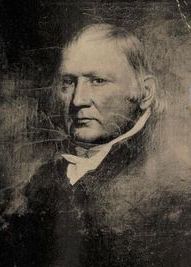
Dr. Samuel Fahnestock, cherry coke hero!
In 1863, after his mother's death, he moved to Marietta, Pennsylvania which is a small town along the Susquehanna River, near Lancaster.  After the Civil War he moved to Lancaster and began to treat diseases by statuvolence or self-hypnosis. But, there is a bit more to the story of Dr. Samuel Fahnestock that deals with more than being a medical doctor.  All during these years it was common for small-town residents and big-city dwellers to enjoy carbonated beverages at local soda fountains and ice cream saloons.  These places were often housed together with apothecaries and served as a meeting place for people of all ages.  The term "soda water" was first used in 1798 and in 1810 the first patent was issued for the mass manufacture of imitation mineral waters to inventors Simmins and Rundell of Charleston, South Carolina.  A 
soda fountain patent was first granted to Dr. Samuel Fahnestock in 1819.  Seems he had invented a barrel, fitted with a pump and spigot to dispense carbonated water, and the device was meant to be kept under a counter or hidden.  Viola!!  It was the soda fountain that I knew as a child.  But then in the 1970s fast food joints came along and destroyed my soda fountain.  So, I guess I can thank Dr. Samuel Fahnestock for my chance to sit on a round, spinning, padded bar stool with a cherry coke in front of me with a straw in it while reading a comic book I had borrowed from the rack by the door.  But, Dr. Fahnestock also promoted his seltzer, soda and magnesia et soda at his doctor's office and apothecary.  Seems he also had patented a system where he kept mineral water in stoneware vessels, instead of the traditional copper vessels, to avoid the metallic taste.  He claimed his beverages diminished thirst, lowered body heat and helped the stomach.  Some called his water "artificial mineral water."  To make sure he was the sole producer of his water he took several precautions.  But, that story will have to wait until another day.  It was another extraordinary day in the life of an ordinary guy.

The "If Only I Would Have Had $2.5 Million Back Then" Story

It was an ordinary day.  Beginning to unpack the few items I had packed in anticipation of our trip to St. Martin in about two months.  I have come to the realization that it just isn't going to happen when we had planned it to happen in the spring.  Began to get emails from friends in St. Martin/Sint Maarten telling us about what is happening on the island at present.  Not much different than what it is like in our home town of Lancaster, Pennsylvania, except for the fact that the beaches on the French side of the island are closed and we don't have any beaches outside our door.  
Two hats from my collection.
As I began to return items already packed to their proper place in our house, I grabbed a few of my hats I had planned on taking with me this year.  One was a pink cap which had the name of one of the restaurants on the island of St. John known as "Woody's Seafood Saloon" while the other hat was blue and gray with the logo "Skinny Legs - A Pretty OK Place."  Both places were located on the island of St. John with Skinny Legs being found in Coral Bay while Woodys is located in Cruz Bay.  On our first trip to the U.S. Virgin Islands with our friends Jere and Just Sue we went to the island of St. Thomas.  Great place to visit and we totally enjoyed our week long trip.  One day we headed to the nearby town of Red Hook where we drove the car onto the ferry to head across the water to the island of St. John.  That was an experience in itself, but exploring St. John was one of the highlights of our vacation.  We unloaded the car in Cruz Bay and began a self-guided tour of St. John.  Stops at a few different areas to snorkel finally led us to Trunk Bay Beach on the west side of the island.  
Beautiful Trunk Bay Beach on St. John.
The island was discovered in 1493 by Christopher Columbus and why he every left those lucious green hills and pure white beaches is a mystery to me.  Actually, why the four of us ever left is still a mystery to me, also.  The island changed hands quite frequently between the French, Spanish, English and Dutch with the Dutch owning the island rights before they sold it to the United States in 1917 for $2.5 million.  A few decades later, a generous donation of 5,000 acres by conservationist Laurance S. Rockefeller was dedicated to creating a national park on the island in 1956.  The 5,000 acres name was changed to the Virgin Islands National Park and before long some 5,659 underwater acres were added.  Today, the park stretches an extensive 12,000-plus acres and occupies nearly two-thirds of St. John Island, plus a portion of nearby Hassel Island.  While on the island we spent part of our day exploring the park as well as snorkeling in the waters of the park.  After leaving we continued to circle the island and happened past this small bar with a funny name.  
Sue took our photo high above Trunk Bay on St. John.
Just had to make a stop and that is where I got my "Skinny Legs" hat.  We had something to eat and watched the boat life in nearby Coral Bay.  A second trip to St. Thomas with another ferry ride to St. John happened about half a dozen years later.  It was during that trip that we spent more time at Virgin Islands National Park as well as visiting Cruz Bay where we stopped for a drink at "Woody's."  St. John's is more than just beautiful beaches.  You can hike to plantation ruins and learn about life of those who worked the plantations years ago.  You can also visit petroglyphs carved by the Taino Indians.  Two-thirds of the island of St. John is now a National Park, making it a unique destination for visitors from around the world.  If you have ever watched a television show about purchasing land or a home on the island, you will realize just how few homes there are on the island.  And, the small villages, such as the few we visited, are filled with the beautiful people who call the island home.  Wouldn't take much for me to call St. John home.  It was another extraordinary day in the life of an ordinary guy.

Friday, April 3, 2020

The "Milkman Cometh...Every Day! Story

Mom bought Cream Dairy milk.  Known
as the milk with the cream on top.
It was an ordinary day.  Mom yelled to me to go out on the porch and get the milk so she could make creamed peas and eggs of toast for lunch.  At the time we were living on North Queen Street in Lancaster County, Pennsylvania.  On the front porch of our duplex we had an insulated metal milkbox where our daily Cream Dairy milkman would place our order for the day.  If mom would place an empty bottle in the milkbox, he would give us the same. I can still visualize her draining off the creme from the top of the bottle before she would reach the more liquid milk.  
Queen Dairy horse-drawn milk truck.
One of the biggest milk companies in the city was Queen Dairy which was located at 411 S. Queen Street in downtown Lancaster.  You could buy their bottled milk at local corner grocery stores as well as receiving your milk from your local milkman.  Other milk companies popped up from time to time such as Lancaster Sanitary Milk Company which was founded in 1921, but changed their name eight years later to Penn Dairy and eventually called themselves Pensupreme.  
Lancaster Sanitary Milk Company.
They were located at  572 North Queen Street.  Our local milkman delivered his milk in a truck, but at one time they were horse-drawn wagons.  I recently read a story dated Tuesday, July 15, 1947 that told of a local milkman who had just returned home form the Navy by the name of Ervin Laukhuff who drove a Pensupreme Dairy truck.  
Lancaster Sanitary became Penn Dories, Inc. 
The article was titled "Milkman Doesn't Ring Twice...He Already Carries the Key!"  Story said that milkmen are required to deliver milk to the doorstep, but they also may go out of their way to deliver their product.  Mr. Laukhuff carries more than 40 keys that had been given to him by his customers.  
Another local dairy was Walnut Grove Dairy in Lititz, PA.
They were the keys to their houses so when he arrived he could place the bottles of milk in their refrig- erator.  Talk about trusting someone!  Other milkmen report that householders leave their door unlocked  so the milkman can put the milk in the fridge and lock the door on their way out.  But, one very accommodating deliveryman would stop at a dorm at Franklin & Mashshall College in Lancaster, wait for his customer, a young milk drinker on the third floor, to lower a basket out the window on the end of a rope, and place the order in the basket.  
Click to enlarge to make reading it easier.
I sure hope the customer gave his deliveryman a nice gift at Christmas.  
Ervin Laukhuff, milkman extraordinaire.
Another customer who lives at the end of a long county lane would place a white cloth on a post along the road to save the milkman a trip back the lane if they didn't want any milk that day.  My mom would put a sign in the door window to tell our milkman if we needed milk.  Also, cut a piece of brown cardboard from a box and would place that in the window if we wanted a bottle of chocolate milk.  It was said that handsome milkmen would get love notes in the empty bottles they would pick up from their customers.  One good looking guy had a scrapbook of such notes.  But, they also had their troubles from being attacked by dogs to having customers yell "stop, thief" when the milkman would enter the house of a customer by mistake thinking the house was one who wanted their milk placed in their fridge.  
Turkey Hill Dairy is the biggest milk producer in Lancaster County today.  They are located to the south-west of Lancaster along the Susquehanna River.  You can't miss the place being that they have two extremely large windmills which they use to supply power to their plant.  It was another extraordinary day in the life of an ordinary guy.

The "And...Lancaster County Is Supposed To Be A Great Place To Retire" Story

Recent chart from the Lancaster Newspaper
It was an ordinary day.  Sneezing and blowing my nose continuously.  I recently had a cold, but thought it had passed a week or two ago.  So why does my runny nose continue?  Ah, after picking up the morning paper I found the reason.  Seems that Lancaster County is leading the State in poor air quality.  Not only the State of Pennsylvania, but it has more soot and smog than New York; Newark and Jersey City, New Jersey; Baltimore, Maryland; Boston, Cambridge, Newton, Massachusetts; and the Washington DC-Arlington-Alexandria areas.  
Power plants are one polluter of the air.
How can that be with all the idyllic fields and streams on acre after acre without all the hi-rises and big city traffic.  Well, it be!  The report is based on the year 2018 which is their latest facts and figures they have.  Can't imagine how bad in may have been last year.  The report is based on the number of days in 2018 with elevated levels of smog, soot or both.  So just what are smog and soot.  Ozone, which in its visible form is called smog is one while the other is particulate matter which is known as soot.  Lancaster ranked worse in soot.  Seems that one or both of the categories were elevated in 119 days of the year which is almost a third of the year.  105 of the days we had an excess of soot while 36 days we had too much smog.  Actually, Lancaster did better than the year before when they showed 179 days of the year with elevated levels in both.  But, I guess we can count on going in the wrong direction next year, since the National Clean Air Act is further endangering air quality by dismantling protections that had been in place before our latest President arrived.  The latest study was conducted by the PennEnvironment Research & Policy Center and Frontier Group.  The American Lung Association also issues a report, but that is only every three years.  
The waste from these animals is spread on the crops
to make it grow better.  It is hazardous.
The most recent one was 2015-16 so we have another year to wait for that study.  But, their last report showed that Lancaster county and Johnstown area are tied for the 15th worst particle pollution in the country.  The report did show improvement over the past two decades due in part to federal efforts to bring down emissions from power plants and industrial boilers.  Both studies are based on an Air Quality Index scale color coded from green (good) to maroon (hazardous).  If you happened to fall in the yellow, or hazardous, areas, you should limit outdoor exertion on days when the air quality is hazardous.  The most recent day in Lancaster County when the air was considered hazardous in the PennEnvironment study was January 25.  So, why is our air quality so poor being that we aren't a huge city with all those cars emitting fumes.  Seems that some sources of pollution are no fault of our own.  Bad air drifts eastward into Lancaster County from power plants and metropolitan areas upwind.  But, Lancaster certainly isn't blameless.  We generate plenty of bad air from industries, power plants all up and downtime the Susquehanna River and home and agriculture.  Yep, all those chemicals and animal manure that Lancaster County farmers use on their fields leads to poor air quality.  And, you do know that Lancaster is known as the "Garden Spot of America" due to all the farmland we have in the county.  
The manure they spread as well as other chemicals
that are used to help the crops grow can be hazardous.
Bad air can increase the risk and incidence of asthma and other breathing problems.  And, the risks are greater for children and old people like me.  That information came from the chairman of nearby Millersville University's nursing department and member of the Alliance of Nurses for Healthy Environments.  And, they certainly should know.  Here's hoping the farmers keep the manure from the streams and is careful with the herbicides they use to kill the insects that eat their crops.  But, will it ever change.  It better!  That's the only way I'm going to be able to stop blowing my nose!  It was another extraordinary day in the life of an ordinary guy.

Thursday, April 2, 2020

The "Everybody Has An Uncle Billy, Don't They?" Story

It was an ordinary day.  Looking at the weekly column written by Jack Brubaker, aka "The Scribbler".   Today's column has two stories; one being a story about a fellow who worked at Armstrong Cork Company and the other about an ex-slave known as "Uncle Billy."  Now, Uncle Billy's story is much more exciting and takes you back to a time when the United States had the institution known as slavery.  Uncle Billy Adams was born in New Orleans, Louisiana in 1845.  At the age of ten his parent's were sold by their slave master to another slave owner. Shortly thereafter, Billy walked off the plantation and headed north.  The slave master took after him with his hounds, but Billy rubbed onions on his shoes to deaden his smell and got away from them.  About a half dozen years later Billy watched the Battle of Antietam at Antietam Creek near Sharpsburg, Maryland.  The battle pitted Confederate General Robert E. Lee's Army of Nothern Virginia against Union General George McClellan's Army of the Potomac and was the culmination of Lee's attempt to invade the north.  At some point during the battle, Billy was chased from the battlefield by soldiers.  He was later freed by President Lincoln's Emancipation Proclamation enacted on January 1, 1863.  In Billy's younger days, after gaining his freedom, he was a circus hand and a roustabout at sea.  He vividly recalled "rounding the horn" in a windjammer and working on the railroad for a few years.  He also said he visited all of the 48 states.  At the age of 85 he was employed as a day laborer on the Lancaster-York inter-county bridge at Columbia.  That historical bridge is still standing today.  Wonder if I searched whether I could find Billy's initials on one of the concrete pillars.  During his lifetime in Lancaster, Pennsylvania, he was known widely as Uncle Billy, the quiet and gentle ex-slave whose pleasant philosophy of life, humor and age made him one of Lancaster's most widely known residents.  He lived in a small, specially constructed house on the rear of the Snavely Lumber Mill in Landisville.  On Monday, October 31, 1955, "Uncle Billy" Adams died at 2:10 PM at Lancaster General Hospital. He was 110 years old.  Uncle Billy's hobby was gardening and he worked on the properties of Jess and Ralph Snavely until he became ill and had to give up his gardening.  Uncle Billy was a long-time baseball fan and would listen to games on his radio, but when he became ill and had to go to the hospital, he didn't take his radio with him, since he was worried he would disturb the other patients.  When he first entered the hospital he entertained his room companion as well as the nurses with his knowledge of the Bible. He always said he tries to lead "a Christian life" although he knows he isn't perfect.  A few days into his stay at the hospital he was treated to a birthday party by 15 Brownies from Troop 103, Landisville, PA for his 109th birthday.  They sang Happy Birthday as well as the Brownie "Smile Song" to him and each gave him a birthday card which they had made.  As the Brownies left the hospital, he stood and shook hands with each one.  Records from the old-age pension bureau bear out the fact that he was 110 years old when he died.  I never knew Uncle Billy, but felt I knew him just a bit by writing this story about him.  I don't know if I liked him because he was a big baseball fan or because he was a hero to many, both adults and children.  It was another extraordinary day in the life of an ordinary guy.  PS - Click to enlarge photograph.


The "A True Pioneer Of Many Aspects Of Personal Computing" Story

It was an ordinary day.  Preparing to type another story for my blog known as "Extraordinary Stories Form An Ordinary Guy."  After deciding about the topic for the story, I begin to search for material I can use for the story.  Different stories require different material as you might have guessed.  For my recent story about peanut butter and marshmallow crackers I had to gather the box of crackers from above the pantry as well as grab the jars of peanut butter and marshmallow.  I also pulled up the online edition of the latest Saturday Evening Post magazine which I also subscribe to in the print edition.  Just something I enjoy about holding a printed newspaper or magazine or brochure rather then viewing it on a screen.  In the magazine was a story about Ritz crackers.  I then opened Blogger on my computer and pulled up my blog.  After gaining entry into the site I open a new story post.  I always begin each story with the same line, as you probably know by now.  Then I begin my story for the day.  At times I may begin with "Preface" which tells you about the background of what will become the main story or I may begin with a sentence I have copied from something printed already.  To do that I open the original piece of writing and make sure it is legally possible to copy, then if it is legal, I will put my cursor at the beginning of what I want to copy and drag the cursor to the end of what I want to copy which will highlight the words in blue.  I then hit the lower case "c" to copy.  Then I place the cursor in my story where I want to place what I just highlighted, and hit the lower case "v".  Some computers may be different I realize, but this is how I copy and paste something.  I never realized that what I was doing had to have been invented or developed years ago by someone who knew programing.
Mr. Lawrence Tesler. one of the true pioneers of many
important aspects of personal computing.
 In the case of cutting and pasting, the person who was responsible for that feature you and I use was Lawrence Tesler.  Hey, with a first name like that, he just had to be inventive.  Seems that Mr. Tesler recently died at his home in Portola Valley, California at the age of 74.  As a young researcher for Xerox at the Palo Alto Research Center in the 1970s he helped develop today's style of computer interaction based on a graphical desktop metaphor and a mouse.  In 1973, he and his buddy Tim Mott developed a program known as "Gypsy" which did away with the restrictive modes that made text editing complicated.  I can still remember one day, years and years ago, when all teachers where I taught high school graphics and photography had an In-Service day where we learned to write programing for computers.  People take years to learn to do that and we were expected to learn how to write programing in 6 hours?  Texler worked at a number of Silicon Valley companies including Apple under Steve Jobs.  But, it was at Xerox that he developed today's style of computer interaction based on graphical desktop metaphor and a mouse.  It was while at Xerox that he also developed, along with Tim Mott, the program known as "Gypsy" which did away with the restrictive modes that had made text editing complicated.  It was the Gypsy program that offered the "cut and paste" for moving blocks of text and the ability to select text by dragging the cursor through it while holding down the mouse button.  It was in 1978 that he designed, with Adele Goldberg and Douglas Fairbairn, a portable machine called NoteTaker which was one of the forerunners to our laptops of today.  Mr. Texler gave Mr. Jobs a demonstration on the Xerox Alto computer which lead to the Apple's Lisa personal computer and then its Macintosh.  He went to work at Apple in 1980.  While at Apple he founded their Advanced Technology Group which developed the hand-held computer.  Tesler left Apple in 1997 to work for both Amazon and Yahoo.  I should mention that while Mr. Tesler was a student at the Bronx School of Science, he developed, at the age of 15, a new method of generating prime numbers.  He told his teacher that his method was a formula, but the teacher disagreed and said it was an algorithm, and could be implemented on a computer.  Wasn't long before he was working with programming language.   His story is way above my level of understanding, so I believe I should stop at this point in trying to explain all he has accomplished.  I thank him for at least developing the method I use daily of cut-and-paste.  couldn't live without it.  It was another extraordinary day in the life of an ordinary guy.

Wednesday, April 1, 2020

The "More Medical Theory Down The Drain!" Story

It was an ordinary day.  Sitting in my family doctor's office waiting for the doctor to enter.  The nurse had just taken my vitals and when I asked her to share them with me she did so.  My body temperature was 97.2 and I asked her if she thought something was wrong with me.  She told me that body temperature changes from time to time as well as from one patient to another.  If it had been below another degree or two lower, the doctor would have been concerned.  Have you ever heard of that before...that normal body temperature isn't 98.6 anymore?  Seems if you are a woman, may be old like me, may be late afternoon and maybe overweight, your body temperature may be different than a young, skinny man who came into the office at 8:00 am. The 98.6 number was established in 1851 by German physician Carl Reinhold August Wunderlich.  And now I find out that normal body temperature has dropped about 0.05 degrees Fahrenheit each decade, based on a person's birth year.  Dr. Julie Parsonnet commented that there's never been an official real number since people vary so much.  Did you know that?  But, why is our overall body temperature doing down?  
I found out that body temperature of men born in the 2000s is about 1.06 degrees Fahrenheit lower than men born in the early 1800s.  And, the body temperature of women born in the 2000s is on average 0.58 degrees Fahrenheit lower than women born in the 1890s.  Could it be that people are taller and heavier now and their metabolic rates have slowed?  Could it also be that eliminating certain diseases such as tuberculosis, periodontal diseases and syphilis could affect you body temperature?  When your body has to fight disease your body temperature rises.  Seems we are not only facing global warming, but human cooling.  What should we do?  My doctor told me that my body temperature wouldn't affect how he would treat me for what he might suspect I have.  Told me that I shouldn't worry about my temperature.  I did read that doctors usually don't worry about body temperature unless you temperature is about 100, which indicated a fever, or below 94, which indicates hypothermia.  Also could be that every person has their own personal average body temperature and it's probably best to see the same doctor each visit since they will be able to compare your own personal body temperature on each visit.  Now, I'm trying to figure how I can get my body temperature to be on the low side so he will prescribe a trip to a warm area of the world with a beach that has warm water.  Maybe a few ice cubes in my mouth before I enter his office.  But, then again, I have to hope the nurse will take my body temperature with a thermometer in my mouth and not a device that checks it at the temple.  That's going to be my next assignment...how to lower my body temperature at my temple.  It was another extraordinary day in the life of an ordinary guy.

The "States That Never Made It" Story

It was an ordinary day.  Telling my wife about the seven states that never made it as members of the United States of America.  I'm sure many of you were alive when Hawaii gained statehood in 1959 and may still be alive when Puerto Rico is named our 51st State sometime in the near future.  Oh!  You didn't know that?  Well, you heard it here first!  Their effort to gain statehood has been going on for years, but yet they haven't been close to being accepted.  I suspect that people who lived in the continental United States weren't too sure about adding Hawaii in 1959, but look how that has worked out for all involved.  Probably would be the same for Puerto Rico if they were given the chance.  Carol and I made a visit to Puerto Rico along with our traveling friends Jere and Just Sue close to 10 years ago and had a great time visiting all the tourist attractions in San Juan.  I, for one would certainly welcome them into the United States.  There were also seven other proposed states that never did make it into the Union and more than likely never will.  
Delmarva and the Assateague Island National Seashore.
The first was an area known as Delmarva which is the peninsula off the coast of Maryland that stretches across Delaware, Maryland and Virginia.  Those living on Delmarva didn't care for the inconsistent government throughout the peninsula with all three states proposing something different and wanted to become a state.  Never happened.  Today the Delmarva Peninsula is home to the Assateague Island National Seashore which is famous for its wild horses.  Neat place to visit if you've never been there.  
The beautiful state of Deseret.
Another prospective state was Deseret which was a state proposed by Mormons who lived in the Great Basin desert in the mid-1800s.  The area where they migrated to due to religious persecution encompasses today's Utah, Nevada and a large part of New Mexico and Arizona.  At the time the Federal government thought the area was too big an area so it divided it into what we call today New Mexico and Utah.  Forgottonia, yes that was supposed to be a state at one time begun as a joke since the citizens of a 14 county area felt neglected by the state of Illinois.  So the Forgottonia was begun.  It did draw the attention of the Federal government who provided needed funds to repair the local infrastructure.  Hey, making up a fictious name for a new state really did work to solve this problem.  
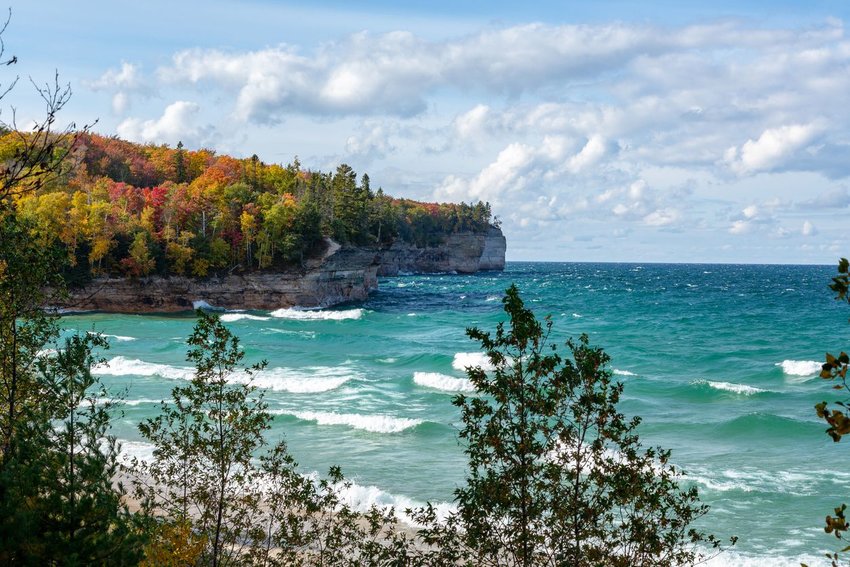
What at one time was going to be the State of Superior.
And then there was the state of Superior which was to be today's Upper Peninsula of Michigan which was repeatedly proposed as its own state.  Thomas Jefferson wanted to call the area Sylvania while other wanted it called Ontonagon.  But, being it is close to Lake Superior, it should be called Superior.  Then, along came the Civil War and the Mackinac Bridge was built so the area is no longer as isolated as it once was.  Therefore the new state idea was forgotten.  Then, shortly after the Revolutionary War ended, residents in the area of eastern Tennessee wanted to form their own government and have their own state known as Franklin.  But, the residents of what would have been Franklin fears the United States government would sell Franklin to France or Spain to pay off war debts, so the state idea was forgotten.  Yet another idea for a state was the state of Scott.  It was during the Civil War that Tennessee became a Confederate southern state.  But, Scott County, Tennessee, seceded from the south to support the Union troops of the North.   After the war ended, it was sort of forgotten what Scott County did.  It wasn't until 1986 that Scott County requested readmission to Tennessee.  They were welcomed back into the state at that time.  
The state to be known as Transylvania.
And finally, the state of Transylvania, which means "pleasant woodsy area" was proposed with parts of western and south- eastern Kentucky and Northern Tennessee.  The name came from a land speculator and pioneer Richard Henderson, who intended to purchase the area in 1775 and apply for statehood.  But then, Virginia and North Carolina claimed the land and killed the deal.  Actually, the Continental Congress refused to recognize the new state anyway.  So, anyone have any idea for a new state?  Better be a good name or it will be laughed off the federal calendar.  It was another extraordinary day in the life of an ordinary guy.

The "The Taco Liberty Bell" Day

It was an ordinary day.  Writing one more time about one of my favorite items to eat, Spam.  My wife makes a real mean Mac and cheese w/Spam that I love to cover with stewed tomatoes.  Makes a great meal for lunch or supper.  Now my latest discovery is Radiant Farms Unicorn meat.  
Hoping to get a can of that on the next trip to the grocery store and have Carol substitute the unicorn meat for the Spam.  If you are still with me by now, I assume you know what day it is today; April fools' Day...right?  Yep, I really don't think I will find unicorn meat at any store.  Just a joke!  Isn't that what you're supposed to do today?  A bit more about today in history tells us that April Fool's customs began in France when April 1 was listed as New Years Day on their calendars.  It was said that people who celebrated New Year's Day on April 1st rather than January 1 were April fools.  Another French April fools trick is for children to tape a paper fish on the back of their friends and when the friend discovers the trick they yell "Poisson d'Avril!"  In Scotland April fools lasts two days with the second day called Daily Day and involves pranks of the backside, such as a sign saying "kick me!"  Canada and England only play pranks in the morning of April 1.  In 1985 Sports Illustrated ran a story about New York pitcher Sid Finch and his 168-mph fastball.  The skinny Finch credited his speed to meditations in Tibet, carrying a French horn with him at all times and wearing one hiking boot while pitching.  People actually believed it until they found out Tibet didn't have meditations.  Every April, since 1986, sees the New York newspapers telling of the April Fools' Day Parade which to this day has never been held.  The papers also claimed that New York had purchased the Liberty Bell from Pennsylvania and were going to rename it the Taco Liberty Bell.  In 2004 the Post Office told of being able to keep your same Zip Code no matter where you moved.  Never found out how that worked out.  Two years ago the BBC ran a story on April 1 about flying penguins as part of their series "Miracles of Evolution."  Said the penguins escaped the cold Antarctic weather by flying to tropical rainforests in South America.  In 2013 The Guardian announced the launch of its own reality device, Guardian Goggles, that will beam journalism directly into the wearer's visual field.  And then on April 1, 2010 online retailer ThinkGeek announced a new product, canned unicorn meat.  Called the new white meat an excellent source of sparkles.  Hey, if I'd had known about it, I would have purchased a can so Carol could mix it with Mac and cheese.  It seemed so true that customers in Germany got upset they couldn't buy it.  So, a few months later ThinkGeek actually began selling unicorn meat for real.  Only problem was the sale was halted by German customs officials who said the product fell afoul of regulations banning the importation of meat from "rare animals."  I'm still looking!  It was another extraordinary day in the life of an ordinary guy.