Extraordinary Stories

1944 (1) Act of kindness (12) Acting (2) Adoption (4) Adventure (766) Advertisement (6) Africa (1) Aging (14) Agriculture (47) Airplanes (9) Alphabet (5) American Red Cross (1) Americana (116) Amish (43) Ancestry (5) Ancesty (2) Animals (43) Anniversary (4) Antigua (10) Antiques (14) Apron (1) architcture (1) Architecture (36) Art (175) Art? (8) Arts and Crafts (69) Athletics (6) Automobiles (40) Awards (7) Banking (2) Barn raising (2) Baseball (103) Basketball (3) Batik (1) Beaches (89) Becoming A Citizen (1) Bed & Breakfast (2) Bee Keeping (6) Beer & Breweries (2) Bikes (3) Birds (9) Birthdays (34) Blindness (1) Blogging (5) Bookbinding (5) Books (12) Boxing (2) Brother Steve (12) Buisiness (3) Business (5) Canals (1) Cancer (14) Candy (30) Caribbean Islands (9) Caribbean Villas (15) Cats (5) Caves (1) Census (1) Chesapeake Bay (61) Children (28) Chocolate (4) Christmas (57) Church Adventures (122) Cigars (1) Circus (3) Civil Rights (8) Civil War (6) Classic Cars (7) Climate Change (5) Clubs (1) Coin club (2) Coins (1) Collections (73) Comedy (3) Comic Books (5) Commercials (1) Comnservation (2) Conservation (41) Covered Bridges (3) Craftsmanship (12) Creamsicle the Cat (11) Crime (16) Crisis (312) Cruise Travel (6) Crying (1) Culture (4) Dancing (1) Danger (16) Daughter Brynn (58) Daughter-In-Law Barb (7) Death (5) Death and Dying (65) Destruction (2) Donuts (1) Downsizing (2) Dunking (5) Easter (3) Eavesdropping (1) Education (48) Energy (15) Entertainment (165) Entrepreneurial (62) Ephrata (1) Etchings (1) Eternal Life (4) Facebook (5) Factories (4) Fads (6) Family (261) Farming (37) Father (42) Father Time (68) Favorites (88) Firefighting (1) Flora and Fauna (28) Fond Memories (490) Food and Cooking (171) Food and Drink (111) Football (16) Forgetfullness (3) Former Students (10) Framing (30) Friends (359) Fruits and Vegetables (3) Fun (4) Fundraiser (6) Furniture (1) Games (7) Generations (3) Gifts (1) Gingerbread houses (1) Giving (8) Globes (1) Golf (3) Good Luck (2) Graduation (1) Grandkids (136) Grandparents (3) Grandview Heights (29) Great service (3) Growing Old (8) Growing Up (187) Guns (2) Handwriting (3) Hat Making (2) Hawaii (49) Health and Well Being (61) Health Care (4) Health Hazards (110) Heartbreak (7) Heroes (26) High School (142) History (777) HO Railroading (4) Hockey (4) Holidays (134) Home construction (7) Horses (2) Housing (3) Humorous (71) Hurricanes (1) Ice and Preservation (2) Ice Cream (8) Inventions (34) Islands (4) Italy (12) Jewelry (3) Job Related (62) Just Bloggin' (56) Just Wondering (19) Juvenile Diabetes (5) Labor (3) Lancaster County (542) Law Breakers (8) LDubs In-Laws (3) Lefties (1) Libraries (1) Life's Lessons (175) Lightning (1) Lists (72) Lititz (18) Locomotives (1) Lodging (1) Love (4) Magazines (2) Magic (1) Maps (2) Marching (2) Market (5) Medical (161) Memories (28) Middle School (3) Milk (2) Minorities (1) Money (3) Mother (54) Movies (6) Mt. Gretna (1) Music (118) My Brother (19) My Wife (260) Neighbors (7) New Year's Day (5) Newspapers (4) Nicknames (2) Nuisance (3) Obsolescence (5) Occupations (2) Old Age (1) oldies (1) Pain and Suffering (12) Panama Canal Cruise (13) Parish Resource Center (14) Patriotism (3) Penmanship (1) Pets and Animals (99) Photography (220) Pizza (1) Plastic (2) Playing Trains (2) Poetry (2) Politics (27) Polution (3) Postal Service (2) Predators (2) Presidents (11) Pride (4) Printing (81) Protesting (3) Public Service (65) Questionnaire (1) Quilts (1) Race relations (6) Rain (1) Reading (4) Records (2) Religion (10) Retirement (4) Revolutionary War (3) Robotics (1) Rock & Roll (4) Rodents (2) Saints (4) Sand (1) Scouting (2) Sex (1) Shakespeare (1) Shelling (2) Shopping (24) Simple Pleasures (122) Slavery (6) Small Towns (4) Smoking (1) Snickedoodle (1) Snow (1) Son Derek (27) Son Tad (33) Son-In-Law Dave (27) Soup (1) Spices and Herbs (1) Sports (139) Sports and collectibles (1) Spring Break (1) St. James (2) St. Martin/Sint Maarten (306) Stained Glass (3) Stone Harbor (4) Story-Telling (26) Stragers (2) Strangers (4) Strasburg Railroad (1) Stress (3) Stuff (4) Suicide (2) Sun (1) Surfing (1) Tattoos (4) Teaching (49) Technology (90) Television (6) Thanksgiving (2) The Arts (6) The Beach House (62) The Flag (1) The Future (5) The Shore (78) This and That (23) Timekeeping (7) Tools and Machines (25) Tours (2) Toys and Games (31) Track & Field (1) Tragedy (8) Trains (19) Transportation (18) Travel (16) Trees (2) Trending (2) TV Favorites (23) Underground Railroad (10) Unit of Measurement (1) USA (2) Vacation and Travel (545) Vehicles (80) Vison and Eyesight (2) War (14) Watches and Watchmaking (5) Weather (48) Weddings (3) White House (1) Wisdom (3) Yearbooks (12) York County (3)

Friday, May 8, 2020

The "The Story Of The River Hills Of Southern Lancaster County" Story: Part II" Story

It was an ordinary day.  In the early 1900s, a few fellows by the names of Frederick Shoff and John K. Hartman were attempting to construct, in the southern end of Lancaster County, what was to be the largest "Inn" in the United States.  Mr. Hartman drew up the plans and sought financing for the 384 room Pequehanna Inn while Mr. Shoff was to be instrumental in turning Pequea into a resort town.  Mr. Shoff operated a sawmill and lumber yard in Pequea and organized the York Furnace Power Company.  Actually, before the surrounding area and small town was known as Pequea, it was known as Schoff's Post Office.  
The River View Hotel along the Pequea Creek.
Frederick Schoff built the River View Hotel in 1902-1903 and sold it to Mr. Paul Heine in 1904. Together, Mr. Schoff and Mr. Heine owned about five miles of river frontage along the Susquehanna River including the York Furnace Springs area where there was a dance Pavillion.  These two men, together with John Myers, organized the trolley system in 1904, which operated until 1925 when it was replaced by a bus.  
An announcement in the local newspaper telling about
the construction of the Pequehanna Inn.
Mr. Heine also owned the water company which supplied the Pequea area.  During the time that Mr. Heine owned the River View Hotel, the hotel saw visitors from as far away as Chicago and New York.  The River View was a popular place for celebrities as well as Presidents of the United States.  They had tennis courts, croquet courts and swings with canopies.  Mr. Heine also was the owner of The Brunswick Hotel in downtown Lancaster.  Construction of the Pequehanna Inn began sometime in 1907, but sometime in early 1910 an ice freshet (a sudden overflowing of the river due to heavy rain and melting snow) wiped out the bridge over the Pequea Creek which was used to transport supplies.  
A note in the newspaper telling of the plight of Mr. Hartman.
It took over two years before the bridge could be replaced due to a dispute between the power company and Pequea County.  In the meantime, Mr. Hartman attempted to move supplies across the creek via a barge, but had no permit to do so.  Finally the new bridge was completed, but local officials said the building materials were too heavy to take across the bridge.  Somebody in command didn't like the new Pequehanna Inn it seemed!  Then the primary financial backer, Mr. George Atlee, allegedly committed suicide on September 3, 1911.  Mr. Atlee also was the owner of the Lancaster and York Furnace Railway Company, the Lancaster and Southern Railway, a short trolley line connecting Rawlinsville with the York Furnace line at Martic Forge, the Colemanville power plant, the Pequea Land Association and several boats on the Susquehanna.  It was said that a "money panic" about that time in history, intervened and ended the life of the Pequehanna Inn.  Mr. Hartman sold most of the iron and lumber from the site to try and recoup his losses.  But, he never gave up his dream of having the Inn and lived on the site of his future Inn in a one-story cottage.  
This is the drawing of what wasn't meant to be!
The inn would have been the climax of his impressive building career.  He died in 1957.  So, what ever happened to the massive stone foundations?  A fellow who had been writing a story about the entire debacle was wondering, after about 100 years, whether anything still remained of the the Pequehanna Inn's stone foundations and rock terraces.  He reached out to the Pequea Nature Preserve, but they owned very little of the land and what land they did have near the Inn showed no foundations their land.  He managed to identify the owner and was able to get in contact with him.  He was given a tour of the property and did find part of the foundation of the Pequehanna Inn.  He reported the foundation was still an impressive site.  The most identifiable architectural element was the curved foundation in the northwest corner.  The new owner said more construction used to be on the site, but materials have slowly disappeared for use in nearby residential projects.  Well, at least part of the Inn may still live on in the dreams of someone else who may now live near the site in Pequea.  But, what ever happened to the remainder of the other Inn, or hotel if you wish, that was known as The Riverview Hotel.  Has to be a story for another day!  It was another extraordinary day in the life of an ordinary guy.

Thursday, May 7, 2020

The "The Story Of The River Hills Of Southern Lancaster County": Part I" Story

It was an ordinary day.  Reading an online version of the book titled "Seeing Lancaster County from a Trolley Window.  The book was published in 1910 and provided a first-hand account of riding the trolley lines that headed in all directions from the city of Lancaster to the seven corners of the county.  
As I was reading about the Pequea trolley line, which passed near Martic Forge where my wife lived as a child, I stumbled upon a few pages that talked about something I had never heard of before.  I asked Carol if she had ever heard about the Pequehanna Inn that would have been near her home as well as the Pequea Railroad Station that would have been about five-minutes from the Inn.  She looked at me with an amazed look on her face and said, "What are you talking about."  "Yeah, there was going to be a 384 room hotel that was to be on the hill that overlooked the Susquehanna River where the Pequea Creek entered the Susquehanna River.  The Pequehanna Inn was to be the largest "inn" in the United States and possess the most elegant dining room in the state.  
Part of the trolley line that ran along th Susquehanna.
And, it was to be a five-minute walk from the Pequea Railroad Station.  It was going to be advertised as the "Lake Placid of Pennsyl- vania."  Wow!  When Carol lived along the Pequea Creek, there was a railroad bridge that ran over the creek a few hundred yards from her front door.  I began to do some research on the railroad and found that at one time the Pequea Railroad and Improvement Company ran on the railroad line from 1849 to 1851, long before Carol was ever born.  
Trolley schedule for Pequea area.
But, that wouldn't have anything to do with a big hotel near the river.  So, I called my friend Jere who did a thesis for his Master's Degree on the Pennsylvania Railroad along the Susquehanna and asked him about a Pequea Railroad Station.  He was baffled, but told me he would check it out.  Wasn't more than an hour later I got a call from him and sure enough, there was a Pequea Train Station near where the Pequea met the Susquehanna.  Up until the early 1900s a passenger train ran along the Susquehanna from Columbia to transport residents to the Pequea area.  Eventually the line was demolished to make room for the Susquehanna Low Grade tracks that were used for freight travel from Harrisburg to the Maryland Line and beyond.  There were two tracks that replaced the one track that carried the passenger train to  Pequea.  Now, as far as the Pequehanna Inn, planning for it began about 1906 when Lancaster City builder and contractor, John Hartman, formed the Universal Cooperative Association.  


Click to enlarge
Hartman had received praise for construction of buildings that were built for convenience and architectural beauty.  Mr. Hartman placed advertisements seeking financing for the project that was to be on a farm of 100 acres in Conestoga Township where the picturesque and historic Pequea Creek emptied itself into the broad and beautiful Susquehanna River.  

The alleged magnificent structure was said to be unique and superbly featured in several particulars.  He claimed it will cover one of the largest areas of ground of any inn in the United States and be built of concrete block construction and be nearly fireproof.  All 384 rooms will be sun lit and will be fully ventilated with pure hill-top air.  Each of its four frontages will have special landscape features with a beautiful interior courtyard and garden.  It will have the largest and finest dining room in the state.  Information from the builder went on, saying the rooms would be for sale which would help cover the cost of construction and part of the maintenance.  They could be used by the the owners or rented or leased to other parties.  
Another view of what the proposed Pequehanna Inn was going to look like.
A schedule of room prices went as follows:  First floor would be Administative apartments with 50 lodging rooms reserved for transient guests; Second floor would be 108 rooms at prices varying from $650 to $250; Third floor would be 108 rooms at prices varying from $750 to $250; Fourth floor would be 108 rooms at prices varying from $800 to $300.  Ample facilities for out-door recreation and an auditorium for conventions, concerts, reunions and entertinment.  If you were interested you could call or visit 55 N. Queen Street in Lancaster for more information.  Mr. Hartman's plan was for the hotel to be a cooperative venture similar to the condos of today.  Rooms would be sold on 100-year leases and owners would have the option to sublet their apartments.  The building would cost about $100,000 (or roughly $2.6 million in today's money).  Mr. Hartman was able to gather financial backing from investors in Lancaster as well as Philadelphia and prepared to turn tiny Pequea into a resort town.  So, a small town, once known as Shoff's Post Office as shown on the 1899 map, was going to become famous.  Follow along with me tomorrow as I tell you the results of the building and what the area looks like today.  It was another extraordinary day in the life of an ordinary guy.

Wednesday, May 6, 2020

The "How Others Work Through Their Fears & Frustrations" Story

It was an ordinary day.  Just passed a very interesting piece of artwork on South Prince Street near Farnum Street.  I stopped to view it and found it had been painted by Adam Serrano who wrote that most of his murals involve the community in one way or another and this piece was no different.  The message that "my mask protects you, your mask protects me" was meant to be loud and translated in three other languages.  Being that it still didn't feel like enough of an impact, he made a Facebook post requesting selfies from anyone on the frontlines of the medical field in Lancaster, PA. He received nearly 200 images.  Perfect for his collage "rip and stick" style.  There are 10 such pieces of art now on display in the city of Lancaster, Pennsylvania that are sponsored by Lancaster Public Art.  All 10 pieces are geared toward the current Coronavirus disaster as far as the message they convey.  The location for the art was identified utilizing a "vulnerability index" ranking median income, the population 65+ years old, the population living alone, and the following pre-existing conditions (COPD, High Blood Pressure, Asthma and Diabetes).  Locations and projects were additionally vetted by neighborhood leaders. All artists selected live or work in the city and represent a wide diversity of City perspectives.  Check out the artwork which follows and you will see the amount of diversity, art wise, that Lancaster offers.  It was another extraordinary day in the life of an ordinary guy.  PS - click on images to enlarge them.


Adam Serrano - South Prince Street near Farnum.
Annajane Dauphine - Rodney Park
This artwork is based on her own perspective, and because the viewers of her piece do not have her perspective, they will create their own.  "That is the best thing I could ask for, because it is impossible for me to see it from their perspective, and so values and lessons can be lost by forcing only my view point."
Chomingo & Esther Rivas Miller  - location unknown
The idea of the piece "Superheroes at Home" comes home from prevention and distance as it is being applied in various places.  We tried to create how we can be superheroes daily taking hygienic measures and being creative with our family and children.
Krissy Whiski - Penn Square
Creating this mural was exciting and I was happy to be chosen to do so because many of my close friends live and work in Lancaster and I want them to be safe.  When creating the mural I chose the notable Renaissance art futures David and Venus, because after the plague, came the Renaissance. The message is certain, wearing a mask is an act of solidarity and kindness to others, in that it can help to slow the spread and flatten the curve, which helps everyone, especially our healthcare workers on the front lines and who are most susceptible to catching the virus.
Maria Tomassetti - 6th Ward Park
When we talk about social distancing, we're not just talking about a physical boundary used to protect ourselves and others, although that is absolutely the intention.  If we truly love our neighbor, our friends and family, then we're going to take the highest and most appropriate action to achieve that protection. 
Loryn Spangler Jones - Corner of Mulberry & James
This has been a truly transforming experience for me, filling me with new life, optimism and stronger than ever sense of community.  My hope is some that bleeds through to the public...it feels like a big hug to every member of our community from my heart that has always been too big for my chest.
Katie Trainer - Corner of Mulberry & Vine
My piece "Together" is intended to have structure that comes from chaos, such as the world in relation to Covid-19.  The background is a blend of textures and colors.  The layering adds richness and structure of a nurse with a face mask.
Keisha Finnie - Ross Elementary School
Once receiving the call that I had been chosen as 1 of the 10 artists to do a PSA Temporary Mural, I already had in mind the idea and message I wanted to portray.  Being that I too am affected by a mental condition, I wanted to show the importance of taking care of your mental health, especially in these times when we are quarantined and forced to face ourselves more than usual.  
Salina Almanzar - Roberto Clemente Field
My piece is a self-portrait that uses elements from my heritage as a Puerto Rican and Dominician woman.  I wanted to use bright colors, Caribbean flowers and foliage, and elements the remind me of strong women in my community.  While we need reminders to maintain distance, wash our hands, and keep our masks on, we also must remember to take are of our mental health.  In creating this piece, I wanted to convey the fact that our minds are often the drivers of our feelings.  
Shaun Hogart - Reservoir Park
With this PSA mural, I was really hoping to bring a little color and a bit of hope to the wonderful people of Lancaster.  This has been, and continues to be, a really difficult time.  Its easy to get mired down, and feel alone, But, the really is that we really are, "All in this together.  We are all fighting the same fight, moving toward the same goal."

Tuesday, May 5, 2020

The "Dan Marschka: Part II - Lancaster Loses It's Photo Storyteller" Story

It was an ordinary day.  Reading the "Lancaster Living" section of my Sunday LNP.  The lead headline on page B1 reads: "LIFE IN PICTURES".  Reporter Mike Andrelczyk's story about retiring staff photographer Dan Marschka was both interesting and informative, but there are really no words that can be written to adequately tell what Dan has done for those that read the Lancaster Newspaper in Lancaster, Pennsylvania.  
Sunday, May 3 newspaper telling of Dan's retirement.
Dan is the type of fellow who can tell an entire story with one nudge of the shutter release on his 35mm Nikon camera.  He has visually reported the history of Lancaster city and county for over 40 years of his life.  During that time he has been an inspiration to myself and many of my students whom he has spoken to during visits to the high school where I taught photography.  There have been many great photographers who have captured the history of Lancaster and its residents for Lancaster's newspapers in the past, but you can count on one hand those that have told the story as well as Dan.  He's not going to be able to walk the same for a few months without his camera over his shoulder!  In the newspaper article about his retirement, Dan tells about his brother, who was in the Navy in the late 1960s,  returning from overseas with a Minolta Rangefinder camera for his 13 year old brother.  Dan says that was a turning point in his life.  But, it wasn't until he entered 10th grade and learned how to work in the darkroom that everything "exploded for him."  Dan's father was a physicist at RCA in Lancaster and helped develop the imaging systems that mapped the moon.  
"The Soiling of Old Glory" tells the busing crisis in 1976
in Boston.  The photo shows a white teenager assaulting
a black man - civil rights activist Ted Landmark - with
a flagpole bearing our flag, Old Glory.  April 5, 1976.
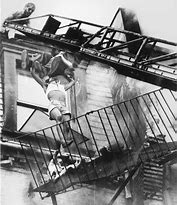
Great influence for a young boy who had a very creative nature.  So, why did Dan decide on photo- journalism as a profession?  He says he was inspired, as many of us have been, by Stanley Forman who was an award winning photojournalist for the Boston Herald.  Stan's photographs titled "The Soiling of Old Glory" and  "Fire Escape Collapse" were both an influence on Dan's decision to become a photojournalist.  
"Fire on Marlborough Street" was the World Press photo
of the year in 1976.  It shows 19 year old Diana Bryant
and her two-year-old  goddaughter falling from the
collapsed fire escape of a burning apartment building
on Marlborough St. in Boston on July 22, 1975.
To be able to tell an entire story of an event with the touch of your fingertip is both challenging, historic and life changing.  Many readers of the newspaper have counted on Dan to do his job this past 40 years and take them on a journey with him as he told the story of his fellow man through his viewfinder.  It all started he said, when he got a police scanner and listened to the chatter on the scanner.  One day he heard a police report of a domestic situation, so he followed the same route and when he heard the report that "We have him blocked," he jumped out of his car in time to take a photograph as the police were slamming the culprit's face down on the hood of his truck.  He said his blood was pumping.  He notified the newspaper of his photographs and they invited him in to take a look at them.  They processed his roll of film and placed one of his images in the newspaper the following day.  He was hooked!  Dan actually met his wife when she was working as a paste-up artist for the newspaper.  I'm assuming that after that meeting, Dan spent most of his spare time and breaks watching her work on the daily newspaper.  On a visit to his home a few years ago I had the pleasure to meet his wife Valerie as well view photos of their children.  She illustrates the same compassion toward the readers of Lancaster news as Dan does.  A few photos were in the newspaper's story this past Sunday showing some of the big events that Dan has photographed during his career with the paper.  
Dan's dramatic photo for a story on drug addition in 2014.
Such stories as the Three Mile Island incident that was followed all over the world, an Amish school house shooting in 2006 when a mentally deranged fellow shot and killed quite a few elementary-aged children, to the arrival of presidential candidate Barack Obama in 2008 at nearby Buchanan Park.  Dan has also traveled the world from Nepal to Kenya; from the Congo to Albania; and many other places in between.  
Recent photo I took which shows my wife looking at the
photographs Dad had taken of me for an article on my blog.
I have been lucky enough to have known Dan for many of those 40 years that he worked at the newspaper.  His yearly visits to my classroom were much antici- pated.  A few months ago he visited with my wife and myself when he arrived to take my photograph for a story in the newspaper about my blog.  Carol and I enjoyed his visit and the professional manner he uses to achieve his final result for the newspaper.  Though he may be retiring from his daily routine, I suspect he will never put down his story-telling Nikon for he just won't look and feel the same without it flung over his shoulder.  So Dan...enjoy the rest of your life!  You certainly have earned an enjoyable retirement for all the many stories you have told the public of Lancaster, Pennsylvania through your viewfinder!  It was another extraordinary day in the life of an ordinary guy.

Monday, May 4, 2020

The "Dan Marschka: Part I - Frankie Was A Lucky Guy" Story

It was an ordinary day.  Just got off the phone with a fellow I had the pleasure of meeting years ago by the name of Dan Marschka.  My family actually knew his mother long before I got to know Dan, since she was a school nurse at Nathan C. Schaeffer Elementary School where my children went to elementary school.  As a teacher in the Manheim Township School District, I invited Dan to speak to my photography classes on a yearly basis during the few weeks that we studied occupations in photography.  
Dan preparing for a local art show.
He always accepted my invitation and my students loved his presen- tations.  Well, the reason for my call to Dan was to ask if he would mind if I used an article that recently appeared in the Lancaster Newspaper that he had written about his cousin Frank.  Every week the Lancaster Newspaper features a story in the "Local" section titled "Through the Viewfinder" which shows the work of one of the photojournalists who work for the paper.  We in Lancaster are so lucky to have a staff of fantastic photographers who report the local news through the lens of their camera.  Many have spoken to my photography classes over the years which has led to quite a few students becoming professional photographers.  Dan's story in the April 15th newspaper tells of his cousin Frank who recently died at the age of 59.  Dan wrote, telling that his Aunt Charlyne asked him about 12 years ago if he would consider being Frank's guardian if both she and her husband Ed passed away before their son Frank did.  He accepted, considering the request an honor and family obligation for you see Frank was born a special needs child in 1960.  He had extra genetic material from chromosome 21.  Down syndrome results when abnormal cell division involving chromosome 21 occurs.  Dan wrote that "Yes, he was "special" in a way many of us are fortunate to recognize."  
Dan's cousin Frankie in his room of photographs.
The photograph in the "Through the Viewfinder" featured a photograph of Frankie taken by Dan in 1991 in his Maryland home.  At the time Frankie was very enthusiastic about pictures, much like his cousin Dan.  But, Dan understood later there was a deeper meaning to Frankie's love of photographs.  Frank had a fascination with Polaroid photographs and the fact that he could see them appear instantly after being taken.  Frankie often would go on photographic binges with his Polaroid disregarding the cost of materials which his parents happily supplied.  Dan wrote "Frankie was driven to create something that emerged from a place of innocence.  It was a pure form of compulsion.  I think he simply wanted to remember moments, places, objects and especially people.  People made him happy."  Frankie was extremely lucky to have had a cousin as understanding and loving as Dan.  Dan said he wonders how different each of us are when we feel compelled to create something without knowing why.  We are probably more distracted than Frankie had been.  The ending to Dan's story in "Through the Viewfinder" was touching and brought a few tears to my eyes as well as many readers, I am sure.  Dan wrote in "Through the Vewfinder that "Frankie's inspiration represents what many of us forget: how to see and recognize the messages we need to share like we did when we were children.  On March 4th, this gentle, loving soul passed into the arms of Aunt Charlyne and Uncle Ed.  I have been privileged to enjoy Frank's vision of this world and his example of love for others."  Frankie must have been a great guy and I only wish I might have had the chance to meet him.  His cousin Dan is much like him in that he has compassion for others which is reflected in the photography that he has taken for the Lancaster Newspaper for many years.  Dan's retirement from Lancaster Newspaper was announced in the Sunday LNP's Living Lancaster section May 3.  Lancaster is going to miss him and his storytelling through the lens of his Nikon.  But, with his fascination for photograph, I'm sure we will see many more of his photographs in the future.  It was another extraordinary day in the life of an ordinary guy.  

Saturday, May 2, 2020

The "Stanley: The Art Therapist" Story

It was an ordinary day.  Sitting in my favorite lounge chair watching one of my favorite shows on TV when my wife said to me, "Checkout these neat photos that I found on your facebook page."  The photographs are from a young woman who graduated from Manheim Township High School with my daughter Brynn in the mid-1970s.  
Stanley the Art Therapist
Her name is Ann Felter and she owns a very large Newfound- land dog by the name of Stanley.  I never had Ann in any of my classes, but knew of her, since she was a friend of my daughter.  Well, the photos that my wife began to show me were something very different.  Ann would brush her dog frequently and use the hair from the dog's brush to make likenesses of animals.  Amazing likenesses that are truly pieces of art.  Ann's talent is limitless and her artistic renderings all carry a matching name which she has given to them.  Stanley is a therapy dog and I must admit that the grooming artwork could be just as therapeutic as the dog himself.  Check out some of the following and see just how adorable Stanley is and how amazing his owner's artwork can be.  It was another extraordinary day in the life of an ordinary guy.

Had an udderly ridiculous dream that I won the yak-pot and was driving a furrari.
Doing irreptile-able damage to the walls I keep scale-n, iguana be out of quarantine.
Given the weight of the groceries in my trunk, you'd think I was nuts and feeding
a herd, but it was all relelephant purchases that ivory much needed.
 The weekdays drag on, fly by the weekends
Crikey it's been another kangaruff week in quarantine. No worries, mate, gonnathrow shrimp on the barbie, take a pouch potato break and have a hoppy day.
Trying to take the sting out of social distanc-sting.
Lil tail for you...I had a call from the fashion police with reports of wearing crocs.
Needless to say, I was snappy with the investi-gator and told him to have a jawsome day
Henestly, are you feeling as cooped up as I am?
I'm ex-pandaing so much during this panda-emic that I'm gonna need suspandas soon.
Some people are hamophobic but I feel swine about this one.
These Stanimals are keeping me octopied.
Quarantine got ya crabby?
During these challenging times, gotta find ways to amoose oneself.
Gir-affe'n at my fur animal? 
Some bunny sheds a lot.
Been prey'n all week for Friday so we can press paws on mane stream movies,
quit lion around, and let roar hair down for the weekend.
Ann and one of her best friends, Stanley!

The "Is A Blink A Wink Or Is A Wink A Blink?" Story

It was an ordinary day.  Searching for my pair of goggles that I use when I use my weedwacker.  Never had to worry about protecting my eyes from the debris that is thrown my way while edging the lawn.  But, now that I don't have to wear glasses anymore due to my eye doctor giving me 20/20 vision when he fixed my cataract, I have to take more precautions not to get anything in my eyes and ruin my vision.  That's why I need to wear goggles or at least sunglasses to keep debris out of my eyes.  And, even when I do wear goggles, I find myself blinking more than usual when running my weedwacker.   There is always more dust in the air when working outside and everyone tends to blink a bit more in those environments.  I remember reading about the reasons why we blink a few years ago.  Seems that about 10% of your waking hours are spent with your eyes shut due to blinking.  We normally blink about 12 times per minute or about 10,000 times a day.  When you add the time you blink during the day and the time your eyes are closed when you sleep, that's about 40% of your daily time is spent with your eyes closed.  Wouldn't it be neat if someone could invent a miniature screen that we could place on the inside of our eyelids to be used to watch films or television?  But, there must be a good reason why we blink so much, even when we do so while working outdoors.  Well, the number one reason is to lubricate our eyes.  If you don't blink on a regular basis, your eyes may sting.  Watching TV for long periods of time or even reading is cause not to blink as much as you should which can make your eyes sting more.  Lubricating tears are produced by your body with the intent to lubricate your eyes.  The tears have three layers; the mucous layer that makes it stick to your eye; the aqueous layer which is a thick layer that hydrates and keeps bacteria out of your eye (think coronavirus); and the oily layer that prevents the other two predominantly watery layers from evaporating.  Every time we blink the tears are pulled across the surface of our eyes to keep it lubricated and prevent the spread of bacteria.  Certainly helps when I am working on the lawn and causing plenty of dust and dirt to fly into the air.  Another reason for blinking is much like your wipers in your car swiping the windshield after shooting wiper fluid on it.  The water in you eye cleanses and soaks up debris while the blinking is the windshield wiper wiping it away.  Another reason to blink is to protect against perceived dangers.  Perhaps I turn my head sideways when I am edging the lawn with the weedwacker and dirt somehow finds its way into my eyes.  Your eyes can close in 0.1 seconds when something strikes it such as dust or even a bright light.  This is called corneal reflex and helps keep items from entering the eyes.  The final reason we blink is a questionable one.  It is said you blink to take a mental break.  Researchers say they found that people blink at perceived break points such as in reading a magazine or book when you tend to blink when you change the page so you don't have to blink as much while reading the material.  Or, if your mind is taking a mental break from learning something, you tend to blink quickly so you are ready to  begin learning once again.  One way or another, we spend about 10% of our waking hours blinking.  That plus the time we have our eyes closed as we sleep; adds up to about 40% or our life having our eyes closed.  Now if I could only find my goggles I could keep from blinking as much, thus allowing me to take a quick nap so I can use up those blinks I didn't need to take.   It was another extraordinary day in the life of an ordinary guy.  

The "Down at the Lah De Dah" Story

It was an ordinary day.  That was until I opened my email this morning and had the chance to sing along with a new Jimmy Buffett song.  According to the Caribbean Journal website, Jimmy is releasing a new studio album this month.  The album is called "Life on the Flip Side" and is his first studio album in seven years.  Just listened to him a few night ago when he sang an encore presentation from New Zealand.  It was only Jimmy and two of his bandmates as well as a new drummer filling for his own drummer who wasn't feeling good.  I sat at my desk, typing a new story for you to read, with Jimmy singing as one of my cat's laid in front of the computer, cocking her head one direction and then another as she listened to his music.  She even told me to turn up the columns so we could hear it better.  Jimmy's new album is being produced by his longtime Coral Reefers Mac McAnally and Michael Utley and includes a total of 14 new songs.  One of those songs is called, "Down at the Lah De Dah."   I have attempted to include it at the end of this story so you can hear it.  By the end of the song I just know you will be singing along with the lyrics.  Carol and I have visited a few places that have claimed to be the location where he wrote and performed "Cheeseburger In Paradise".  My guess is the place that he really did that was at the small beachfront restaurant and bar in St. Barth called "Le Select."  So, listen to the music, sing along and wish you were in the Caribbean next to the beautiful blue water and sun-bleached sand.  It was another extraordinary day in the life of an ordinary guy.

Friday, May 1, 2020

The, I'll Have A Cherry & Whipped Cream With 3 Scoops Of Ice Cream Under It!" Story

It was an ordinary day.  Cool, but not cold; breezy, but not windy; great day for a bowl of ice cream, as always.  A week ago I bought a 1.75 quart of Dutch Farms "Bullwinkle" ice cream made by Nelson's.  It was vanilla with peanut butter cup and fudge in it.  Had a sale on it at our local grocery store and being that it was about a half-inch taller container than most others, I fell for the deal for only $2.50.  Was it any good?  Well, the best part of it was that it had an extra serving in the container than most other ice cream containers have today.  Other than that, I doubt if I would buy it again.  I do have a few favorites, with plain vanilla being my all time favorite, since I can have fresh peaches on it in the fall, strawberries on it in the spring, chocolate syrup on it anytime, etc., etc., etc.  
It was said that Alexander the Great also enjoyed snow and ice flavored with honey and nectar.  Nero Claudius Caesar frequently sent runners into the mountains for snow so he could flavor it with fruits and juice.  When Marco Polo came on the scene in Italy about 1,000 years ago, he had a recipe that is very similar to what we now call sherbet.  This recipe was tweeked until it somehow looked and tasted like what we call ice cream today.  About the same time in history, England came up with about the same product as our ice cream.  But, it was called "Cream Ice" and Charles the Ist loved  the dessert.  France was introduced to a frozen dessert in 1553 by the Italian Catherine de Medici when she married Henry II of France.  By 1660 the general public was enjoying the cool treat.  Sicilian Procopio had a recipe he made by blending milk, cream, butter and eggs at the Paris Café Procope.  But, it wasn't introduced to the United States until 200 years before I was born in 1944 when the Governor of Maryland's guest, William Bladen made it for him.  On May 12, 1777 the New York Gazette published an advertisement that Philip Lenzi sent to them that announced that he had ice cream on a daily basis.  In 1790 President George Washington ate nearly $200 worth of ice cream during the summer months ($5,611.20 worth in today's economy).  It was about this time in history that insulated ice houses were invented and in 1851 a Baltimore milk dealer began making and selling ice cream. Then, in 1874 the American soda fountain shop opened and "Soda Jerks" all over the country went to work making ice cream sodas.  Many religions criticized their congregations for eating the "sinfully" rich ice cream sodas on Sunday so the Soda Jerk began to leave out the soda water on Sundays and the ice cream Sundae was born!   
Do you remember the Good Humor Truck?
During WWII ice cream became an edible morale symbol for our troops.  Even our war ships got into it with the "floating ice cream parlor."  Ice cream production has been constant since that time.  In Italy there is an annual Gelatimo ice-cream festival every year in Forno di Zoldo.  This past year Dimitri  Panciera achieved the Guinness World Record when he piled an incredible 121 balls of ice cream onto one cone.  The rules state that the cone can be no greater that 3.74 inches in diameter and that once the scoops have been placed on the cone, they must remain on the cone without falling for 10 seconds.  Now that's something I'm going to have to begin practicing for so I can enter it next year.  Hey...someone will break the record sometime...why not me (but not with "Bullwinkle" flavor).  It was another extraordinary day in the life of an ordinary guy.


In 2014 I took my grandson, Caden, to a local ice cream dealer and we made our own flavor.
This is Dimitri Panciera with his prize winning ice cone of 121 balls of ice cream on it.
Guy looks to skinny for eating ice cream as much as it looks like he does.

The "Fool's Gold" Story

It was an ordinary day.  Working in the garden when I saw a glimmer of light coming from the flower bed.  Looked and looked, but couldn't find it again.  Reminded me of my youth when my friends and I used to look for what we called monkey gold.  And, I'm wondering how many people in the mid-19th century might have seen the same thing when they became part of the California Gold Rush which officially began in January of 1848.  Near the base of the the Sierra Nevada Mountains, a carpenter by the name of James Marshall was working on building a water-powered sawmill when he happened upon a few flakes of gold trailing down the American River.  
A real gold nugget. Those aren't my hands!
That happened to be the first gold harvested in the Gold Rush.  Wasn't long before prospectors realized that there really was gold in them 'thar hills.  For those that could find gold, it was an instant pathway out of poverty into the world of wealth and fortune.  Made for some pretty good western movies and TV shows.  In no time nearly 75% of males living in San Francisco were heading for the gold mines and by June of that year there were over 4,000 miners in the area.  The owner of the property were Mr. Marshall had found the gold, a gentleman by the name of John Sutter, had his property overrun, destroyed and vandalized by so many that he went bankrupt.  In no time at all prospectors from Oregon, Mexico, Chile, Peru and China found their way to California.  The population of California grew from 800 to over 100,000 within a year.  
The USA official 33 cent stamp.
Might have been good for the people who ran restaurants and grocery shops, but those whose land was destroyed weren't happy.  Then in 1849, crime, violence and theft were common throughout the area as the "forty-niners" continued to arrive.  Then, the gold began to dry up by 1850, but it didn't stop the gold-diggers from still heading to California.  By 1855 the population had swelled to 300,000.  Historians believe that about $2 billion was mined during the Gold Rush.  At its peak in 1852 about $81 million was pulled from the earth.  Countless miners died on their journey to California as well as died in the mines.  Like all big discoveries throughout history, the California Rush brought both prosperity and hardship.  Gold is a precious metal much the same as silver and platinum since it is found in nature at a rarer frequency than more common metals.  
smaller gold nuggets
Precious metals all feature three core properties:  Rarity, Luster and Ducile or the metal's mallea- bility.  The more pure the metal, the higher the karat rating it receives.  The 24 karat rating is the highest which means it is the purest and has no filler metals.  There are 10 of these precious metals that are found on Earth.  Many of them are linked to world currencies which means they can be used to barter for goods or services.  Now, it perhaps was the filler metals that my friends and I looked for when we were younger.  In the alley behind my house we often would find a stone with a shiny piece of gold in it.  Mom and dad would tell me it was called Monkey Gold.  So why is it called that instead of regular gold?  Well, monkey or fool's gold is really pyrite.  Pyrite just glistens instead of shines.  
A piece of monkey gold
I'm not quite sure what the difference is, but someone can tell!  Pyrite is also not as hard as gold and you can find out by taking a piece of copper and scratch it with both.  Pyrite has sharp edges and will scratch the copper more than gold.  Also, gold leaves a pure yellow residue while pyrite leaves a greenish-black powdery residue when rubbed against white porcelain.  Finally the pyrite has sharp edges while gold is rounded on the edges.  The Monkey gold is much more angular.  Well needless to say, all the gold I found was pyrite or I wouldn't be sitting here typing this story.  I'd have someone else type it while I dictated it!  It was another extraordinary day in the life of an ordinary guy.