|
| Newspaper story reported DNA linked a man to two rapes, but they had no name until a a few days ago. |
Tuesday, June 9, 2020
The "DNA Proves Costly To Lancaster Man" Story


Monday, June 8, 2020
The "A New Story About A Lancaster Hero" Story
It was an ordinary day. Reading a comment posted on a story I had written a few years ago about Leo Houck, one of Lancaster's best boxers whose career consisted of an estimated 203 fights from 1902 to 1922.
The writer of the comment was Greg Hauck whose grandfather was Edward Hauck and one of Leo's brothers. Greg has been a friend of my oldest son, Derek, since the two played baseball together starting in elementary school. Greg told me that after reading my story, he has finally found out why his last name and his grandfather's last name are spelled different that Leo's last name, even though they are all blood relatives. In my blog story I told about one of Leo Hauck's promoters who misspelled Leo's last name on a poster, so Leo decided to continue using Houck instead of his given name of Hauck. And, since my post a few years ago, I have found a new book about Houck's life and boxing career that was recently published by author Randy Swope, a Lebanon County, Pennsylvania native and Navy veteran who has taken up writing as a hobby after retiring from a lengthy career working for the United States Department of Defense.
Seems that writing a book on a boxing hero is perfect for someone who worked in defense all their life. He decided to write a bit more about some of Houck's most important fights in his life. Told of Leo beating Harry Lewis in front of 10,000 people in Paris, France in a fight called the "world middleweight championship." The next year Houck also beat George Chip who at the time was called the "middleweight champion." OK, what gives? Why wasn't Houck crowned Middleweight Championship after beating Lewis? Seems that Lewis was actually the welterweight champ in Europe and not middleweight. Also found out that to be declared the champion at any weight, you had to knock out the guy and not just beat him. Randy also wrote that Houck's managers had trouble lining up big fights, since Leo didn't like to travel long distances; plus Leo enjoyed other sports as well as boxing. Leo enjoyed playing football and semi-pro baseball.
He didn't have to be a superstar or a champ. He just loved playing whatever game came along. One little known fact about Leo was that he was Penn State's boxing coach for many years and produced many winning teams and boxers with winning careers. Ed Hauck, Leo's son, later wrote to Joe Paterno after Paterno had been hired as an assistant football coach, to see if Joe knew anything about Leo he could share with him. Joe responded with a letter that said, "When I came here, I actually had to fill Leo Houck's shoes. Think about that." I guess nothing else was needed to be said about how good a boxer and coach Leo Houck really was. If you are a sports fan you may enjoy Randy's book titled "Leo Houck - A Biography of Boxing's Uncrowned Middle Weight Champion." And, the Foreword is written by Greg Hauck's Grandfather, Edward Hauck. It was another extraordinary day in the life of an ordinary guy.
 |
| Monument located in Buchanan's Park in Lancaster, PA which features Leo Houck. |
 |
| New book by Randy Swope about the history of Lancaster boxer Leo Houck. |
 |
| Boxing Champion Leo Houck. |
Sunday, June 7, 2020
The "Gardens During A Time Of Need" Story
It was an ordinary day. Doing an archive "Dive" of the Lancaster Newspaper's files which date back to 1794. I'm in search of stories about a topic that has recently been in the Lancaster Newspaper known as "Victory Gardens," or an earlier rendition of the same known as the "War Gardens." Being that I am a subscriber to the Lancaster Newspaper's print edition, I also have access to the Online edition which gives me a chance to search the past 226 years of history of Lancaster County, Pennsylvania that has been set in type, produced by the Linotype machine, typed on a typewriter or digitally entered on a computer into print form. And, Lancaster's history is amazing! I found an article published in The Daily New Era from Saturday, January 26, 1918 that has a headline that reads, "Will Lay Ground Work For Next Summer's War Gardens." Seems a public meeting was called by the Agricultural Bureau of the Chamber of Commerce to discuss the war garden work in the city and suburbs of Lancaster.
The War Garden, or food garden for defense, were vegetable, fruit and herb gardens planted at private residences and public parks during WWI and WWII. In war time the government encouraged people to plant gardens to supplement their rations and also to boost morale. These gardens were used along with Rationing Stamps and Cards to reduce pressure on the public food supply. They were also considered a civil "morale booster" in that gardeners could feel empowered by their contribution of labor and rewarded by the produce grown. In the January 26 story, it was written that the New Era has been in touch with the National Emergency Food Garden Commission in regards to the coming growing season.
A new, illustrated, 32-page war garden primer will be available to help with the planting and growing of your war garden. Another article from Saturday, July 13, 1918 was titled "Just See Our War Gardens! We Have Hundreds of Thousands Of Them at Work!" The article told that the war gardeners of the United States answered General Pershing's call to "keep the food coming." It was reported that there were 4,900,000 war gardens in the United States. That was said to be 40% more than in 1917. The article went on to tell which parts of the country had the biggest increase of war gardens. Then on Friday, September 4, 1942 the title of a story on page 3 read, "Victory Garden Show Sept. 18-19." Seems the war garden is now known as the Victory Garden in hopes of leading our nation to victory.
The event was a flower and victory garden show held in the Armory on North Queen Street. It was sponsored by the Victory Garden Committee and the Men's Garden Club. The show was part of a program of 20,000 registered flower and vegetable shows throughout the country, destined to raise $2,000,000 for men in the service and their families. Also, during the fall of 1942, 200 people had signed up for the public victory gardens in Lancaster City. For $1.25, you received a plowed and fertilized plot of land, 50 feet by 50 feet.
For $1 more you got a 50x100 foot garden. As the war continued, people were asked to make more sacrifices. Food and gasoline supplies were rationed so more could be sent to the war effort. In order to make up the difference, people began to grow their own vegetables. In 1943, nonessential vegetables and fruits such as watermelon, artichokes, eggplant, celery, cucumbers, radishes, rhubarb, leeks and pumpkins became scarce so if you wanted any of them, you would be best planting them yourself in your victory garden. The land in front of Lancaster McCaskey High School, as well as parts of the local Media Heights Golf Club, were offered for those who wanted to plant a victory garden.
Many people turned their lawns into gardens. An article from Sunday, April 11, 1943 showed how to make an outdoor seed box useful to speed your victory garden. A four-panel explanation showing a woman creating her seed box was featured in the article. Then in the summer of 1944 a wave of optimism swept over the country when a collapse of Germany seemed near. When the war finally ended, it wasn't the end of the victory garden since food was badly needed in Europe. Victory gardens were more needed in 1946 than during the war. One local group, the Illustrious Order of Yams held a picnic in Lititz Springs Park in July of 1946. Eventually the gardens began to disappear with some becoming playgrounds while others turned back into lawns. It wan't until 1971 that victory gardens were mentioned once again. Some even renamed them inflation gardens due to the cost of food. Then on April 4, 1991, an article appeared in the Lancaster New Era that was titled "Is now the time to bring back the Victory Garden?"
With the economy being uncertain, was it time once again to grow your own fruits and vegetables? Should the Victory Gardens of old be turned back into gardens once again? It did prove to be a place where people could gather and socialize and develop new friendships. Today there are many local communities that sponsor garden plots that you can use to raise your one fruits and vegetables. In the community where I live, Manheim Township, we have a very large plot that you can use to raise what you care to. As for my brother, a few years ago he got tired of having to mow the grass on part of his property so he turned in into a garden. Now has fruit trees as well as tomatoes, corn, asparagus and a variety of other vegetables. I enjoy his garden since he makes great soups with what he raises and invited the family to visit for a meal. A victory for all of us! It was another extraordinary day in the life of an ordinary guy.
 |
| Poster for War Gardens |
 |
| The Garden Primer |
 |
| A Victory Garden years ago. |
 |
| More posters telling you to participate in the victory garden. |
 |
| How to make an outdoor seed box. |
 |
| Many people today have neighborhood plots. |
Saturday, June 6, 2020
The "Having The Best Time Of Your Life" Story
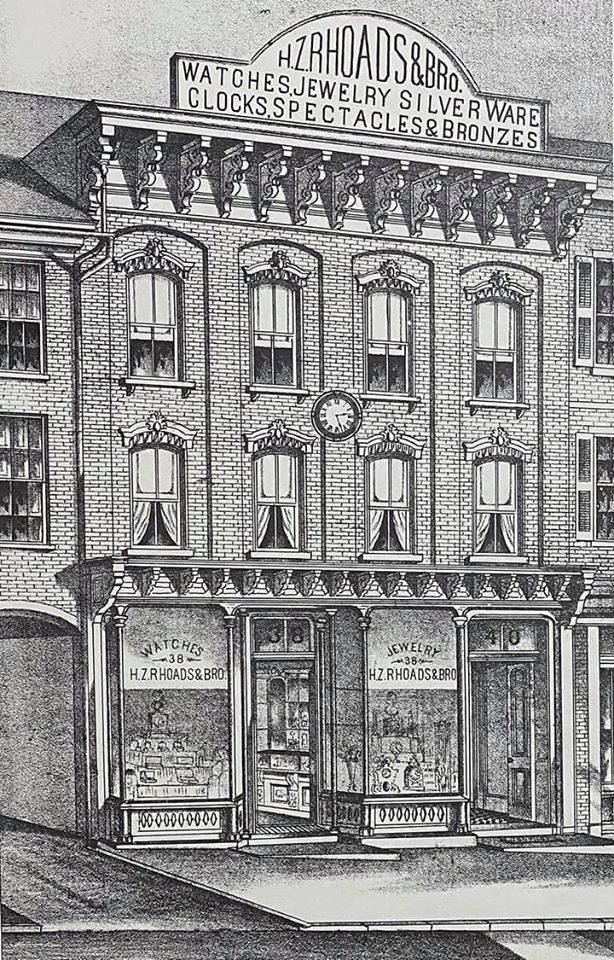 |
| The H.Z. Rhodes & Bro. Store on W. King St. |
 |
| The store today is Max's Eatery. |
 |
| Lancaster's First Courthouse taken with a camera obscura. |
 |
| Lancaster current courthouse with the city's oldest clock. |
 |
| Hamilton Watch which is now The Watch Tower Apartments. |
 |
| Bowman Jewelry Store and School of Watchmaking. |
 |
| One final view of the second oldest clock in Lancaster |
Friday, June 5, 2020
The "Takin' Your Sweetheart To The Drive-In!" Story
It was an ordinary day. Going through an old box in the space above our garage when I came upon a small metal device. Ah! I thought I had thrown that away years ago. It was a metal speaker about the size of a small box of candy. But, did it bring back memories from over 50 years ago! The device was a speaker that sat on the front window of my car when Carol and I had gone to the Comet Drive-In Theater one evening in the mid-1960s. If my memory serves me right...the weather had turned nasty and a downpour finally arrived. We decided it was time to head home, so I started the car and headed to the exit. Only thing I didn't do was put the speaker back on the post in the spot where the car had been sitting. Ripped the cord right off the post that held it. Thought I would be in trouble if I returned it the next day, so I put it in the box above the garage and finally found it today. The Comet Drive-In Theater was one of three drive-in movies that I can remember that filled the night sky with movie action. The nation's first drive-in opened in 1933 in Camden, New Jersey, but the owner was way ahead of his time. Never caught on due to the Great Depression and WWII. But, after the war all our soldiers returned, started families and began living the lifestyle we now know as "the 50s."
 It was actually in 1949 that Mr. Harry Chertcoff planned to build a 1,000 car drive-in about four miles east of Lancaster along the Lincoln Highway. Was going to cost him about a quarter of a million dollars. But, it never happened. Three more outdoor theaters were proposed in the next few years, but the only one that was ever built was that original one that Mr. Chertcoff proposed. On May 23, 1950 the "Sky-Due" theater opended on Lincoln Highway East, at the site of what is now Tanger Outlets. A full-page ad in the newspaper told of the opening with a playground for kids and a refreshment stand.
The first movie shown in the outdoor theatre was "The Green Grass of Wyoming." There was heavy rain the first night, but that still didn't stop about 400 cars from parking in the theater to allegedly watch the movie. By the early 1950s there were close to 1,000 drive-ins across the country. Then in 1955, Chertcoff opened his second drive-in theater along what is not Route 283, near Flory's Mill and Cloister Drive. Called it the "Comet" and it opened on June 22, 1955.
 Another full-page ad was posted in the local newspaper. This time the movie was "Rhapsody" which starred Elizabeth Taylor. Then in 1956 a Maryland-based partnership began to build a theater along Route 462 just east of Columbia. It opened on August 9, 1956 with the movie "A Man Called Peter". When baby-boomers reached their teen years, the number of drive-ins had grown to an all-time high in the USA of 4,063 in 1958. A few years later I turned 16 and before long I had a 1958 Chevy Impala convertible which was a real hit at the drive-in.
 Put the top down on it and I could sit three in the front and four in the back. Didn't make for a very romantic evening at the outdoor movies, but that was reserved for another evening the following week with my special girl. In 1962 a battle raged in Lancaster over the long standing "Blue Laws" that forbid entertainment venues from operating on Sundays unless township residents voted to allow such operation. Didn't bother the drive-in owners, since they probably factored in the fines in their ticket price for the Sunday movies.
Then in the early 1970s, the drive-in theater's popularity began to wane, so the owner of the Columbia Drive-In decided to show X-rated movies on his outdoor screen. Thing about that was you could see the screen from the Route 30 Bypass. Many would stop along side of the bypass to watch some of the movie with their binoculars. A few accidents began to take place so the police put up signs that you couldn't park there. Still slowed down the traffic along the highway! It also upset the neighbors who might of had a view of the screen from their homes. Some protested to the police department and eventually the owner stopped showing the movies.
 In 1979, the Comet Drive-In showed its last movie on September 13. Two days later the property was sold to a trucking company. Two years later the Sky-Vue showed their last movie..."The Night the Lights Went Out in Georgia." That land is now the home to Lancaster Outlet City, the county's first outlet shopping mall. In December of 1994 the Columbia announced they may close. It wasn't until 2005 that the last drive-in movie was shown at the Columbia Theater. But, along comes 2020 and once again three businesses in Lancaster are once again planning on beginning out-door movies. But, for now, with the pandemic still causing problems, we will have to wait and see. Just hope they buy a few extra speakers to hang on your car window for those careless people that are also forgetful. It was another extaordinary day in the life of an ordinary guy.

 |
| Opening of the Sky-Vue |


 |
| The screen of the Columbia Drive-In could be seen from the road. X-rated movies slowed the traffic. |

Thursday, June 4, 2020
The "To Courtney...With Love, Tampah!" Story
It was an ordinary day. June 4th, 2020 and my granddaughter, Courtney was supposed to graduate from High School today. She worked hard to maintain excellent grades and was a great student. And as a reward, she was to graduate today. She was supposed to walk up on the stage, cross it as everyone in attendance watched her, turn to receive her hard-earned diploma from the Principal of Urbana School District in Urbana, Maryland, and after shaking his hand, turn back toward the crowd who at this time would be cheering and applauding her. And, a slight smile would cross her beautiful face.
 |
Courtney and Tampa on the Ferris wheel at Ocean City, N.J.
|
 |
| A young Courtney with her Amah. |
 |
| Courtney with her sister Camille. |
 |
| One of my favorite photos of my first grandchild. |
 |
| Courtney at her Middle School graduation with her dad Dave and mom Brynn. The Mencarini Family. |
 |
| The night she tossed up the coin for the opening kickoff during the Battle For A Curee For Diabetes Night. |
 |
| She was a super pitcher! |
 |
| On her right wrist is her tattoo that means: I Am Greater Than My Ups and My Downs. |
 |
| Showing off her new College t-shirt. |
 |
| On a photo shoot with some of her friends. |
 |
| The day she had 5 minutes to be on the stage to accept her diploma and have her photograph taken. |
 |
| The Graduate! |
Wednesday, June 3, 2020
The "An Accomplished Artist And Author Known As Lawrence Bohme" Story
It was an ordinary day. Came across a very interesting post on the "WE ARE ST.MAARTEN" Facebook page that was posted by my friend Barbara. She asks readers if anyone remembers a boutique owned by Lawrence Bohme back in the late seventies in St. Martin or St. Barths? She didn't, but did know that he had drawn many pen and ink postcards of which she has a few. The post cards were amazing and featured scenes from Sint Maarten/St. Martin. I enjoyed them so much that I thought I would check out other sites to see if he had made pen and ink postcards of other islands where Carol and I had visited in the past. On Barbara's original post, she did give a link which tells the story about Lawrence, but I also found a few other sites that told a bit more about the artist. Lawrence Bohme, (originally spelled Böhme) was born in 1942 in London. His father was a German war refugee while his mother was a Welsh woman. The family emigrated to Vancouver, Canada as soon as WWII ended. His mother was an abstract artist who decided to take her son with her on a series of adventures throughout Mexico, Jamaica and Greenwich Village, New York where Lawrence graduated from the Charles Evans Hughes High School. Soon after, he became a student in Madrid, where he acquired the second name of "Lorenzo." He also studied at the Sorbonne in Paris as well as "the University of the World, Faculty of Life."
After a few years he set out on a 10-year exploration of South America and the Caribbean, setting up his one-man custom crafts boutique in various locations, St. Martin being one of those sites. In 1981 he returned to Europe and became a translator for Unesco in Paris and eventually found his way to southern Spain where he settled in the olive-farming town of Montefrio. Eventually his father bestowed on him part of a payment that had been granted to him by the German government years before. He then traveled to Rio where he met his wife Paula and conceived a daughter named Nina. Lawrence became not only an illustrator, specializing in pen-and-ink images, but an author who illustrated his own books for the next 30 years. He did so on three different continents. His original drawings have been sold in book and card shops in New York, Paris and Rio de Janeiro, as well as published in his own travel books.
One of those books features over 100 postcards of the life and scenes of famous cities and little-known villages. The book features drawings and how the artist's nomadic life led him to travel to it.
For the past ten years he has been working on his memoir, "Lorenzo, The Story of a Very Long Youth", and has thus far completed seven volumes "each one the length of a normal-sized novel", which are published separately on Amazon. I found an Internet site that features his books which I can purchase for my Kindle! "The Postcard Maker" is an art book reflecting the work of a self-taught "drawer" as Lawrence called himself, or as the free-wheeling adventure story of a curious and restless man who couldn't see enough of the world. His other books feature tales of travel with many being illustrated with his artwork. Google his name and you will find the site to order his books if you are so inclined. It was another extraordinary day in the life of an ordinary guy.
 |
| Lawrence Bohme, click on images to enlarge them. |
 |
| His postcards show a line across the bottom such as this one. |
 |
| His book which I recently purchased. |
 |
| Postcard illustrating Philipsburg, Sint Maarten. This card and the following three are from the collection of Barbara. Click to enlarge them. |
 |
| Postcard illustrating Town Hall in Philipsburg. |
 |
| Postcard showing Marigot in St. Martin |
 |
| Postcard illustrating Grand Case in St. Martin. |
Tuesday, June 2, 2020
The "Quarantine's From The Past: Part II - 1948" Story
It was an ordinary day. Just finished reading a column in the newspaper that is know as "I Know A Story." Every week the column is written by someone who usually lives close to Lancaster, Pennsylvania or someone whom may have lived nearby and has since moved out of the area. Today's story was written by Anne Rhodes Brockley and is titled "Remembering a quarantine in 1948." I suppose that many reading this story today weren't born in 1948 or if they had been, may not remember much about their childhood. Anne tells about the year that she and her sister were quarantined due to scarlet fever. She was almost 6 years old and her sister was 7. When school had ended their mother took both girls, as well as their 8 year old brother, to the circus. While at the circus, Anne felt ill and after returning home her mother called the doctor. He made a home visit and diagnosed scarlet fever. The doctor contacted the authorities as Anne was confined to the house. Two weeks later her sister also had the dreaded disease. Their brother was also told to stay in the house for the next six weeks, even though he had not been diagnosed with the disease.
The quarantine was tough on the three siblings, but was even worse on their mother. The whining got to be too much so their mother told Anne's brother to get on his bike and ride up and down the alley behind their house. A neighbor saw him and called the authorities. A Police officer came and warned their mother, with a wink, to keep him inside. I assume the patrolman might have had children and knew that six weeks in quarantine is unbearable. Anne said that her father was an amateur photographer and took a photograph of the sign on the front of their house at 1192 Maple Ave. Soon after the quarantine, they sold their house and moved into a bigger home. Probably in case it ever happened again, a larger home would give them more space during a quarantine. I suspect that scarlet fever wasn't as deadly as COVID-19. It originally resulted in death to 15-20% of those infected, but since the advent of antibiotic therapy, it is only deadly in about 1% of those infected. The signs and symptoms included a sore throat, fever, headaches, swollen lymph nodes and a red rash on the tongue that feels like sandpaper. I can remember having friends who had scarlet fever and who got to stay home from school for a couple of weeks. We all envied them, not knowing how serious a disease it could be. It was another extraordinary day in the life of an ordinary guy.
 |
| The photograph their father took of their front door at 1192 Maple St. Notice the Scarlet Fever sign. Click to enlarge. |
The "Quarantine's From The Past: Part I - 1941" Story
It was an ordinary day. The Sunday LNP newspaper had quite a few stories on the continuing pandemic we are still experiencing and probably will continue to experience for perhaps another year or more. One of the stories was about a retiree from nearby Lititz, Pennsylvania by the name of Joe Weaver who was among the many children who were required to stay indoors during the polio outbreak in 1941. For most of you, including myself, 1941 means nothing, since you and I weren't born at the time. Accompanied the story was a photograph that appeared in the newspaper showing Joe using a jigsaw at the Lancaster Recreation and Playground association. Joe was glad to be able to use it since it meant the end of his quarantine in 1941. (A note here would be the fact that Joe is not using goggles which would be required today).
Joe loved to work with his hands and still remembers when they closed the shop and made everyone go home due to the polio quarantine. Joe's dad was a supervisor at Armstrong Linoleum and they lived on Shippen Street at the time. He had to walk to school and walk downtown to go to the movies. When he was in 7th grade he wanted to join the track team, but his tuberculosis test came back positive. A later chest X-ray showed it had cleared up, but he was discouraged from doing any strenuous physical activity. At the time the only form of entertainment was the radio, since the television, video games and computer hadn't been invented. He did remember making necklaces from macaroni. Joe's sister, Annie, remembered that the polio scare began in August of 1941. She said that schools didn't open until a month or so into the usual school year. To make up the time they missed, their holiday vacations throughout the year were recalled. Children were not allowed to go to church, the movies, the library, the park, swimming pools or anywhere in public. Annie didn't remember anyone wearing masks back then. Joe attended St. Anthony's Catholic School, East Junior High and Lancaster McCaskey High School where he loved making things of metal and wood.
Joe spent two years in the U.S. Navy and then began working at Armstrong Cork Company. In the newspaper story, Joe reported that he didn't actually know anyone who had polio, but still remembers being kept indoors to avoid the disease. Dennis Weaver, the son of Joe, tells that his dad was a real do-it-yourselfer. He told the newspaper reporter that he worries about how his father will fare during the new coronavirus quarantine. His dad is accustomed to going out for breakfast and lunch often, but will have to curtail that for now. Joe is now 92 and still loves working with machinery. During his current quarantine, he is watching a bit more television than he had in the past. He does try and take care of the flowerbeds and bird feeders. He actually made his own mask out of cloth. This veteran of quarantines advised everyone to greet each day with a purpose. He advises everyone to start a hobby if you doh't have one. Do anything where you are creating something. He reports that when he goes to bed at night, he thinks about what he as accomplished during the day. And, being that he has been through two quarantines during his lifetime, he should know. It was another extraordinary day in the life of an ordinary guy.
 |
| Joe Weaver, polio quarantine survivor. |
 |
| Photograph from the Lancaster Sunday News on September 7, 1941 showing Joe working at the Lancaster Recreation and Playground Asso. |
Monday, June 1, 2020
The "Eating My Way Through Baseball" Story
It was an ordinary day. Looking at a small piece of green tablet paper my wife handed me with "Eating My Way Thru Baseball" written on the top and the name Barry Weinberg written on the bottom. She said I would probably enjoy reading the book while on vacation. The note sat on my desk a few weeks until yesterday when I "Googled" "Eating My Way Thru Baseball" and found the story of Barry Weinberg's love of our Nation's favorite pastime.
As I read more about Barry and his book I found he also wrote a blog. Within seconds I had his blog on my MacIntosh desktop computer and spent the next hour or so exploring his blog which is titled "Barry Weinberg's 'Eating My Way Through Baseball', Life's a journey, enjoy the meal!" As I read more I realized that Barry grew up in Silver Spring, Maryland which is a short ride from where my daughter Brynn and her family live in Urbana, Maryland (Yes...I even thought about a visit with Barry at sometime in the future). He writes in his blog that his life was changed when Frank Howard (Washington Senators baseball team All-Star) moved in across the street from him. Frank used to play wiffle ball with the neighborhood kids in the street and used to take him to the ballpark to watch batting practice. Barry graduated from Springfield College where he played baseball for four years. He then went to Indiana University to do graduate work. He claims to have had good grades in only two classes; Care and Prevention of Athletic Injuries and First Aid. Made his life's work easy to predict. Before long he was working for the Pittsburg Pirates organization as a trainer. To this day he still has no idea how he got the job, since he had no experience, didn't have a degree in athletic training, wasn't certified and hadn't finished his education. In another part of this blog I found a story of how he now lives his life. His love of baseball began nearly 60 years ago.
He has spent over 40 years working in professional baseball as an Athletic Trainer from the minor leagues to the World Series. Worked with the Pirates, New York Yankees, Oakland A's and the St. Louis Cardinals. He writes that "It is unbelievable to me what a young boy from Silver Spring, Maryland; Edith and Harold's only son; has had the opportunity to do." He also writes, "I've met and befriended wonderful personalities, a lot of whom are mega stars, and witnessed the funniest things (before games were televised) and heard the craziest stories everywhere from the dugout to the locker-room and dined all over the country and in many parts of the world."
Today he is known best as "Uncle Barry", since his college best friend Ed Folli's kids started to call him that. Then Ed's son Michael was drafted by the Cardinals and he continued to call Barry "Uncle Barry" so it stuck with everyone. He tells that he can't cook, but loves to eat out. I'm sure he has frequented many restaurants during his years of working in professional baseball. Actually the first sentence in his book says: "I can't cook - nor do I try." He now shares little tastes on his Blog in no particular order to wet your appetite. I must admit I loved his stories and the photographs he shared with everyone on his blog. I loved the story of his meeting and eating with Neil Alden Armstrong who was an American astronaut, engineer and the first person to walk on the Moon. You too can view his blog at: https://www.eatingmywaythroughbaseball.com/blog-1. It was another extraordinary day in the life of an ordinary guy.
 |
| Barry Weinberg |
 |
| Barry helping the St. Louis catcher off the field. |
 |
| Neil Armstrong |
 |
| Advertisement for his book. |
The "And...How About The Middle Name!" Story
It was an ordinary day. I was trying to remember how many of my friends didn't have a middle name. Thought for quite some time and couldn't find a single one who didn't have a middle name. Now, if you read my blog from time to time, you probably remember a story or two when I told you about all the trouble I have gotten into due to someone whose name is the same as mine, Larry W. Woods. Its been more than once that the people in authority (police) have called my wife asking about one Larry W. Woods. By now she knows how to handle the situation, since the other Larry W. Woods has a different middle name than I do. What did people do years and years ago when people didn't have a middle name or middle initial. The traditional middle name goes all the back to close to 3,000 years ago in Rome. In Rome it wasn't uncommon for Roman men to sport three names known as the praenomen, nomen and cognomen. The praenomen was the individual's personal name, such as Larry, whereas the nomen was the family name, such as Woods. The cognomen was slightly different and was more of a nickname that was passed down from father to son. This is different than how we use the three names today being that we use the nomen, or family name, as the last part of our name. Using a middle name probably became a normal practice in the 13th center when the elite in Italy began using it. By the 14th century, use of a longer name became popular across all social classes and made its way to the countryside, where it became even more prevalent. Parents had to decide if they should use the name of a saint for their newborn or if they show bear the family name. The former was thought to provide their child with protection in life. So, they began to use both.
 Using a middle name began to spread. Italy, Spain and France used middle names as well as England's upper class. By the start of the 19th century, Europe was full of citizens with three names and colonists in the United States were doing the same. Today it isn't unusual for us to use all three names from time to time. We known William Brad Pitt as Brad Pitt; we known John William Ferrell as Will Farrell. Your middle name is a portion of you personal name that is written between your given name and your surname. Some keep it as a name while others prefer an initial. I prefer an initial unless my wife happens to be talking to the police, then I prefer my middle name of William. But, what do we do when the woman gets married and has a maiden name? Does she now have four names? My wife decided to drop her third name of Baker and take my name of Woods so she still retains three names, with her middle initial still being "A" for Ann. I have a friend who I worked with who went by R. Dean Lemon. Boy did that screw things up! Seems he didn't like his given name of Ruel so he chose to be known as Dean. Same goes for the Principal of the school where we both taught. The principal's name was C. Wendell Hower. I never called him anything except Mr. Hower, so I have no idea what the C. stands for anyway. And, for my wife and I, I may have to be known as Larry William Woods in order to keep the police away from the house. Seems Larry Wayne Woods enjoys using just his middle initial, since it takes the police away from him for some time until my wife can explain to then that they are looking in the wrong place for their man. She's getting real good at doing that. It was another extraordinary day in the life of an ordinary guy.

Subscribe to:
Posts (Atom)