Extraordinary Stories

1944 (1) Act of kindness (12) Acting (2) Adoption (4) Adventure (766) Advertisement (6) Africa (1) Aging (14) Agriculture (47) Airplanes (9) Alphabet (5) American Red Cross (1) Americana (116) Amish (43) Ancestry (5) Ancesty (2) Animals (43) Anniversary (4) Antigua (10) Antiques (14) Apron (1) architcture (1) Architecture (36) Art (175) Art? (8) Arts and Crafts (69) Athletics (6) Automobiles (40) Awards (7) Banking (2) Barn raising (2) Baseball (103) Basketball (3) Batik (1) Beaches (89) Becoming A Citizen (1) Bed & Breakfast (2) Bee Keeping (6) Beer & Breweries (2) Bikes (3) Birds (9) Birthdays (34) Blindness (1) Blogging (5) Bookbinding (5) Books (12) Boxing (2) Brother Steve (12) Buisiness (3) Business (5) Canals (1) Cancer (14) Candy (30) Caribbean Islands (9) Caribbean Villas (15) Cats (5) Caves (1) Census (1) Chesapeake Bay (61) Children (28) Chocolate (4) Christmas (57) Church Adventures (122) Cigars (1) Circus (3) Civil Rights (8) Civil War (6) Classic Cars (7) Climate Change (5) Clubs (1) Coin club (2) Coins (1) Collections (73) Comedy (3) Comic Books (5) Commercials (1) Comnservation (2) Conservation (41) Covered Bridges (3) Craftsmanship (12) Creamsicle the Cat (11) Crime (16) Crisis (312) Cruise Travel (6) Crying (1) Culture (4) Dancing (1) Danger (16) Daughter Brynn (58) Daughter-In-Law Barb (7) Death (5) Death and Dying (65) Destruction (2) Donuts (1) Downsizing (2) Dunking (5) Easter (3) Eavesdropping (1) Education (48) Energy (15) Entertainment (165) Entrepreneurial (62) Ephrata (1) Etchings (1) Eternal Life (4) Facebook (5) Factories (4) Fads (6) Family (261) Farming (37) Father (42) Father Time (68) Favorites (88) Firefighting (1) Flora and Fauna (28) Fond Memories (490) Food and Cooking (171) Food and Drink (111) Football (16) Forgetfullness (3) Former Students (10) Framing (30) Friends (359) Fruits and Vegetables (3) Fun (4) Fundraiser (6) Furniture (1) Games (7) Generations (3) Gifts (1) Gingerbread houses (1) Giving (8) Globes (1) Golf (3) Good Luck (2) Graduation (1) Grandkids (136) Grandparents (3) Grandview Heights (29) Great service (3) Growing Old (8) Growing Up (187) Guns (2) Handwriting (3) Hat Making (2) Hawaii (49) Health and Well Being (61) Health Care (4) Health Hazards (110) Heartbreak (7) Heroes (26) High School (142) History (777) HO Railroading (4) Hockey (4) Holidays (134) Home construction (7) Horses (2) Housing (3) Humorous (71) Hurricanes (1) Ice and Preservation (2) Ice Cream (8) Inventions (34) Islands (4) Italy (12) Jewelry (3) Job Related (62) Just Bloggin' (56) Just Wondering (19) Juvenile Diabetes (5) Labor (3) Lancaster County (542) Law Breakers (8) LDubs In-Laws (3) Lefties (1) Libraries (1) Life's Lessons (175) Lightning (1) Lists (72) Lititz (18) Locomotives (1) Lodging (1) Love (4) Magazines (2) Magic (1) Maps (2) Marching (2) Market (5) Medical (161) Memories (28) Middle School (3) Milk (2) Minorities (1) Money (3) Mother (54) Movies (6) Mt. Gretna (1) Music (118) My Brother (19) My Wife (260) Neighbors (7) New Year's Day (5) Newspapers (4) Nicknames (2) Nuisance (3) Obsolescence (5) Occupations (2) Old Age (1) oldies (1) Pain and Suffering (12) Panama Canal Cruise (13) Parish Resource Center (14) Patriotism (3) Penmanship (1) Pets and Animals (99) Photography (220) Pizza (1) Plastic (2) Playing Trains (2) Poetry (2) Politics (27) Polution (3) Postal Service (2) Predators (2) Presidents (11) Pride (4) Printing (81) Protesting (3) Public Service (65) Questionnaire (1) Quilts (1) Race relations (6) Rain (1) Reading (4) Records (2) Religion (10) Retirement (4) Revolutionary War (3) Robotics (1) Rock & Roll (4) Rodents (2) Saints (4) Sand (1) Scouting (2) Sex (1) Shakespeare (1) Shelling (2) Shopping (24) Simple Pleasures (122) Slavery (6) Small Towns (4) Smoking (1) Snickedoodle (1) Snow (1) Son Derek (27) Son Tad (33) Son-In-Law Dave (27) Soup (1) Spices and Herbs (1) Sports (139) Sports and collectibles (1) Spring Break (1) St. James (2) St. Martin/Sint Maarten (306) Stained Glass (3) Stone Harbor (4) Story-Telling (26) Stragers (2) Strangers (4) Strasburg Railroad (1) Stress (3) Stuff (4) Suicide (2) Sun (1) Surfing (1) Tattoos (4) Teaching (49) Technology (90) Television (6) Thanksgiving (2) The Arts (6) The Beach House (62) The Flag (1) The Future (5) The Shore (78) This and That (23) Timekeeping (7) Tools and Machines (25) Tours (2) Toys and Games (31) Track & Field (1) Tragedy (8) Trains (19) Transportation (18) Travel (16) Trees (2) Trending (2) TV Favorites (23) Underground Railroad (10) Unit of Measurement (1) USA (2) Vacation and Travel (545) Vehicles (80) Vison and Eyesight (2) War (14) Watches and Watchmaking (5) Weather (48) Weddings (3) White House (1) Wisdom (3) Yearbooks (12) York County (3)

Sunday, May 23, 2021

The "Lancaster County Historic Preservation Trust Continues To Preserve Local History," Story

It was an ordinary day.  Sky is blue with a bit of a chill to the air when Carol and I hopped in the car to take a drive thorough the southern end of Lancaster County.  If you have been reading the stories on this site for some time, you probably know that Carol lived in the area known as Martic Forge for quite a few years.  A few years ago we drove back the stone lane in search of the home where she lived during her Junior and Senior High School years.  Sign at the end of her lane said "Do Not Enter," but I figured she must know someone along the Pequea Creek which ran in front of her Martin Forge home.  We found her old house, but couldn't find anyone to talk with, so we headed back the stone road once again.  

What at one time was the Smith-Coleman House and became Kepler Lodge
Just before we entered the main road, we looked to our left at the beautiful home known as the Smith-Coleman House along Marticville Road.  The property where the house sits used to be a 3,400-acre tract first warranted to Abraham, James and Thomas Smith in 1737.  The house which stands there today was built in several stages with Thomas probably building the first part of the home between 1737 and 1769.
An early look at the property
In 1769 a Sheriff Sale for the property told of a two-story stone house, one room in depth, with two rooms on the first floor.  Whom may have purchased the home is unclear, but I am assuming that Ironmaster Robert Coleman eventually purchased the home and added a three-bay section that is still part of the building that stands today.  He was said to have lived there from 1793 to 1805.  In 1796 the appraised value of the property was $5,785 while in 1805 it increased to $15,200 which was a extremely large amount of money.  
An addition to the original house can be seen here.
Between 1805 and 1815 another part of the home was probably added based on the interior design and the difference in woodworking.  Then in the 1930s and 1940s, the house was purchased by the YWCA and became known as Kepler Lodge.  Today there is also a tenant house, known as he guest house, a barn, spring house and shed on the property.  Today the Smith-Coleman House is part of the Historic Preservation Trust of Lancaster County.  
This is the latest section to be added.  To the left you can see an earlier addition
which is what the previous photo showed.
The Trust was established in 1966 to help "stem the rapid destruction of historic properties in Lancaster County.  Many historic properties have been saved since the beginning of the Trust.  As Carol and I exited the lane where she once lived,  I took the time to pull over and take a few photos of the place at the end of the road where Carol once lived.  We both enjoyed our scenic ride today and await our next journey back in time.   It was another extraordinary day in the life of an ordinary guy.

Saturday, May 22, 2021

The "Battling Another Nemesis" Story

It was an ordinary day.  Reading a bit more about the Brood X cicadas.  It was back on April 14 that I wrote a story about the impending arrival of the Brood X cicadas.  The last time the Brood X cicadas arrived was in 2004.  

The Brood X Cicada, a friendly bugger.
Seems to be freaking out many, many people, but perhaps they don't realize that they are perfectly harmless to humans, except for the constant annoying whine they make if they are nearby.   What should spook most people is the pending arrival of droves of mosquitoes that tend to arrive every year.  Seems they have no benefit to speak of, thus they are a constant threat.  I can still remember their whine as they buzz around my hearing aides that sit firmly in my ears.  Their buzz seems to be amplified to the point that they are annoying.  But, what annoys me more is the itchy welts they raise each and every time they land on me and plant their tongue, or whatever it is, into me.  Mosquitoes are more than just a nuisance, since they are usually at the top of the list of the deadliest animals on the planet.  They are carriers for a variety of diseases such as dengue, encephalitis, malaria and yellow fever.   The latest report I could locate for how deadly they are was in 2019 when over 400,000 people died from malaria, two-thirds of whom were young children.  Now, I realize that is not as deadly as the COVID-19 virus, but certainly tops anything a cicada could do to you.  So, just how do we defeat the ghastly mosquito?  You can sleep with a bed net over you or you can request the release of genetically modified bugs that will eliminate them.  But, I should tell you that mosquitos don't cause malaria, but it is a parasite that is in their saliva called Plasmodium.  Now if you are bitten by a mosquito that has Plasmodium in its saliva, you will more than likely get malaria.  The parasite invades the liver, multiplies, and goes back into the blood allowing another mosquito to slurp up your blood and continue the deadly cycle.  For COVID-19 we now have a vaccine, and it appears that a new malaria vaccine may be in the near-distant future.  The vaccine has been tried and is supposedly 77% effective in trials, making it the first candidate to cross a critical threshold set by the World Health Organization.  
The mosquito, the carrier of deadly diseases. 
More testing and data are needed before the vaccine can be given to more people.  Hopefully, testing of the malaria vaccine will be as productive as the vaccine for COVID-19 has been.  In Africa, malaria is the fourth leading cause of death in children under the age of 5.  If the new vaccine works as good as they hope, we'll be one step closer to making mosquitoes more of a nuisance than a threat.  Isn't science marvelous?  So, for now, enjoy the noisy Brood X cicadas knowing that they are only a noisy nuisance and not a deadly nuisance as other insects can be.  It was another extraordinary day in the life of an ordinary guy.  

Friday, May 21, 2021

The "The Only Thing Small Is In The Name" Story

It was an ordinary day.  Reading about a young man by the name of Robert Smalls and his accomplishments during his lifetime.  He was much like me except for a few small features...he was Black and a slave in South Carolina in 1839.  Both Robert and his mother Lydia were slaves of a man named Henry McKee.  When he turned 12 his mother persuaded Mr. McKee to send him to work in Charleston, South Carolina.  She reasoned with Mr. McKee that he could bring back his wages from his job and give them to him.  Robert began working at the Charleston docks were he learned just about every job on the ship where he worked.  He could handle the wheel and pilot a boat by the age of 17.  He met a young woman and they married when both were young.  His plan was to earn enough money to buy his family out of slavery.  Then the Civil War began and Robert found himself in the service of the Confederacy.  He was placed aboard the CSS Planter which was a transport ship that also laid mines.  

The CSS Planter
He became the pilot and learned the ports of Charleston as well as the ports in the states of Georgia and Florida.  The Union had formed a blockade seven miles off the coast of Charlston Harbor so Smalls formulated a dangerous plan.  In 1862 he recruited fellow slaves on the ship and devised an escape plan.  In May, the CSS Planter collected cargo of 200 pounds of ammunition and four large guns.  During the night it was common for the white officers to depart the ship for better sleeping quarters while the Black crew remained on board.  Small requested that the families of he and his Black crew members could have family visit with them.  He was given permission.  Their plan began when Smalls dressed in the captain's uniform and a straw hat and set sail, passing five forts along the harbor and right toward the Union blockade.  The Confederate flag was lowered and substituted with a white sheet.  Union officers boarded the ship and Smalls presented the ship and guns and asked for a Union flag to put on the mast.  The leaders of the Union Navy were particularly impressed with the young Mr. Smalls who had also presented them with a Confederate codebook and detailed intelligence regarding troop locations and armament they had on location.  Wasn't long before the union captured Coles island and held it until the end of the war.  Mr. Smalls was featured in a few Union newspapers and the Navy paid him and his crew a bounty for delivering the ship and guns. He was also employed by the Union to help identify the location of mines that the Planter had laid in Charleston harbor.  Robert Smalls was able to convince President Abraham Lincoln to allow Black soldiers into the Union forces.  Mr. Smalls met with the members of Lincoln's Cabinet before speaking with Pres. Lincoln.  The President was impressed with how Mr. Smalls told the story of the Planter and developed an appreciation and admiration for Robert Smalls.  Soon after the President issued an order to raise 5,000 African-American troops.  Throughout the war Smalls served on numerous ships as a pilot and eventually made his way back to the Planter.  During one ship battle, Robert took command and evaded capture and was promoted to rank of Captain.  He captained the Planter throughout the war and he and his ship were present when the U.S. flag was raised over Fort Sumter at the war's end.  In 1897 a special act of Congress awarded him a pension equal to that of Captain.  
Congressman Robert Smalls
Captain Smalls used his money to advance the Black community in South Carolina.  He opened a store, owned and published a Black-owned newspaper and co-founded a Black-owned horse-powered railway.  He also caused South Carolina to be the first state that offered compulsory free schooling for all races.  In 1868 he was elected to the State House and served two years.  He was then elected to the State Senate and served until 1875.  He later was elected to the U.S. House of Representatives, serving eight years across three terms for two districts.  Humble Robert Smalls died at the age of 75 in 1915 from diabetes and malaria.  School and Military locations in South Carolina have been named for him and in  2004 the U.S. Navy named a ship Major General Robert Smalls.  It was the first ship named after a Black man.  The plaque at his gravesite in South Carolina reads: "My race needs no special defense, for the past history of them in this country proves them to be equal of any people anywhere.  All they need is an equal chance in the battle of life."  
The plaque at the gravesite of Robert Smalls
Robert Smalls was certainly equal to the task!  A true HERO!  It was another extraordinary day in the life of an ordinary guy.

Thursday, May 20, 2021

The "So What's In A Name?" Story

It was an ordinary day.  Reading a story written by "The Scribbler" in the Lancaster Newspaper about how Peter T. Watt actually got his middle initial.  

Peter T. Watt, Lancaster resident
Peter was the co-founder of the Lancaster downtown department store know as Watt & Shand.  Seems that mercantile apprentices Peter T. Watt, Gilbert Thompson and James Shand opened the predecessor of Watt & Shand, aka The New York Store, on March 9, 1878.  
An early photograph of Watt & Shand in downtown Lancaster, PA
The New York Store featured lines of foreign and domestic dry goods as well as upscale merchandise.  During the first year of business, Gilbert Thompson died.  Soon after, Peter and James changed the store's name to Watt, Shand and Company.  Eventually it was renamed Watt & Shand.  The store thrived in downtown Lancaster, Pennsylvania and eventually opened another store in the newly built Park City Center in 1970.  Getting back to how Peter T. Watt actually get his name.  Well, that's what "The Scribbler" wrote about recently in his newspaper column.  Lady by the name of Nancy C. Groff happened to be the great-granddaughter of Peter T. Watt.  
An 1898 photograph of the updated and enlarged Watt & Shand Store.
She is now in the process of writing a biography of her famous ancestor as well as the store he founded.  Her numerous files and boxes of information have helped her find a bit about her great-grandfather, but she can still use some more information.  So...she wrote to "The Scribbler" for some help.  That's when he published his story!  A few facts that we do know about Peter T. Watt are that he owned part of the department store in downtown Lancaster as well as owning and living in a gorgeous house known as Roslyn, which is one of the finest Victorian mansions in Lancaster.  
Today the store has a new owner in Marriott, but the
front facade still remains intact.
But, Nancy still wonders about his middle letter "T" in his name.  Nancy made a visit to Stronsay, Scotland which was the place of her great-grandfather's birthplace.  While there she talked with relatives and asked them to explain the middle "T" in her great-grandfather's name.  She recalls that while there she talked with one of her great-grandfather's cousins, Jim Work Twatt.  They told her that the "T" in the surname became Peter's middle initial.  Jim and a neighbor told her that when Peter emigrated to the United States in 1970, he created a middle initial because "at the time it meant you had moved up in the world or it was a status symbol.  Now, that may be what "The Scribbler" found out, but I suspect that if you grab your Webster's Dictionary you might find another reason why he changed his name from Peter Twatt to Peter T. Watt.  In the dictionary you will find that "Twatt" means an idiot who uses pointless twitter as well as the word Twat is a vulgar word used as slang for "vagina";  also used in British slang as a way to call someone stupid.  Aha!  So now maybe we know why Mr. Peter Twatt changed his name to Peter T. Watt.  I certainly would have changed my name, wouldn't you have?  It was another extraordinary day in the life of an ordinary guy.

Wednesday, May 19, 2021

The "Sometimes Good Things Happen To Good People" Story

 It was an ordinary day.  Relaxing and reading the morning paper when I came across a story titled "THON volunteer gets big surprise."  For those reading this story and not knowing what "THON" might be, THON is Penn State University's IFC/Panhellenic Dance Marathon, or THON, which is the largest student-run philanthropy in the world.  THON is a year-long effort which raises funds and awareness for the fight against childhood cancer.  One year while Carol and I were visiting with our friends, Jere and Sue, who live in State College, we visited the event which was held in the gym at Penn State University.  Neat experience!  Well, my morning newspaper story told of a Penn State University student who will be graduating from Penn State who has both benefited from and raised money for the annual THON campaign.  He recently got a big surprise on NBC's "Today" program.  Seems that the fellow, by the name of Nicholas Vicidomini, who has helped by volunteering with THON for many years, was interviewed remotely for the hour of "Today" that is hosted by Hoda Kotb and Jenna Bush Hager.  He explained that he was diagnosed with lymphoblastic lymphoma in 2006, the summer after his first-grade year in Manheim Township School District.  Wow!  I read on and found that Nick had graduated from Manheim Township High School in 2017.  If you have been a reader of this blog you may perhaps remember that I too graduated from Manheim Township High School in 1962 and went back to teach in the same school district for 33 more years.  And...the name of Nick Vicidomini sounded very familiar!  Went to my home office and opened my cabinet that held the myriad of yearbooks that I have been the advisor to for over 50 years.  Did a bit of mental figuring and grabbed the 2012 Manheim Township Middle School Yearbook and opened it to the "The Class of 2017."  

Nicholas Vividomini as a Middle School student
Yep...there was Nick on page 43... and page 47, and page 48 and page 59 and...well I stopped looking at that point.  I do remember this young man from his time spent in Middle School and High School at Manheim Township School District.  Handsome young man who participated in just about everything from music to sports in his Middle School years.  His parents, Dennis and Carla, who were also interviewed on the show, told about their son being airlifted to Penn State Health Children's Hospital in Hershey, Pennsylvania, where his cancer was diagnosed, and also recalled receiving a sense of hope after being told that their expenses that were not covered by their insurance, would be covered by the Four Diamonds Fund.  
Photo submitted by NBC showing Nick with Hoda and Jenna
Well, Nick explained to Hoda and Jenna that in 2007 he traveled to Penn State for his first THON and felt like he wasn't being treated like "a kid with cancer...but just like a regular kid."  He told them that "I made a promise to myself: I want to help people feel the way I felt during the week of THON."  He told them, "It was honestly full circle.  "Growing up, being a part of THON as a family...being benefitted by this organization has been truly amazing.  Once I got to Penn State...I wanted to join this organization and try and give back as much as I could."  While on the show with Hoda and Jenna, he was connected virtually with his family as well as Four Diamonds families, staff and health-care workers who have been impacted by THON fundraising.  Then, the "Today" hosts surprised him with a $25,000. donation given by "Subway."  As I finished reading about Nick and his time on TV with Hoda and Jenna, something struck me.  I wrote about this young man several times in the past.  I opened a story in my blog and typed in "THON" in the upper white box at the top left of the page.  Sure enough, there were a few stories about THON as well as Nick.  If you care to read them you can find them on Monday, February 28, 2011; Sunday, March 24, 2013; Saturday, February 17, 2018; and Saturday, November 14, 2020.  It was another extraordinary day in the life of an ordinary guy.

Tuesday, May 18, 2021

The "Freedom Seekers In York and Lancaster Counties, Pennsylvania" Story

It was an ordinary day.  Reading just one more story about the Underground Railroad in Pennsylvania.  I have written a few stories in the past about the Lancaster heroes who were a part of the Underground Railroad, but this time the story I am reading tells about Lancaster's neighbor, York County and their efforts in the Underground Railroad.  If you are not aware, the term Underground Railroad refers to a loosely organized network of abolitionists and sympathizers who lived in the Northern states that sought to help African Americans in their escape from slavery in Southern states.  The Underground Railroad was a collection of patriotic people who had localized networks of friends known as "conductors" who helped coordinate people who would seek freedom for Southern slaves that had escaped from their prison of slavery in the South.  The destination of the slaves depended upon routes that had been set up that would take them to "safehouses" to the north.  I have written stories about those escaping through Lancaster County, Pennsylvania, but I have never written about their escapes through neighboring York County which had a much larger borderline to the south than Lancaster County did.  Evidently, there were common routes for freedom seekers traveling north through York County.  Many slaves tried to make their way North, through York County, as quickly as possible, but some found safe havens in York County and by the 1850s had settled in York County.  The routes and locations in York County follow with a photograph of the area if I was able to find one to post: 

New Market (The Maryland Border):  The Southern border was easy to cross, but there were quite a few slave hunters who made a living trying to capture slaves and return them to their owners south of the border.  If slave hunters managed to catch a slave north of the border, they would have to get local authorities to sign off on their papers before being able to apprehend anyone.  Luckily there were many friendly conductors who were Quakers and sympathetic with the slaves.  The Shepherd family of Quakers help guide freedom seekers north and out of harms way.  Many were directed towards the home of fellow Quaker, apple nurseryman and clockmaker Jonathan Jessop who lived along the Baltimore Pike.

Shrewsbury:  Not far from the southern Maryland border was a small town known as Shrewsbury that had quite a few slaves find their way through their town on their way to safety.  One farmer, John Lowe, Jr. operated a camp in the woods that hosted revivals for the Methodist Episcopal Church.  One of his tenants was Samuel Berry who was a free African American and well known conductor in the area.

Samuel and Mariam Berry:  Samuel and Mariam worked for years to earn enough money to buy their freedom.  They finally moved to Shrewsbury with their five children where they had a farm.  Samuel was also a conductor on the Underground Railroad.  One time he was caught by slave hunters and beaten.  Marian was so upset that when slave hunters appeared again she threatened them until they left, often apologizing for disturbing her.  On one occasion she headed to New Market to tell everyone there the slave hunters names and when the slave hunters arrive in town, the townspeople cried "Shame" to the men who sulked away.  No one ever bothered the Berry family again.

Town of Hanover
Hanover: This town was close to the Mason-Dixon Line which ran along the border between Pennsylvania and southern states.  Many freedom seekers found their way through this town on their way North.  The town was home to a local slave-catcher, William Otter who was born in England and a Royal Navy officer who deserted the Navy and came to the United States.  He was known as "Big Bill" since he was 6'4" tall and 250 pounds.  He was called upon by slave masters to help catch runaway slaves.  How well he did in a town that was anti-slavery I could not determine.

Fawn Grove:  This town served as a crossroads for freedom seekers coming through Maryland.  Quakers who lived in the farming town provided shelter and guidance for slaves.  Families in the town would help slaves on their trip north to ferry crossings.

Peach Bottom:  On the eastern side of the Susquehanna River from York County was Lancater county and a town known as Peach Bottom.  They had several active conductors who assisted slaves across the river.  One former slave, Henry W. Grant, married another freed slave and they moved to Southern Lancaster.  After they had their 12th child they moved to Peach Bottom where he helped fellow African Americans on their way north as well as hold meeting with other fellow conductors.

View of the Susquehanna River

Drumore Township:  After slaves had been shuttled across the river they would end up in Drumore where they would move deeper into Lancaster County.  Some were pointed in the direction of Quarryville along Peters Creek which eventually became known as Pilgrim's Pathway.

Jonathan Jessop:  Mr. Jessop was a clockmaker and creator of the York Imperial apple farm.  He was a member of the Underground Railroad and lived on an apple farm that is now the location of the Apple Hill Medical Center.  He and his two friends, Samuel Willis and Amos Griest, had a network that moved freedom seekers through York, PA to points north.  At times they were driven in carriages to the home of  Mr. Griest and hidden until they could escape to the north.

York:  York was the most important crossroads in the county for both freedom seekers and slave hunters.  Slaves could either head north to Harrisburg or east towards the bridge over the river towards Wrightsville in Lancaster County.  York had several conductors and sympathy organizations who would often shelter and guide freedom seekers.  One former slave, William Goodridge, used rail cars to transport freedom seekers into Lancaster, PA.

William Goodridge
William Goodridge:  William was born a slave in 1806 in Baltimore, Maryland.  At age 6 he was indentured to a tannery in York, but the tannery went out of business and William was granted his freedom.  He then became a barber and later married.  He became wealthy and was able to provide passage for slaves by putting them on his private railroad freight car to take them north to safety.  The Goodridge House is now recognized as a site on the National Underground Railroad to Freedom.  His home had a secret room hidden beneath his kitchen were slaves could safely stay until shipped north.  
Home of Samuel Willis
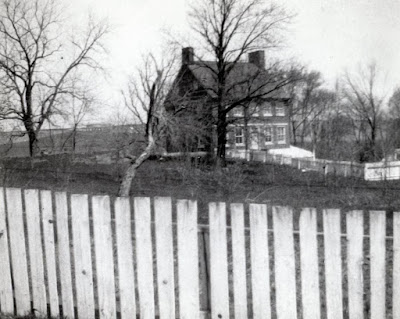
Samuel Willis:  Samuel "Kindly Friend" Willis was a member of the Underground Railroad.  He lived in York on a secluded farm property in Manchester County.  He was a Quaker whose building still stands today near the Codorus Creek.  He helped Freedom Seekers move through the town of York.  Today his home is a recognized site on the National Park Service's National Undergorund Railroad to Freedom.

Hallam
Hallam:  The road between York and Wrightsville sometimes had groups as large as 40 Freedom Seekers walk the route at night.  Along the route were several safe houses.  A tunnel was later found on the property of Abraham Hiestand that ran underneath the limestone highway and connected his Valley Inn to stables on the other side of the highway where fugitives could hide.

Jonathan Mifflin and Samuel Mifflin:  Miller was a veteran of the American Revolution who married Susanna Wright, the sister of William Wright.  Both families were part of the local Underground Railroad. Jonathan employed a free African American named Robert Loney as a raftsman on the Susquehanna River.  Robert would secretly transport Freedom seekers across the river at night to the town of Columbia. Jonathan died in 1840 and his son Samuel took over his job.  Sam and his wife eventually moved from the area and a Mr. Robert Loney took over the job conveying freedom seekers across the river to Columbia. 

The town of Wrightsville looking toward Columbia in Lancaster County
Wrightsville:  Freedom seekers arriving from York to the Susquehanna River ended up in Wrightsville.  The Columbia-Wrightsville Bridge was the final barrier between freedom and slavery.  Slave catchers knew this and would often wait for their targets by the bridge.  But, this area was also home for many conductors who ran a small network of boatmen who escorted thousands of freedom seekers across the river.

The Columbia side of the bridge.
Columbia:  The crossing of the river was mistaken as the border between the United States and Canada for freedom seekers.  Many freedom seekers celebrated when they got off the ferry, but were warned they were a long way from freedom.  The chances of being captured dropped quite a bit from here even though Canada was many miles away.

William Wright: Mr. Wright was the grandson of the founder of Wright's Crossing or Wrightsville.  He lived in Columbia and hated slavery.  He established a network of stations and safe houses spaced about 10 miles apart in the early 1820s.  He was responsible for the Underground Railroad in York County.

William Whipper
William Whipper: Mr. Whipper was a successful businessman in Columbia.  He lived near the Wrightsville bridge and was able to watch for freedom seekers on their way to Philadelphia.  He had private railroad cars that he would use to hide the slaves.  He even had special canal boats that he would place them on so they could eventually reach Pittsburgh.  He didn't believe that freedom seekers would ever be safe in the United States and would send some to Canada.  His home was watched by local slave hunters and one time his lumber yard was almost set on fire by one of them.

William Wagner painting of he city of York, Pennsylvania
York
:  Many York Countians feared participating in the regional Underground Railroad networks since Freedom seekers were considered fugitives from federal law and helping them flee could have serious repercussions.  One such person was caught and forced to sell their farm to pay the fine.  Both jail time and heavy financial penalties were used.  In 1850 the situation was made even more dangerous with the passing of the Fugitive Slave Act.  Most who did participate did so with more secretive efforts.  Those who did help Freedom seekers would be remembered and admired.

A Sketch by local artist Lewis Miller
of the Wrightsville-Columbia covered bridge.
Click on image to enlarge it to make it easier to read the cursive.

A drawing of Wright's Ferry on the Susquehanna River.

Monday, May 17, 2021

The "Trying To Re-Create History For $18 Million" Story

It was an ordinary day.  Sunday, October 21, 2007 to be exact and Carol and, I along with a few other friends from historical St. James Episcopal Church from Lancaster, Pennsylvania, headed down the street from our lodging in Rome, Italy to view the interior of the Rome Colosseum.  Years ago I wrote a story about our entire trip to Italy, but today my story deals with just one event, or should I say argument, about one of my favorite sites in Rome, the Colosseum.  

The Roman Colosseum in Italy
Seems that there are plans in place to cover the floor of the Roman landmark.  Once again, visitors to the site will be able to stand on the floor of the Colosseum and view what gladiators would have once experienced as they prepared for mortal combat.  Starring into the the banked crowds, perhaps under the gaze of the mighty Roman emperor himself, would have been not only scary, but perhaps the last sight they might have seen in their life.  Well, there was a contest set forth to cover the subterranean corridors that at one time were covered with wood.  I can still remember what appeared to be like a beehive of chambers that ran under the entire floor of the Colosseum.  
The interior of the Colosseum with the many chambers that at one time were covered with a wooden floor. I'm the one in the red jacket.
Recently, one person's design was picked which features a lattice of specially treated wooden slats that can be rotated to allow air to circulate and to expose the beehive if needed.  The winning design was created by an engineering consulting company led by Milan Ingegneria.  The cost to rebuild the floor of the Colesseum will be approximately $18 million US dollars.  The new surface is expected to be in use by 2023.  At present, just about all the chambers at the base of the Colosseum are exposed to view with only a  7,000 square foot section covered due to a floor that had been installed in 2000.  That section had been used for the staging of "Oedipis Rex," by Sophocles.  When the new floor is in place, visitors will be able to stand on the new wooden floor of the Colosseum and feel what it must have been like years and years ago. It was said that, "Reconnecting the thread of time, we are finally returning to the public the same view that people had from the stage of the monument during antiquity."  The Roman Colosseum is Italy's most visited site with close to 8 million visitors taking in the the glory of years past every on a daily basis.  
The day I first saw the Colosseum.
If I close my eyes, I can remember back to that day in 2007 when I  left our hotel room, walked two blocks to my left and there it was, about 3 blocks down the road to my left.  A vision I will never forget!  Before long, my wife Carol and I and a few of our friends were standing in line for a chance to walk through the Colosseum and experience what it must have been like years and years ago.  And...we were not disappointed.  Even though it is a huge stone bowl, standing at the top of it and looking down into what at that time were underground tunnels that sat under the main floor of the Colosseum at one time.  I'm not sure how I feel about covering the tunnels.  I loved looking at them and trying to imagine what it must have been like to have to traverse throughout them in order to get my chance to see if I would survive combat or pass along to the next world.  There are some experts and very important people who also are questioning why all that money should be spent to cover what so many people have come to enjoy.  One such person, historian Tomaso Montanari said, "From the point of view of cultural policy, it serves no purpose to cover the floor.  Monuments are not things to be filled.  It's all very ridiculous, it's Italy seen via Las Vegas."  
Perhaps this view will disappear after they have constructed a new floor over what at the time were underground tunnels.
Another retired archaeologist who worked at the University of Urbins, also expressed skepticism and said that the section that was rebuilt in 2000 "already gave a good idea of the relation between the auditorium and the underground area.  There is no need to create 'a false arena'."  The new design of covering the floor will be a system of pulleys that can be used to open the floor for people to see the tunnels under it if necessary.  The new architects for the floor claim that "The structure is light and recalls both in form and function the original plan of the wooden area at the time it was first in use."  As for me, I was so excited to view this wonder of the world that I just assumed that it was meant to be the way it was for eternity.  Looks like I assumed wrong.  Perhaps those of importance will change their mind and keep it the same as it has been for ages.  It was another extraordinary day in the life of an ordinary guy.   

Sunday, May 16, 2021

The "The Flying Cloud In Manheim" Story

It was an ordinary day.  Standing in front of the REO Manheim Marketplace in the small town of Manheim which is about 10 miles from the city of Lancaster, Pennsylvania.  Read in the Lancaster newspaper yesterday about a new edition to the Marketplace that now sits in front of the REO Manheim Marketplace at 51 N. Main Street in downtown Manheim.  The REO Marketplace is located in a series of buildings that had formerly been Bickel's Snack Foods.  The location was the home of Manheim's first automobile dealer in 1907.  The REO dealership, which at one time stood for Ransom Eli Olds who was the founder of Oldsmobile, was acquired by J. Harvey Spahr and remained in operation as an automobile dealership into the 1930s.  Today, a partnership known as Staudt McGovern Holdings owns the property and has been redeveloping the old REO Manheim Marketplace.  Two of the members in the partnership are Suzanne and Barney Reiley who happen to have friends who are REO automobile enthusiasts and told them about a 1929 REO Flying Cloud that was for sale.  Bob and Heidi happen to already have a 1930 REO Flying Cloud that was purchased from the owner of the earlier dealership of J. Harvey Spahr REO.  Well, the Reileys purchased the vehicle in February of 2020 and had it clear-coated and placed it in storage until the outdoor space at the Manheim REO Marketplace became available.  The REO was a perfect fit for a business know as the REO Marketplace and it went on display this past March.  Well, if you have been reading this blog for sometime, you may remember that I have a soft spot for automobiles having had a 1953 Henry J as well as a variety of other cars, including a 1987 Corvette during my lifetime.  So...I just had to hop in my car and head to nearby Manheim to take a look at this new addition.  

1929 REO Flying Cloud
I immediately saw it under a roof along the main street and found a parking space and made a visit.  Not sure what I had expected, but it isn't in pristine shape to say the least.  It's actually in need of a whole lot of work!  And being it is an antique car, it will cost the owners a pretty penny to restore it to pristine condition.  First thing I noticed was the PURDUE UNIVERSITY STUDENT PERMIT sticker from 1950-51.  
Sticker on the windshield in front of the rear-view mirror.
Made me wonder what it may have looked like 70 years ago.  I happened to be the only person in the vicinity, so I spent the better part of the next half-hour looking at every part of the car and taking quite a few photographs to share with you.  I'm sure that with a bit of restoration the car may at one time look as it perhaps did in 1929.  Check out the photos that follow.  It was another extraordinary day in the life of an ordinary guy.

Over all look at the car from the right passenger's side.

Rear shot showing the spare tire on the back of the car.

I just love the wooden spokes and wide white walls.

Head lamp

Running board which holds what looks to be metal foot scrapers.

The familiar REO logo.

Twin door handles that are next to one another.

This looks to be a shock that is fabric.

Rough interior with very little instrumentation.

View of front seat and gauges from the passenger side.  I liked the "suicide knob" on the steering wheel which today is illegal.

Wooden braces with light on the ceiling of passenger area.

Final photo shows the wooden floor of the automobile.


The "Back In The Days When Grocery Bagging Was A Supermarket Art" Story

It was an ordinary day.  Standing at the end of the check-out line, putting our groceries in the fabric bags we had purchased a year or so ago.  Got tired of trying to find a place to reuse the plastic bags that our groceries were placed in for years.  Finally decided to buy a few reusable fabric bags that our local supermarket had at the end of the check-out line.  Week after week I would bag our weekly purchases and from time to time the check-out girl or guy would thank me for saving them the trouble of having to bag everything.  Usually gave them the same old spiel about working at a grocery store years ago and bagging groceries all day long.  Got pretty good at it after doing it long enough.  It was back in 1960 that I got my first official job.  My dad was the manager at a local wholesale jewelry store and one of his customers was a fellow by the name of Doc Bennett.  Doc was the manager of the local Acme Supermarket and one day my dad and Doc got to talking and...well when he came home from work he asked if I wanted a job at the Acme Supermarket stocking shelves and bagging groceries.  I would get paid $2.32 an hour for the job.  Didn't take me long to snap up the job since most of my friends were getting $1.00 an hour pumping gas.  But, in order to begin the job I had to go to "Grocery School."  I was driven, along with two other new hires, to Philadelphia to participate in a two-day school on how to stock shelves, bag groceries and run a cash register.  We were taught how to pack a bag so it wasn't too heavy or so it didn't tear and how to stock shelves by moving the current stock to the front and placing the new supply to the rear.  As far as using a cash register, we were taught how to figure out what the price of one item might be if the product was priced at perhaps 3 for $.49.  To this day, I still thank them for making my math skills, especially in mental mathematics, fantastic.  I began my job at the Lancaster Acme Supermarket on North Queen Street a week after returning from my schooling in Philadelphia.  At first I stocked shelves and packed grocery bags, just as I had been taught at grocery school.  Enjoyed the job, but loved the pay check at the end of every other week.  Before long I had enough money to buy my own car and keep gas in the tank.  By the time I was a Senior in high school, I was operating a cash register at the Acme.  Not the type that you see in grocery stores today, but cash registers where you had to punch in the price of each item and when necessary calculate the cost of one item when the price was 2 for or 3 for or maybe even 4 for one total price.  No hand calculators or cell phones to do it for me.  I had to rely on my memory to do it for me.  Perhaps the reason that after my Senior year in high school, I wanted to be a math teacher.  To this day I can still calculate unit prices at the grocery store when Carol and I shop each week.  Would you know what one can of soup would be if the price on the shelf was 3 for $.49?  Answer is $.17 a can.  I had to figure out unit prices quickly in my head or go back to bagging.  Funny, but I can still remember that my very first customer I checked out had a total bill of exactly $50.  The customer, after I told them they were my first customer, was sure I had made a mistake, since what are the chances that the bill would come out even like that.  Manager arrived at my register and after looking at the receipt, told them I had done a great job and in fact their bill was actually $50.  My manager at the Acme, if you remember, was my dad's good friend, Doc Bennett!  I loved my job and when a brand new Acme Supermarket opened two years later near Millersville, Pennsylvania, which was close to Millersville State Teacher's College, where by now I was a student, I was asked to change job location and work at the Millersville Acme.  Worked there part-time until I graduated in 1967 from Millersville.  Well, I still enjoy packing my own grocery bags and when the check-out person at the local Giant Supermarket sees me in line, they know they will not have to do any packing for this customer.  Most employees in the store know my story by now, since I tell it to anyone who will listen.  Just ask my wife!  And...now you too know it!  It was another extraordinary day in the life of an ordinary guy.

Friday, May 14, 2021

The "Trying To Be Just Like My Uncle Bob" Story

It was an ordinary day.  Watching "ME-TV" so I can view a few of my favorite Westerns that I used to watch as a young boy while growing up in the north end of the city of Lancaster, Pennsylvania.  Covered Wagon Theater, Bonanza, Rawhide and Gunsmoke were some of my favorites which I never missed when they were on TV.  Just loved the cowboys in their leather jackets, wide-brimmed hats and twin holsters with white-handled pistols.  Also didn't matter if the show was in black and white.  Would never miss a show unless it meant visiting with my Uncle Bob on his dad's farm in Strasburg, Pennsylvania.  He would often invite me to help him on the farm with duties such as sheering the sheep or slaughtering the hogs or even mending the fences around the perimeter of his dad's farm.  Around certain parts of the farm were fences made from wooden posts with barbed wire stretched between them.  One entire field was enclosed in barbed wire in order to keep the steers from roaming the roads of Strasburg.

Fellow carefully rolling barbed wire.
Barbed wire came about in the mid-19th century and became known as devil's rope.  I can remember several large cuts and scratches I received  from barbed wire while visiting with my Uncle Bob.  Mom and Dad would always tell me to stay away from the fences when I visited with him.  The guy who is given credit for the making of barbed wire is a man named Joseph Glidden.  The first purpose of barbed wire was to keep animals in, not to keep people out.  And, to display how easy this was, Glidden made himself enormously rich on the near grassless plains of the west Texas panhandle when he housed the near unimaginable number of 20,000 head of cattle.  He was able to corral these animals in such numbers and at such relatively low cost by ringing the entire ranch with his newly made wire...some 120 miles of it, at a cost of some $39,000, far less than a conventional wooden fence, and far less cumbersome.  Beef became all of a sudden both cheap and available, with the result that almost overnight it would replace pork as the preferred national dinnertime dish.  And, the corralling took place because of the invention of barbed wire.  Once Mr. Glidden's famous patent, #157124, was approved, it seemed that every farmer west of the Mississippi was determined to string his newfangled barbed wire along their property lines.  Then the railroad companies began to do the same to keep the animals off their tracks.  Then along came razor wire which became the world's default barrier to unwanted movement.  Kept prisoners in and kept rabbits out.  Also was a painful reminder that to trespass was a mistake.  Never saw any razor wire at my Uncle Bob father's farm, but there was plenty of barbed wire.  The only thing I do remember about his farm were the signs he attached to his barbed wire fence that said "POSTED" which meant "No Trespassing" which meant he didn't want you to hunt on his property.  Never could figure why anyone would want to shoot a steer and try to get it past the barbed wire.  I do remember hunting on my Uncle Bob's dad's farm, but never remember shooting anything during the couple of times I went hunting there.  Uncle Bob would usually get a few rabbits or a couple of pheasants, but for some reason I never got anything.  Perhaps the .22 gauge rifle I was using wasn't as good as the shotgun that he used.  He probably reasoned it didn't matter if I shot anything as long as I was having a good time.  Probably right, since I did enjoy my time with my Uncle Bob.  Really missed him after he died.  But, I will never forget those barbed wire fences we walked along on the borders of his dad's property.  It was another extraordinary day in the life of an ordinary guy.

Thursday, May 13, 2021

The "Almost All The News Was Bad Today In Lancaster County" Story

It was an ordinary day.  Reading the local newspaper which today had 24 pages to it.  Less than half of that was actual news, be it local, state or national.  And, for some strange reason, the majority of what was considered news was very disturbing, to say the least.  On page one was a story from the small town of Quarryville, which is in southern Lancaster County.  Story titled "Police: Parents locked up children" which told of parents who locked their three very young children in a third floor bedroom while they went to a motor show at the Buck Motor Sports Complex.  Neighbors saw the three hanging out a third floor window and called the police.  The story was carried over to page 2 where it was written that the police reported there was a very strong odor of urine and feces in the room and there was no bedding in the room.  The parents were brought back from the event and arrested.  All three children were put in the care of foster parents.  The parents were both taken to the county prison where they remained since they couldn't come up with the $40,000 cash bail.  Luckily, stories like that don't appear too often in Lancaster.   But, on page three were two more stories which almost matched the one on page one.  One story titled "Teen partying case moves through court" told of a Manheim Township husband and wife who will be tried in Lancaster County Court on charges they let their teenage children, ages 14 and 15,  host numerous parties that involved underage drinking and smoking marijuana.  After one of the parties this past year, a teenage girl got into a DUI crash in the city.  The couple waived a preliminary hearing.  The next step in their case is formal arraignment at which time they will enter pleas.  According to the police, they were called to the home 21 times in the recent past.   Some of the parties had 40 to 50 minors at them.  The couple have been charged with one felony count of endangering the welfare of children as well as one count of corruption of minors and furnishing alcohol to minors.  They were free on $25,000 bail.  Below that story was a story titled "NJ man charged with choking ref" which was about a New Jersey Man who was charged with choking an official at a local sports complex.  Seems he didn't like the call the referee made during a wrestling match, so he pushed the official and put his arm around the official's neck in a choke hold.  Bystanders broke up the fight.  The father was upset that his son lost and wanted to talk to the official about the match.  The official began to leave and that is when the parent grabbed the official.  The police were called and the father was confined to Lancaster County Prison after he was unable to come up with the $20,000 bail.  He will face a hearing on June 23rd.  Where he will remain until then was not reported.  His poor son will certainly suffer from the acts of his father.  Then on the next page was a story titled "Police say cycle rider, 21, posted videos of chase" which told of a local man who led police on a high speed chase, racing and violating numerous traffic laws while riding his motorcycle.  The police were able to track him down since he posted videos of himself outracing the police.  The man was charged with fleeing or attempting to elude an officer; altered, forged or counterfeit documents and plates; recklessly endangering another person; and 10 traffic violations.  Videos he posted to "You Tube" showed him running stop signs, reaching speeds of up to four times the legal limit (140mph in a 35 mph zone), weaving through traffic and driving under farm equipment.  Oh yeah, he didn't even have a motorcycle license.  The young man frequently reported on his videos that he doesn't stop for police, has no registration plate and drives recklessly.  He faces an upcoming hearing.  Wonder if he will be there?  I should also report at least one good story from today's newspaper. Story title read, "Longtime police horse retiring from force."  Seems that "Duke" is leaving the force after 18 years of service to the city of Lancaster.  Duke is a 22 year old Percheron who will be clopping down from his position as a police mount after 18 years of service at Saturday's "Coffee With A Cop" event at the Pennsylvania College of Art an Design Art Park at North Prince and West Chestnut streets.  He will be retiring to a private farm where he will be able to enjoy his golden years.  He retires after being the longest serving police animal in Lancaster police history.  He was a crowd favorite due to his massive size, white coating and gentle disposition.  The 2,100 pound horse served as part of protection details for VIP's, politicians and world leaders.  He was an Amish plow horse before becoming a police horse.  Duke certainly deserves a long awaited retirement.  I'm sure he must have read the morning newspaper and realized he didn't want to have anything to do with what is going on in Lancaster at present.  So, as you can see, news in Lancaster isn't all bad, but today it seemed to outdistance the good stuff. Did make for an interesting read, though.  It was another extraordinary day in the life of an ordinary day.

Wednesday, May 12, 2021

The "President-Elect Lincoln On A Whistle-Stop Tour To Washington" Story

It was an ordinary day.  Monday, February 11, 1861 and President-elect Abraham Lincoln was getting ready to board his train at the station in Springfield, Illinois for a Whistle-Stop Trip to Washington, D.C.  During the next few days he would have the chance to meet many of his supporters as well as narrowly avoid an assassination attempt on his way, by rail, to the White House.  

The engine that pulled Lincoln's train.
He needed to arrive in time to take his oath as President of the United States on March 4.  At approximately 7:30 a.m., the President-elect left for the railway staton without his wife, who would join him later.  Wasn't long before he boarded the train at Springfield's Great Western Railroad Depot.  He stood on the platform at the rear of the train and said to the crowd, "To this place, and the kindness of these people, I owe everything...I now leave...with a task before me greater than that which rested upon Washington."  His train made a stop at Decatur, Illinois where he greeted the crowd and then on to Tolono, Illinois for more of the same.  Then it was on to Vermilion Country Train Depot and then State Line City, Indiana for more of the same.  In Lafayette, Indiana he was joined by a committee of Indiana politicians in State Line City where he spoke before a crowd in Lafayette.  He told the crowd, "While some of us may differ in political opinions, still we are all united in one feeling for the Union.  
Map showing Lincoln's rail route to Washington, D.C.
We all believe in the maintenance of the Union, of every star and every stripe of the glorious flag, and permit me to expose the sentiment that upon the union of the States, there shall be between us no difference."  Before long he was back on the train and off to stops in Thorntown, Lebanon and Zionsville.  He arrived at is last stop in Indianapolis, Indiana at 5:00 P.M. where he was welcomed by Governor Oliver Morton and a 34-gun salute.  He joined a procession of 20,000 state legislators, public employees, soldiers, firemen and others.  He stayed in Indianapolis for the night and with his wife at his side, they boarded the train at 11:00 A.M. the following morning en route to Cincinnati, Ohio.  The train made stops at Shelbyville, Greensburg, Morris and  Lawrenceburg before finally arriving in Cincinnati, Ohio.  A public reception was held for him by the German Industrial Association where Lincoln spoke to the crowd saying, "I deem it my duty...that I should wait until the last moment, for a development of the present national difficulties before I express myself decidedly what course I shall pursue."  He was reluctant throughout his rail journey to make definite public statements on the secession crisis.  The following morning Mr. Lincoln was escorted by members of the Ohio Legislature to the Railroad Station where he departed on the Little Miami Railroad at 9:00 A.M.  His stops on that Wednesday, February 13, 1861 were stations at Miford, Miamiville,  Loveland, Morrow, Corwin, Xenia, London and Columbus, Ohio.  The largest crowd to greet him was in Columbus where 60,000 people greeting him where he spoke to the public from the steps of the state Capitol, but his address was curiously "out of touch with reality" speech.  "It is a consoling circumstance that when we look out there is nothing that really hurts anybody," he said.  "We  entertain different views upon political questions, but nobody is suffering anything."   The following morning, Thursday, February 14, 1861, a rainy day, he left before 8:00 A.M. for his next stop at Pittsburgh, Pennsylvania.  Short stops were made at Newark, Ohio, Frazeysburg, Dresden, Coshocton, Newcomerstown, Uhrichsville, Cadiz Juncion, Steubenville, Wellsville, Rochester, Pennsylvania and Allegheny City, PA., and Monongahela House, Pittsburgh where Lincoln was awestruck by the size and strength of the crowds that gathered to greet him on the streets of Pittsburgh.  The following day, February 15 he made more stops in Ohio including Cleveland where amidst a snow storm he arrived to another large crowd.  It was on this day that Lincoln's inaugural address was thought to have been lost by Robert Lincoln.  The following morning, Saturday, February 16 he left to travel to Willoughby, Painesville, Madison, Geneva, and Ashtabula, Ohio where the crowds called for Mrs. Liincoln to make an appearance from the train car, but President-elect Lincoln replied that he had found it very difficult to make her do what she did not want to.  Then it was on to Conneaut, Ohio before crossing into New York to Westfield where legend meets lore when then bearded Lincoln meets 12-year-old Grace Bedell, the young girl who advised him to let his whiskers grow.  "Acting partly upon her suggestion, I have done so," he said.  "And now, if she is here, I would like to see her."  The two met and he gave her several hearty kisses amid the yells of delight from the excited crowd.  Then it was off to Dunkirk, Silver Creek and Buffalo, NY where he is greeted by former President Millard Fillmore and 10,000 supporters.  The following morning he left Buffalo at 5:45  in the morning, Monday, February 18 with newspaper man Horace Greeley onboard.  Stops followed at Batavia, Rochester, Clyde, Syracuse, Utica, Little Falls, Fonda, Amsterdam, Schenectady and Albany, New York.  Tuesday, February 19, 1861 saw stops at Troy, Hudson, Rhinebeck, Pougkeepsie, Fishkill, Peekskill and the Hudson River Railroad Company in New York City.  It was here that Walt Witman said, "I shall not easily forget the first time I ever saw Abraham Lincoln...From the top of an omnibus I had, I say a capital view of it all and especially Mr. Lincoln: his looks and gait; his perfect composure and coolness; his unusual and uncouth height; his dress of complete black, stovepipe hat pushed back on this head; dark-brown complexion; seamed and winkled yet canny-looking face; black, bush head of hair; disproportionately long neck; and his hands held behind, as he stood observing people."  About 250,000 people watched as Lincoln's 11-car procession to the Astor House ended his day.  The following morning, Wednesday, February 20 saw stops at the Academy of Music in New York, City Hall and the Astor House.  The following day he took in Cortland, St. Ferry, Jersey City, New Jersey, Newark, Elizabeth, Rahway, New Brunswick and the New Jersey State House in Trenton, NJ.  The last couple of stops that day were to Bristol, PA, Kensiington Depot in Philadelphia and The Continental Hotel where he discussed a plot uncovered to assassinate him while in Baltimore.  The railroad company's detectives support this intelligence.  He pledges to consider altering his schedule, but insists on fulfilling his engagements in Philadelphia and Harrisburg, PA.  Friday, February 22, 1861 and he is at Independence Hall where he says, "I have never had a feeling politically that did not spring from the sentiments embodied in the Declaration of Independence.  Before leaving, he raises a new flag of 34 stars over Independence Hall.  Kansas had just been admitted earlier that month.  Next it was to the Philadelphia Train Station with Allen Pinkerton accompanying him.  Telegraph lines out of the city were cut to prevent word of the trip from spreading south.  
Lincoln's stop in Lancaster, Pennsylvania.
Three more stops saw him in Leaman Place, Pennsylvania, Lancaster and Harrisburg where he went to the Pennsylvania State House.  New plans were drawn for his arrival in Washington due to security worries.  Saturday, February 23, 1861 had him at President Street Station in Baltimore, Maryland with an arrival in Washington, DC.  The President-elect was widely ridiculed for his secretive entrance into Washington.  
Abraham Lincoln arriving in Washington D.C.
Both newspapers and the general public were worried they had once again elected a weak, indecisive commander-in-chief.  Fortunately for the Union, the fears were unfounded.  Lincoln's Whistle-Stop Train Trip to Washington was exhausting for all.  But he survived it, luckily.  It was another extraordinary day in the life of an ordinary guy.