Extraordinary Stories

1944 (1) Act of kindness (12) Acting (2) Adoption (4) Adventure (766) Advertisement (6) Africa (1) Aging (14) Agriculture (47) Airplanes (9) Alphabet (5) American Red Cross (1) Americana (116) Amish (43) Ancestry (5) Ancesty (2) Animals (43) Anniversary (4) Antigua (10) Antiques (14) Apron (1) architcture (1) Architecture (36) Art (175) Art? (8) Arts and Crafts (69) Athletics (6) Automobiles (40) Awards (7) Banking (2) Barn raising (2) Baseball (103) Basketball (3) Batik (1) Beaches (89) Becoming A Citizen (1) Bed & Breakfast (2) Bee Keeping (6) Beer & Breweries (2) Bikes (3) Birds (9) Birthdays (34) Blindness (1) Blogging (5) Bookbinding (5) Books (12) Boxing (2) Brother Steve (12) Buisiness (3) Business (5) Canals (1) Cancer (14) Candy (30) Caribbean Islands (9) Caribbean Villas (15) Cats (5) Caves (1) Census (1) Chesapeake Bay (61) Children (28) Chocolate (4) Christmas (57) Church Adventures (122) Cigars (1) Circus (3) Civil Rights (8) Civil War (6) Classic Cars (7) Climate Change (5) Clubs (1) Coin club (2) Coins (1) Collections (73) Comedy (3) Comic Books (5) Commercials (1) Comnservation (2) Conservation (41) Covered Bridges (3) Craftsmanship (12) Creamsicle the Cat (11) Crime (16) Crisis (312) Cruise Travel (6) Crying (1) Culture (4) Dancing (1) Danger (16) Daughter Brynn (58) Daughter-In-Law Barb (7) Death (5) Death and Dying (65) Destruction (2) Donuts (1) Downsizing (2) Dunking (5) Easter (3) Eavesdropping (1) Education (48) Energy (15) Entertainment (165) Entrepreneurial (62) Ephrata (1) Etchings (1) Eternal Life (4) Facebook (5) Factories (4) Fads (6) Family (261) Farming (37) Father (42) Father Time (68) Favorites (88) Firefighting (1) Flora and Fauna (28) Fond Memories (490) Food and Cooking (171) Food and Drink (111) Football (16) Forgetfullness (3) Former Students (10) Framing (30) Friends (359) Fruits and Vegetables (3) Fun (4) Fundraiser (6) Furniture (1) Games (7) Generations (3) Gifts (1) Gingerbread houses (1) Giving (8) Globes (1) Golf (3) Good Luck (2) Graduation (1) Grandkids (136) Grandparents (3) Grandview Heights (29) Great service (3) Growing Old (8) Growing Up (187) Guns (2) Handwriting (3) Hat Making (2) Hawaii (49) Health and Well Being (61) Health Care (4) Health Hazards (110) Heartbreak (7) Heroes (26) High School (142) History (777) HO Railroading (4) Hockey (4) Holidays (134) Home construction (7) Horses (2) Housing (3) Humorous (71) Hurricanes (1) Ice and Preservation (2) Ice Cream (8) Inventions (34) Islands (4) Italy (12) Jewelry (3) Job Related (62) Just Bloggin' (56) Just Wondering (19) Juvenile Diabetes (5) Labor (3) Lancaster County (542) Law Breakers (8) LDubs In-Laws (3) Lefties (1) Libraries (1) Life's Lessons (175) Lightning (1) Lists (72) Lititz (18) Locomotives (1) Lodging (1) Love (4) Magazines (2) Magic (1) Maps (2) Marching (2) Market (5) Medical (161) Memories (28) Middle School (3) Milk (2) Minorities (1) Money (3) Mother (54) Movies (6) Mt. Gretna (1) Music (118) My Brother (19) My Wife (260) Neighbors (7) New Year's Day (5) Newspapers (4) Nicknames (2) Nuisance (3) Obsolescence (5) Occupations (2) Old Age (1) oldies (1) Pain and Suffering (12) Panama Canal Cruise (13) Parish Resource Center (14) Patriotism (3) Penmanship (1) Pets and Animals (99) Photography (220) Pizza (1) Plastic (2) Playing Trains (2) Poetry (2) Politics (27) Polution (3) Postal Service (2) Predators (2) Presidents (11) Pride (4) Printing (81) Protesting (3) Public Service (65) Questionnaire (1) Quilts (1) Race relations (6) Rain (1) Reading (4) Records (2) Religion (10) Retirement (4) Revolutionary War (3) Robotics (1) Rock & Roll (4) Rodents (2) Saints (4) Sand (1) Scouting (2) Sex (1) Shakespeare (1) Shelling (2) Shopping (24) Simple Pleasures (122) Slavery (6) Small Towns (4) Smoking (1) Snickedoodle (1) Snow (1) Son Derek (27) Son Tad (33) Son-In-Law Dave (27) Soup (1) Spices and Herbs (1) Sports (139) Sports and collectibles (1) Spring Break (1) St. James (2) St. Martin/Sint Maarten (306) Stained Glass (3) Stone Harbor (4) Story-Telling (26) Stragers (2) Strangers (4) Strasburg Railroad (1) Stress (3) Stuff (4) Suicide (2) Sun (1) Surfing (1) Tattoos (4) Teaching (49) Technology (90) Television (6) Thanksgiving (2) The Arts (6) The Beach House (62) The Flag (1) The Future (5) The Shore (78) This and That (23) Timekeeping (7) Tools and Machines (25) Tours (2) Toys and Games (31) Track & Field (1) Tragedy (8) Trains (19) Transportation (18) Travel (16) Trees (2) Trending (2) TV Favorites (23) Underground Railroad (10) Unit of Measurement (1) USA (2) Vacation and Travel (545) Vehicles (80) Vison and Eyesight (2) War (14) Watches and Watchmaking (5) Weather (48) Weddings (3) White House (1) Wisdom (3) Yearbooks (12) York County (3)

Monday, May 9, 2022

The "Finding It's Way Back Home" Story

Preface:  Recently a copy of the Quran was returned to the city of Lancaster, Pennsylvania where it had been printed in 1835.  Exactly what is the Quran and what is the importance of the "document" is my story today with a story tomorrow telling about the return of the "document" to the city of Lancaster where it was printed.  Throughout my high school and college career I never enjoyed history, but I have found a new interest in it and learning about the Quran and its attachment to my home town of Lancaster was extremely interesting.

It was an ordinary day.  Reading a story about the Quran, also romanized as Qur'an or Koran, which is the central religious text of Islam, believed by Muslims to be a revelation from God.  It is organized into 114 chapters which consist of verses.  It is widely regarded as the finest work in Arabic literature and has significantly influenced the Arabic language.  Muslims believe that the Quran was orally revealed by God to the final prophet, Muhammad, through the archangel Gabriel incrementally over a period of some 23 years, beginning in the month of Ramadan, when Muhammad was 40.  It was concluded in 632, the year of his death.  Muslims regard the Quran as Muhammad's most important miracle; a proof of his prophethood; and the culmination of a series of divine messages starting with those revealed to Adam, including the Torah, the Psalms and the Gospel.  The word Quran occurs some 70 times in the text itself, and other names and words are also said to refer to the Quran.  The Quran is thought by Muslims to be the literal word of God.  But, Muhammad didn't write the Quran since he didn't know how to write. Several of Muhammad's companions served as scribes, recording the revelations.  Shortly after the prophet's death, the Quran was complied by the companions, who had written down or memorized parts of it.  Caliph Uthman established a standard version, now known as the Uthmanic codex, which is generally considered the archetype of the Quran known today.  The Quran describes itself as a book of guidance for mankind.  It offers detailed accounts of specific historical events and it often emphasizes the moral significance of an event over its narrative sequence.  Supplementing the Quran with explanations for some cryptic Quranic narratives, and rulings that also provide the basis for Islamic law in most denominations of Islam, are Hadiths which are oral and written traditions believed to describe words and actions of Muhammad.  During prayers, the Quran is recited only in Arabic.  During the month of Ramadan, which is April 1 to May 1, Muslims typically complete the recitation of the whole Quran during tarawith with prayers.  The Quran consists of 114 chapters of varying lengths, each known as a sÅ«rah.  Chapters are classified as Mecan or Medinan, depending on whether the verses were revealed before or after the migration of Muhammad to the city of Medina.  Chapters are not arranged in chronological order, rather the chapters appear to be arranged roughly in order of decreasing size.  Some scholars argue the chapters are arranged according to a certain pattern.  Before printing and the printing press were developed, the Quran was transmitted in manuscripts made by calligraphers and copyists.  The Quran has been translated into most African, Asian and European languages.  The first translator of the Quran was Salman the Persian who translated it into Persian in the seventh century.  The first fully complete translations of the Quran were done between the 10th and 12th centuries in Persian.  The first translation into a Western language was in 1143 for Peter the Venerable.  By 1936, translations in 102 languages were known.  The central theme of the Quran is monotheism.  God is depicted as living, eternal, omniscient and omnipotent.  God's omnipotence appears above all in his power to create.  He is the creator of everything, of the heavens and the earth and what is between them.  All human beings are equal in their utter dependence upon god, and their well-being depends upon their acknowledging that fact and living accordingly.  According to the Quran, God communicated with man and made his "Will" known through signs and revelations.  Tomorrow I will share with you how my city of Lancaster, Pennsylvania came upon a copy of the Quran that was printed in the city in 1835.  It was another extraordinary day in the life of an ordinary guy.

Sunday, May 8, 2022

The "Artists You May Not Know! - Part II" Story

It was an ordinary day.  Motoring up steep hills, passing roads to Friar's Bay and Pic Paradise, descending into grassy pastures on the north side of the island known as St. Martin.  While on this road we pass a nondescript white stucco building, high on a hill, with a sign that reads "ART - Minguet - ART GALLERY."  

View of the Minguet Art Gallery from main road in St, Martin. 

Easy to miss since it is on a very busy curve in the road and if you take time to search for it you may find horns sounding and cars inches from your rear bumper.  So, why would anyone want to open an art gallery on a road such as this?  Well, the artist picked this spot on purpose, since there is no way you can miss it.  For many, it is their destination and they are prepared for the traffic and trying to enter the parking lot in front of the store.  This gallery is for serious art patrons.  The gardens and patio out front are loaded with Bouganinvillea flowing over a pink picket fence and some cactus and other tropical plants brighten the entrance.  There is a balcony above the garden and storefront, where there is obviously an apartment. 

Inside the entrance to the gallery
As you enter the glass doors to the reception area, there's a melange of art and marketing!  Books on Minguet, postcards on Minguet and posters and photos of Minguet are for sale; with Minguet being the one and only Alexandre Minguet.  Behind the long shop counter stands a woman with long, dark hair who introduced herself to us as Catherine Minguet, the daughter of the artist.  She enjoyed talking about her father and the magnitude of paintings that line the walls of the gallery.  I pulled my camera to my face and was told...No Photos, please!  She told us that her father, Minguet, had died in 1996, but his work is still in galleries worldwide. 
Still life painted by Minguet
He owned the one we were standing in on Rambaud Hill and one in his home in the country of France.  She now owns both of them.  Her father was born in France in 1937 and educated in the art academies in France.  He eventually fell in love with the French side of the island of St. Martin/Sint Maarten and moved to the island.  He was 59 years old when he died.  His photo in the gallery shows him to be a rotund fellow with a beard and bald head.  You can tell of the love that Cathrine had for her father by the way she talks about him and his work.  Most of the pieces in the gallery were priced in the thousands of dollars, above the budget of my wife and I since we were on the island to enjoy the beaches more so than the art of the island.  We did find two lithograph prints that we loved and purchased them. 
Poster for the gallery
The volume of paintings in the gallery was amazing and I could only guess the value of the prints I was viewing as I stood between my wife Carol and Catherine.  We have made several more visits to the gallery since our initial stop, but mostly to stop and talk with Catherine about her father and his immense gallery of work.  If you ever find yourself on the island of St. Martin/Sint Maarten (Dutch side of island), travel the main island road and you will be treated to one of the most interesting art galleries you can imagine.  And, even after all our years of traveling to the island, I'm sure there are plenty of original prints to buy that were painted by Alexandre Minguet.  It was another extraordinary day in the life of an ordinary guy.  PS - The two following prints are from my collection.


Saturday, May 7, 2022

The "Artists You May Not Know! - Part I" Story

It was an ordinary day.  Trying to anticipate how much wall space my wife and I may have when we finally make a move to an apartment or a condo in a local retirement community.  The amount of wall space will determine how many pieces of artwork we will be able to bring with us from our present home in Manheim Township.  We now have close to 100 pieces of art displayed in our home and know we will be limited in the amount of those pieces of art we will be able to take with us when we move.  Some pieces I plan to sell such as a few of my Wallace Nutting photographs and perhaps a few Ansel Adams photographs.  A room full of posters from the New Jersey Shore will also find new homes as well as one or two very large original pastels we have purchased on trips to exotic locations.  Going to be tough to decide what should be sold/given away and what we will keep for our new home.  One such painting that I must make a decision about was given to me in 1971 by one of my students whom I had in my Graphic Arts class at Manheim Township High School.  Mike Kiehl was a great young man whom had quite a bit of artistic talent and entered the National Scholastic Arts competition with a few of his art class acrylic paintings.  

Painting I have from Mike Kiehl
I would stop to watch him paint from time to time when he had his art class and I had some free time in my teaching schedule.  Well, when his artwork was returned to him after the competition had ended in the 1971 Scholastic Art competition, he gave me one of his acrylic paintings I had watched him paint.  Told me he wanted me to have it as a reminder of him being in my class for two years.  It has been on my wall since 1971.  That's over 50 years now and I will have a tough decision when I have to find wall space in our new home.  I will not sell it, but if I can't find space in our new home, I may perhaps donate it to Manheim Township High School so they can place it somewhere in the school for display.  Mike's painting in not the only painting that I must make a decision on, but is certainly the most personal painting I must decide about.  I also thought I might offer it to the retirement community where we will be moving to so they can hang it in one of the halls of the place.  I do feel bad that I might not have room for it and must keep some of the more valuable pieces, but feel I can find a good home for it.  I have lost track of Mike since he graduated from High School in 1971, but I'm sure he still remembers the painting he gave to me back then.  I will make sure that it has a good home one way or another.  Now, for the next piece of art that I may not have room for...check out my story tomorrow.  It was another extraordinary day in the life of an ordinary guy.  

Friday, May 6, 2022

The "Mr. Jeffrey Hudson Brings History To Life - Part I" Story

It was an ordinary day.  Reading part 1 of two articles written by Mr. Jeffrey L. Hudson that appeared in the Sunday Newspaper on April 24, 2022.  Mr. Hudson is a retired school teacher, just as I am.  Biggest difference is that Mr. Hudson used to teach History while I taught Graphic Arts/Photography.  My job was much easier, since most students prefer to learn with their hands instead of solely with their brain.  While in high school, I was one who preferred learning with my hands.  But, the more I read the story in the Sunday News, the more I wish that I would have had Mr. Hudson as my history teacher when I was in high school.  He writes that the best way to present history to students is with an attitude of discovery.  History shouldn't be a mere recitation of names and dates; neither should it be a selection of events picked and tortured into shape to fit some preconceived narrative.  He approaches history as the study of people which only makes sense.  He says we should place ourselves in the same time span we are studying and become part of the history we are studying.  So, when studying Lancaster's Thaddeus Stevens, we should study him as if we were living at the same time as Mr. Stevens.  And, by doing so, we will feel more like being a part of history rather than just learning about something that happened before we were born.  So...are you ready to be transferred back in time?  Seems that Mr. Stevens was a state representative from Adams County who was trying to stay ahead of the mob that had descended on the state Capitol in Harrisburg on December 4, 1838.  The mob was there to contest the election for governor and the Legislature that had just taken place.  Boy...does that sound familiar!  Seems there was no doubt who had won the governorship, Democratic David Porter; but there were irregularities in the legislature results from a section of Philadelphia where an election judge had lost the vote tallies from one of the wards.  So, the Whigs also claimed a win just as did the Democrats.  The day the new members were to be seated, a Democratic mob, some armed with Bowie knives and double-barreled pistols, stormed into the Pennsylvania House of Representatives to prevent the seating of an Anti-Masonic/Whig majority.  Thaddeus Stevens was an Anti-Mason who had played a key role in the election.  When the armed crowd surrounded him he headed to the Senate where the situation got worse.  When the Whig candidates from Philadelphia were seated by the speaker, the mob rushed from the lobby onto the floor of the Senate, some calling for Stevens' blood.  Stevens and the speaker escaped by jumping out a window about 6 feet above the street.  That's a long way down for a man who was born with a club foot as was Thaddeus Stevens.  Wow...I seem to remember something similar happening just a few months ago, don't you?  This incident in 1838 was known as the "Buckshot War" because the state militia had to quell the mobs with buckshot cartridges.  Later on Mr. Stevens would find himself in the middle of a political controversy and it certainly would not be the last.  Mr. Stevens would eventually come to stand at the center of America's greatest conflict and there earn his reputation as a champion of human rights and racial justice.  I'll tell you, Mr. Hudson had me engrossed in what I was reading more so than at any time in my life when history was the topic.  Mr. Hudson went on to tell about Mr. Stevens being born in Danville, Vermont on April 4, 1792 and eventually teaching at York County Academy where he became famous as a public speaker.  Dartmouth College, his alma mater, picked him to deliver its commencement address in 1814.  He eventually was admitted to the Pennsylvania bar and before long he had set up practice in Gettysburg, PA.  Many of his cases were said to have been won by sarcasm.  He once responded to a huge crowd who had accused him of contempt of is court by saying, "Sir, I doing my best t conceal it."  Before long he was the county's most successful attorney.  He won 9 of his first 10 cases argued before the Pennsylvania Supreme Court.  

In 1833 Adams County elected him to the state Legislature where he advocated for free public education.  He actually worked with his rival to get something done.  Seems that Gov. George Wolf was a Mason as well as a Democrat, two things Mr. Stevens despised.  But, by working with Gov. Wolf, a bill creating a free public educational system passed.  His work for free public education earned him the name of "the father of public education in Pennsylvania."  Then in 1842 he moved to Lancaster, Pennsylvania where he eventually became the highest paid attorney in town.  He lived on South Queen Street where he also had his law office.  A bachelor, Mr. Stevens hired Lydia Hamilton Smith, a black women of both African and Irish descent, to be his housekeeper and business manager.  She remained with him until his death.  
Mr. Stevens' home on South Queen Street in Lancaster, PA
Soon after his move to the city of Lancaster, he began his fight for abolition and human rights for all, regardless of race.  I'll tell you...if I was a student of Mr. Jeffrey Hudson when I was a high school student, I might never have followed the same track that took me to where I am today.  Tomorrow I will tell you the second half of Mr. Hudson's story that he recently had published in Lancaster's Sunday newspaper.  It was another extraordinary day in life of an ordinary guy.   

Thursday, May 5, 2022

The "The Return Of The Shad Fish In The Susquehanna River" Story

It was an ordinary day.  Reading once again about the snakehead fish that have been found in the Susquehanna River in Pennsylvania.  Seems like the invasive snakehead fish has found its way from the Atlantic Ocean into the Susquehanna River and then further upstream.  The snakehead are long, slender fish with mouths full of sharp teeth.  They are native to Asia, but the fish have been discovered in the wild in 2002 in Maryland, believed to have been released "by aquarium hobbyists or those hoping to establish a local food resource.  Since then, the fish have established a wild population, which has spread, including to Lancaster County, Pennsylvania.  The invasive, menacing looking snakeheads are a threat to ecosystems because they are apex predators that feed voraciously, reducing food sources that have long served native fish.  Along the Susquehanna River are a couple of dams that are now being used to try and trap the snakehead fish in their lifts in order to keep them from heading further upstream.  The lifts were created years ago to accommodate declining populations of American shad, which are able to get through the dams and head upstream in order to spawn.  Worked, but the snakeheads also found their way upstream.  

The invasive Snakehead fish
So, the Constellation Energy group, which operates the downstream Conowingo Dam, will trap and transport the fish to a "Stocking point" in the Susquehanna above the Safe Harbor Dam.  A few years ago, one of the most anticipated and important times of the year along the river, was when millions of migratory American shad flooded in from the Atlantic Ocean into the Susquehanna River, surging upstream to reproduce in such mass that they pushed the water into waves.  "For native Americans and, later, Pennsylvania colonists, shad, or 'poor' man's salmon as they are known, delivered a badly needed source of protein and burst of flavor after a long lean winter.  Their roe was considered a delicacy.  Perhaps the snakeheads will never be eliminated, but maybe they can be controlled to the point that the shad will once again be the main fish of the Susquehanna River.  It was another extraordinary day in the life of an ordinary guy.   

Tuesday, May 3, 2022

The "President Richard M. Nixon Was A Quaker At One Time" Story

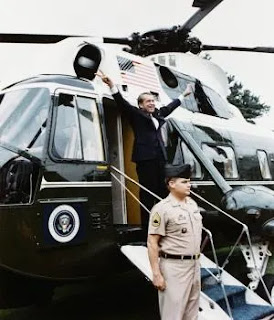
It was an ordinary day.  President's Day, 2022 and Lancaster County residents had the chance to once again remember one of our Presidents whose ancestors came from nearby Salisbury Township.  President Richard Milhous Nixon was a Quaker from Salisbury Township whose relatives on both sides of his family were mostly Quakers.  President Nixon's late father, Francis Anthony Nixon died in 1956.  Francis Nixon's great-great grandmother was born in Salisbury Township.  Jane McIlvaine was President's Nixon's distant grandmother who was also born in Salisbury Township and resided there until 1773.  She then moved to what is now Juniata County where she married Paul Trimer in 1780.  Research also showed that former President Nixon's great-grandfather was killed in the Battle of Gettysburg on July 3, 1863.  His name was George Nixon who served as a private with Company B, 73rd Regiment, Ohio Infantry.  He is buried in Gettysburg National Cemetery, close to the spot where Abraham Lincoln gave his famous dedicatory address a few month later.  His cemetery marker  reads: GEORGE NIXON CO. B REGT. 73.  Ninety years later on July 5, 1953 his great grandson, Richard Nixon, visited the grave.  Lancaster County Historical Society has traced Nixon's family tree back to his sixth-generation grandparents.  Nixon's 4X great grandparents, Robert and Isabel McIlvaine, were laid to rest in Upper Octorara Cemetery in Sadsbury Township, Center County, PA.  Their son Moses, Nixon's great-grandfather died at Gettysburg, his widow moved to Ohio where her son, Samuel Brady Nixon, married.  His marriage to Sarah Ann Wadsworth bore a son, Francis Anthony Nixon, the president's father, who moved from Ohio to California in 1907.  Richard M. Nixon was born in Yorba Linda, California in 1913.  His father, a farmer, returned East in 1947, settling in nearby York county where he farmed until 1951.  He injured his arm in a fall, thus ending his farming days.  He returned to California where he died in August of 1956.  Richard Milhous Nixon came to prominence as a representative and senator from California.  He served as Vice President from 1953 to 1961 under President Dwight D. Eisenhower and waged an unsuccessful presidential campaign in 1960, narrowly losing to John F. Kennedy.  In 1962 he lost a race for governor of California.  Nixon ran for the presidency again in 1968 and was elected the 37th President of the United State, serving from 1969 until 1974 when I remember him leaving the White House, flashing his usual signal with his two fingers as the helicopter rose above the White House never to return with Nixon on it again.  


He had resigned as President of the United States!  It was another extraordinary day in the life of an ordinary guy.

Monday, May 2, 2022

The "Gardening By The Zone" Story

It was an ordinary day.  Just finished mowing the lawn and asked my wife when we will plant the flowers she likes to buy every year.  She told me it has been a bit too cold up until now and perhaps we could head to the local flower shop in the next week or two.  She has done quite a bit of reading during the past and knows which plants will grow the best and which plants will die too quickly if planted too soon after our winter has come to an end.  We are in zone 6 of the chart showing the types of plants that will survive the best as well as when to plant those plants.  The map showing zones is meant to give the gardener the best time to plant to ensure the plants will survive in the area in which we live.  USDA zones are based on the coldest temperature the area tends to reach in the winter, separated by increments of 10 degrees.  The lower the zone number, the colder that area'a weather is.  Zone 6 usually experiences, but not always, a yearly low of -10F.  The zone stretches in something like an arc, more or less, across the middle of the U.S.  And, the number given your area is only a guideline and not foolproof.  Planting and growing zone 6 plants typically begin around mid-March (after the last frost) and continues through mid-November.  So, what are the best plants for Zone 6?  If you look at the seed package, it should have a USDA zone mentioned somewhere on it to act as your guideline as to whether you should plant it or not.  Not all plants can survive the winter.  The number applies to perennials that are meant to survive the winter.  There are plenty of plants and flowers that are annuals and are supposed to die with the frost.  But, gardening in Zone 6 is very rewarding because so many plants do well there.  

A great garden for Zone 6
The best plants for the cold are crops such as lettuce, radishes and peas.  Other vegetables that do well in Zone 6 are tomatoes, squash, peppers, potatoes and cucumbers.  Perennial favorites that thrive in Zone 6 are Bee balm, Coneflower, Salvia, Daisy, Daylilly, Coral bells and Hosta.  Common shrubs that also do well are Hydrangea, Rhododendron, Roses, Azalea, Forsythia and Butterfly bushes.  I have read about more Gardners who enjoy planting a bee garden too help the bees by adding to the flowers they will frequent.  A few things you should remember if you too would like to have a bee garden.  Replace part of your lawn with flowering plants which provide a habitat for the honey bees, solitary bees, butterflies and other pollinators.  Select single flower tops for your bee garden such as daisies and marigolds.  Double-headed flowers look neat, but produce much less nectar than the single flower plants.  Skip the hybridized plants that have been bred not to seed which in turn would produce little pollen for the bees.  
Try maintaining a Bee Garden!
Plant at least 3 different types of flowers in your bee garden to ensure there will be blooms there during as many seasons as possible.  This will provide the bees with a constant source of  food.  Spring flowers for the bees might be crocs, hyacinth, calendula and wild lilac.  Summer flowers are bee balm, cosmos, snapdragons, foxglove and hosta.  Fall or late bloomers are zinnias, sedum, asters and goldenrod.  You may also want to leave a small patch of you garden uncultivated since some bees burrow in the ground.  Even piles of branches or hollow reeds would work.  Avoid using herbicides or pesticides in a bee garden.  They can be toxic and are not the best for children who will come to visit with the bees.  Bees enjoy a bath from time too time just as birds do.  Fill a shallow container with water and perhaps pebbles for the bees to land on.  And...you don't have to have a big garden to make it into a bee garden.  You can even use a window container or a rooftop location.  Every little bit can help to nurture bees and other pollinators.  It was another extraordinary day in the life of an ordinary guy.

Sunday, May 1, 2022

The "Say It Ain't So...Joe" Story

It was an ordinary day.  Phils were playing the Mets at Citi Field in New York.  And...if you haven't watched or read about the game, just hit the delete button on this story and wait until tomorrow to read my next story.  And...why do I say that?  Well, my Phils were no-hit!  It was the 20th time in franchise history that they didn't get a hit in a professional baseball game!  They lost their very first no-hitter in franchise history on September 13, 1883 at Recreation Park in Philadelphia.  The guy who threw the no-hitter that fateful day was known as Hugh "One Arm" Daily.  Yeah..right!  Seems that either a friend shot him in the hand while playing with a loaded musket, or he burned himself while simulating fire on a theater set in Baltimore.  Hey...that's what I read so it must have been true..right!  Seems that everyone had a wild story or a crazy nickname back then.  It was tough watching the game on TV this past Friday evening.  Every time one of my Phils came to the plate, I just thought they had to get a hit.  It can't go on and on...can it?  But, they went down in baseball history swinging and missing or swinging and hitting the ball to an opposing player every time they came to bat.  It was the 20th time in their storied history that it happened.  The last time they were no-hit was on May 25, 2014 at Citizens Bank Park in Philadelphia.  That game was pitched by the Dodger's pitcher Josh Beckett.  The no-no this past Friday night was thrown at the Phillies by 5 different pitchers; Tylor Megill, Drew Smith, Joely Rodriguez, Seth Lugo and Edwin Diaz.  Hey, I had trouble trying to remember Josh Beckett's name...there is no way I will ever remember the name of 5 different guys.  Actually, by the time I will have finished typing this sentence, I will have forgotten all but Tylor's name.  And, if I had been Tylor, I would have been awful mad that my coach would take me out of a no-hitter game at the end of the 5th inning! But, that's the way it's done today!  Tough for the Phils to take since the previous 8 games they had scored a total of 48 runs!  But, it's professional baseball and I guess you have to expect some games when you don't score too may runs or even get too many hits, since you have to play well over 100 games every season.  One of the Phillies new players this year, Nick Castellanos, said that the best way to bounce back is to forget it!  "You need to have short-term memory.  Have a good dinner, enjoy the night in New York and get ready to play tomorrow."  Even the Phils manager said, "Tomorrow's a new day."  Hey, they know that a no-hitter can happen for or against you at any time, so just forget the past one and hope you are on the other end of the score in the next one.  It was another extraordinary day in the life of an ordinary guy.  PS - The Phils did turn it around by winning last evening!  

Saturday, April 30, 2022

The "Having The Camel Hair Pulled Over Their Eyes!" Story

It was an ordinary day.  Reading about a rather unusual topic...camels!  Learned more United States history today than I have in a long time.  And....it all had to do with camels!  You know...the animals with either one hump or two humps.  Goes back to 1851 when Jefferson Davis was a United States Senator and future president of the Confederacy.  Seems he had proposed to import 50 African and Asian camels into the American Southwest with the idea that he could use them to hunt down Indigenous people in the region, thus asserting U.S. control across the continent.  He believed that once safe passage could be secured from Texas to Southern California, white Southerners cold begin to move west in large numbers and bring their slaves with them, thus the camels would help to expand slavery in Southern states.  And...he did it!  After four years of lobbying in Congress he received funding for his camel project.  At the time he was Secretary of War and could oversee the project.  He picked his own agents who set off on a world tour, with stops in Tunis, Constantinople, Cairo and Smyrna who collected a variety of camels and dromedaries as well as Turkish and Arab handlers.  In April of 1856 a cargo of 34 animals landed in Indianola, Texas and nine month later another 41 arrived.  The camels were hard workers and drew crowds of spectators as then hauled large amounts of hay.  Between 1857 and 1859, Lieutenant Edward Fitzgerald Beale employed dozens of camels in several high-profile expeditions across the Southwest.  Camel enthusists grew in numbers and observers could see that the camels could survive without water for long stretches of time, manage heavy loads, travel more than 30 miles a day while consuming less food than horses and mules.  But, they did have their faults.  They sneezed, shedded, gave off a foul odor and had the tendency to regurgitate on passersby.  And, some even began to realize that the camels were part of Davis's veiled proslavery plot.  Then Congress refused to fund the animals anymore.  By that time there were more than 80 camels scattered across forts in Texas and California.  The camels could work on the Southern plantations and work faster and harder than mules, thus working the slaves harder to keep up with them.  Slaveholders began to clamor for more camels.  In 1858, a cargo of 89 camels docked in Galveston, Texas and several month later 21 more camels arrived in Mobile, Alabama.  Most could not see that the camels were being used as a smokescreen to help smuggle African captives into North America.  By this time the United States had outlawed the African slave trade, but most did not notice that captive Africans could be stored in the same ship's hold as the camels.  It seems that Mr. John A. Machado, the main importer of camels to the States was also a notorious slave trader.  The camels were a cover for his importation of captive Africans who were usually stored in the ship's hold.  The smell of the camels covered the smell produced by the captive Africans.  Then along came the Civil War which brought an end to the camel trade.   Camels did make a few appearances in Union and Confederate armies during the war, but they weren't widely employed.  By the end of the war most had ben auctioned off or set loose.  Some found their way into zoos and circuses while others disappeared into the wild.  For years and years travelers reported seeing strange beasts moving across the desert landscape of the Southwest.  One such sighting added to the story of the "Red Ghost" who was said to rampage across the West with a headless rider on his back.  Today the historic mining town of Virginia City, Nevada holds camel races every year.  These original residents of our country were more than a mere curiosity.  These transplanted camels were used to expand the insititution of slavery, beginning with the Secretary of War and continuing with individual planters and slave traders.  The senators who snickered at Jefferson Davis in 1851 when he unveiled his pet project had little notion of how deep the plot would run.  Seems his experiment outfoxed many!  So...how many of you have seen a camel walking around the neighborhood recently?  It was another extraordinary day in the life of an ordinary guy.

Friday, April 29, 2022

The "My Favorite Meal" Story

It was an ordinary day.  Just finished a story for an Internet site called Storyworth which my son, daughter-in-law and grandson gave me as a Christmas gift.  I am given topics to write about and after 12 stories, a booklet is made and sent to my friends and relatives.  Neat idea and a great momento for my relatives.  One of the latest stories I wrote was titled my "favorite meal."  Had a hard time coming up with just one meal, so I wrote about a dozen of them, some from around my hometown of Lancaster as well as favorite meals from the Caribbean.  For most of you who read my stories, you will not have the chance to read the "favorite meal" story, so I posted a copy of the story today.  Hope you enjoy it.  It was another extraordinary day in the life of an ordinary guy.

Trying to determine what might be my favorite meal is a tough story to write.  Thought about it for a few days and finally decided I needed to list more than one meal in order to be honest with both myself and those reading this story.  I finally got it narrowed down to ten which was a tough job to do.  Almost as tough as writing the story!  Goes way back to when my Grandpap would make his famous Chicken corn soup.  Tough to tell you just how good it was unless you had a bowl or two of it.  After the first spoonful, you knew nobody could top it.  As a youngster Grandpap would have me help him prepare the ingredients and help him make his famous soup.  While peeling the sweet corn, both white and yellow, if we happened to come upon a silk worm, we would save it and add that to the batch of soup.  Grandpap always enjoyed seeing whom might be the one to get the worm in their bowl of soup.  I think everyone in the family got at least one worm in their soup over the many years he made his soup.  The next best meal I have ever eaten was my wife's creamed peas and eggs on toast.  May not sound interesting to you, but the flavor was, and still is to this day, remarkable.  She would make a cream sauce and place either fresh or frozen peas in it and slowly heat it on the stove.  After hard boiling eggs, she would cut them in pieces and add them to the mixture.  When the mixture was ready, she would make toast and place the mixture on top of the toast.  Unbelievable meal!  My next most favorite meal was found in Chesapeake City, Maryland at a restaurant known as The Chesapeake City Inn.  Their Anaheim Pepper with cheese ravioli was so good that it was just about the only meal I ever had at the restaurant over about 40 years of visits.  From here I must take you to the Caribbean island of St. Martin/Sint Maarten to finish my list.  Next on my list would be Andy & Cheryl's Baywatch Restaurant on Orient Beach.  The "mussels a la Andy" were unbelievable.  You would remove them from their shell, dip them in melted butter and pop them in your mouth.  Not sure if it was the food or the view in front of the restaurant that was mesmerizing.  Closeby were two restaurants with equally delectable meals.  The cheese ravioli at le Piment and the scallops at Safari Grill were both delicious.  A few miles to the west of Orient Beach found us in Grand Case and the Il Nettuno Restaurant where I always enjoyed their cheese ravioli.  And finally, traveling to the Dutch side of the island, we found the restaurant known as Pineapple Pete's where we almost always had the lobster thermador.  Most of my selections seem to be mostly seafood choices, but that's what both my wife and myself enjoy.  Perhaps if you had the chance to try a few of my choices from the Caribbean, you too would love them.  Tough to narrow my list of fabulous meals to one, so I have listed what I could remember as some of my favorites.  I'm sure I missed a few, but I'm no longer hungry after writing this story.

Thursday, April 28, 2022

The "Are You Ready For Some Laughs?" Story

It was an ordinary day.  Reading a few jokes in the Readers Digest that were pretty funny.  Thought you might be in the mood for a few to lighten your day. Hope you get a good laugh from them!  It was another extraordinary day in the life of an ordinary guy.

I invented a new word!   Plagiarism!

Did you hear about the mathematician who’s afraid of negative numbers?   He’ll stop at nothing to avoid them.

Helvetica and Times New Roman walk into a bar.   “Get out of here!” shouts the bartender. “We don’t serve your type.”

A woman in labor suddenly shouted, “Shouldn’t! Wouldn’t! Couldn’t! Didn’t! Can’t!”   “Don’t worry,” said the doc. “Those are just contractions.”

Where are average things manufactured?   The satisfactory.

What sits at the bottom of the sea and twitches?   A nervous wreck.

Why can’t you explain puns to kleptomaniacs?   They always take things literally.

How do you keep a bagel from getting away?   Put lox on it.

What do you call a parade of rabbits hopping backwards?   A receding hare-line.

What does Charles Dickens keep in his spice rack?The best of thymes, the worst of thymes.

What’s the different between a cat and a comma?   A cat has claws at the end of paws; A comma is a pause at the end of a clause. 

Why should the number 288 never be mentioned?  It’s two gross.

What did the bald man exclaim when he received a comb for a present?   Thanks— I’ll never part with it!

What did the left eye say to the right eye?   Between you and me, something smells.

How do you make a tissue dance?   Put a little boogie in it.

What do you call a pony with a cough?   A little horse.

What did one hat say to the other?   You wait here. I’ll go on a head.

Why can’t you hear a pterodactyl go to the bathroom?Because the “P” is silent.

What do you call a woman with one leg?   Eileen.

What did the pirate say when he turned 80?   Aye matey.

What is an astronaut’s favorite part on a computer?   The space bar.

Once my dog ate all the Scrabble tiles.   He kept leaving little messages around the house

Did you hear about the two people who stole a calendar?They each got six months.

What breed of dog can jump higher than buildings?   Any dog, because buildings can’t jump.

Why did the M&M go to school?   It wanted to be a Smartie.

Why do bees have sticky hair?   Because they use honeycombs.

I got my daughter a fridge for her birthday.   I can’t wait to see her face light up when she opens it.

What do you call a rooster staring at a pile of lettuce?   A chicken sees a salad.

Why did the nurse need a red pen at work?   In case she needed to draw blood.

The numbers 19 and 20 got into a fight.   21.

Why did it get so hot in the baseball stadium after the game?   All of the fans left.

What do you call a train carrying bubblegum?   A chew-chew train.

Why can’t male ants sink?   They’re buoy-ant.

Where do you find a cow with no legs?   Right where you left it.

Did you hear about the kidnapping at school?   It’s okay. He woke up.

Why does Humpty Dumpty love autumn?   Because Humpty Dumpty had a great fall.

Why couldn’t the leopard play hide and seek?   Because he was always spotted.

Wednesday, April 27, 2022

The "A Photographer To Top All Other Photographers!" Story

It was an ordinary day.  Checking my new MacBook Air when I came across a local online story about a young girl named Morgan Smoker.  Story began with...Hi there!  I'm so glad you're here!  I'm Morgan!  I'm a daughter, friend and photographer who is passionate about capturing memories and glorifying God with my talents.  I am in a wheelchair and I talk using a communication device.  I am able to operate my camera fully with my device!  I've loved taking photos since I was a freshman in high school.  I cherish making people feel good about themselves and I would love to capture your memories.  My experience is mainly in natural light portraiture and wedding photography, but I do enjoy, and have studied studio photography.  Capturing photos shares many of God's masterpieces, and I have an eye for it!  I can't wait to meet you and capture your story!  Let's chat!  Morgan is a 22 year old resident of nearby Gordonville who enjoys playing by the family pool, listening to country music, working, going to church and taking photographs.  She travels, cheers for the Philadelphia Eagles and likes to go to the park with her Yorkie dog named Roxy.  And, she really enjoys making ironic comments on the internet!  And...all this is done while sitting in an electric wheelchair with the help of an Accent 1400 communication device, a machine that assists in composing messages and loading pre-programmed responses. Morgan's message is displayed on the screen and verbalized with a computerized voice.  The machine can also sen emails and text messages.  To operate the Accent 1400 Morgan moves the cursor on the screen through a dot sensor on her forehead.  Morgan was born with glutamic acuduria type 1 which is a hereditary disease that prevents the body from processing certain proteins.  But, Morgan says that even people think she can't do anything, she is 100% mentally competent.  Guitaric acuduria type 1 is found from time to time in the Amish community according to Adam Heaps who is the managing director of the Strasburg Clinic for Special Children where Morgan is treated.  The disease affects 1 in 250 people in the Amish community.  But, neither Morgan, or her parents, were raised Amish.  She did have a grandmother who was Amish, but left the Amish community when she was 16 years old.  When Morgan was only a few months old she became ill and was taken to the hospital.  Her illness was discovered and did result in some brain damage.  She can't walk, talk or control her hands, but can chew and swallow food.  Greg Finger, Morgan's boyfriend, says that the only thing she can't do is walk.  Greg and Morgan want all people with disabilities to know that just because they might be in a wheelchair doesn't mean they can't be successful.  And...I must admit...after seeing her photography...she is 100% correct.  Her Accent 1400 machine helps her take her photographs, but composing her photographs takes place in her head.  And, she does a fantastic job of composing her photographs.  

Morgan Smoker, Professional Photographer
Morgan began taking photographs shortly after attending the Lancaster County Career & Technology Center.  She now takes wedding photos, portraitures and works for Dutch Wonderland Amusement Park taking photos at their "Get the Picture" stand.  She also enjoys going to New Holland's worship center when not taking photos.  She says that it is her faith that plays a major role in her life and success.  "Our God works in a mysterious way, and I love him for it," she says.  It was another extraordinary day in the life of an ordinary guy.  

Tuesday, April 26, 2022

The "A Story I Will Never Forget...And, I Wasn't Even There!" Story

It was an ordinary day.  Reading a very interesting story in my morning newspaper that was written by reporter Ty Lohr who also took several great photographs to illustrate his story.  His story was titled "Keeping History Alive" and told the story of a Polish woman named Linda Schwab who was a 7 year old Jewish girl in 1942 when Nazi soldiers rode into her village on motorcycles.  At the time she couldn't comprehend what was going to happen to her and her family, but that one day back in 1942 changed her life forever.  Today she shares her story with school children to help them understand what if was really like during World War II.  

Linda Schwab (photo by Ty Lohr - LNP)
Her story goes back 80 years, but on the days before she gives her talks, she still finds it hard to sleep the night before her presentation.  The newspaper story tells that her presentation this particular day was to a class of Middle School children whose teacher, Joanne Woodward asked her to speak after one of her students asked her about the importance of the Holocaust.  Linda feels it is important to share her story so others can learn more about the history of WWII.  She tells about her father and his brothers leaving the Jewish ghetto where they lived in what today is known as Belarus and never returning home again.  Not long after they left, Linda's mother and aunts watched as Nazis made the men dig a hole before killing all of them.  It was a massacre she told the Middle School students.  But, somehow that night her father quietly returned, having somehow avoiding his death earlier that day, and led the family out of the ghetto.  But, her father decided to go back to get warmer clothing for the children.  When the family returned they were met by drunken SS soldiers who shot her father.  She still remembers seeing blood as her father lay motionless on the ground while she and the rest of the family were escorted back to the ghetto.  But, later a knock at the door was heard and when they opened the door, there was here father who had been shot in the ear, but had faked death.  He took the family into hiding where they spent 6 months in a potato cellar and another 18 months in a hand-dug cave in the Belrusian woods.  Can you imagine the intense interest that the middle school students must have displayed as Linda told her story!  She continued by telling the class that it was a warm day in April that they all were freed.  They were all skin and bones and yellow she told them.  The Germans had left Poland, but only after setting fires and destroying villages.  
Linda is 3rd from left, front row holding the fan.  Submitted by Linda
Linda and her family left their hiding spot and were met by Russian soldiers, one of whom gave his hat to her brother.  She told the class that it was God's will that they survived.  Linda immigrated to the United States as a young teen and now lives in nearby Harrisburg.  Linda continues to share here story with others, since fewer and fewer Holocaust survivors still remain.  She told the class that the one thing she wants them to remember from her experience is for people to "be kind."  She finished her talk to the middle school students by placing her hand over her heart and telling the class, "I love America.  I'm very American now."  I'll bet that not a single student, including the teacher, in that class will ever forget the day in April of 2022 when they heard 86 year old Linda Schwab tell her personal story about surviving WWII.  I must admit that after reading her story in the newspaper that was written and photographed by newspaper writer, Ty Lohr, I too will never forget it.   Thank you Linda for sharing your life's story so others can see the horrors of war.  It was another extraordinary day in the life of an ordinary guy.         

Sunday, April 24, 2022

The "The Colorful, Rags-To-Riches Saga Of Stephen Smith" Story

It was an ordinary day.   Reading the story of a fellow named Stephen Smith who was a black man whose life was somewhat different than most black men of his era.  Stephen Smith was born a slave in Dauphin County, Pennsylvania around 1795 to a slave woman named Nancy Smith.  His father was unknown.  When he was five years old he became the indentured servant to the Pennsylvanian businessman named Thomas Boude who was a former Revolutionary War officer from Lancaster County.  When he turned 21 he gathered enough money together to purchase his freedom for $50.  After purchasing his freedom he had big plans ahead of him and in the same year purchased a lumber business.  On November 17, 1816 he married Harriet Lee, who worked as a servant in the Jonathan Mifflin home.  Already equipped with entrepreneurial skills, Smith opened a lumber business and became involved in lucrative real estate operations while his wife operated an oyster and refreshment house.  Stephen Smith became involved in civil rights activities early on when he opposed the policies of the American Colonization Society and demonstrated his position in 1831, when he led free blacks in Columbia, Pa. in a pubic meeting.  In 1834 he joined such men as David Ruggle, John Peck, Abraham Shadd and John B. Vashon who were the first black gents for Freedom's Journal and later for The Emancipator.  They were asked to secure subscriptions to the papers and collect what were called arrearages.  Being an astute businessman, he opened a lumber business in Columbia and prospered.  The risky work on the Underground Railroad did not intimidate such abolitionists as Smith and William Whipper.

Mr. Steven Smith

 These two abolitionists and businessmen of Columbia, Pennsylvania escaped bodily harm and jail sentences for secreting slaves.  Smith's success in real estate ventures and work as an abolitionist disturbed whites who led a mob in an attack on his office in August 1834, spurring a race riot, followed by a second one in October.  They wanted to frighten Smith and force him and other black real-estate owners to sell their property below market value and leave town.  In the 1830s, Smith and several antebellum blacks were members of various boards with Mr. Smith being with the Columbia Bank.  At the time he was the bank's largest stockholder, but did not qualify to be President since he was black.  He was allowed to name the white man to be President!  Mr. Smith was inspired by eminent minister, Richard Allen, founder of the AME church and at the age of 31 became licensed to preach.  He was a Teller in the election of every Bishop since Richard Allen until his death in 1873.  Smith built a public hall in Philadelphia for the use of the "People of Color"; but it was destroyed by fire in the riots of 1842.  Stephen Smith was one of the Signers of Frederick Douglas' Men of Color to Arms; during the early part of the Civil War calling Black Americans to join the Union Army.  By the 1850s, Smith had invested $9,000 in the Columbia-Wrightville Bridge, which was burned on June 28, 1863 to stop Confederate troops from crossing into Lancaster County.  although a claim was filed with the Federal Government for the bridge, neither the bank nor its investors were ever repaid.  By 1873 Smith had accumulated a fortune worth more than $1,000,000 in today's modern terms.  And, it was in 1873 that Stephen Smith, businessman, minister an abolitionist died.  The more I searched, the more I found out about Mr. Stephen Smith.  He was truly a man who went from rags to riches.  It was another extraordinary day in the life of an ordinary guy.     
Saturday, April 23, 2022

The "The Story Of Wright's Ferry Mansion" Story

It was an ordinary day.  Reading a bit more about the woman known as Susanna Wright.  It was more than 5 years ago that I wrote the first of many stories about Susanna and her Wright's Ferry Mansion which was on the east side of the Susquehanna River in the state of Pennsylvania.  Seems that Susanna was one of the most substantial women in colonial Pennsylvania.  So, exactly what happened to her estate along the banks of the mighty Susquehanna?  According to Lancaster Newspaper writer, Jack "The Scribbler" Brubaker, Susanna had an incredible array of talents and accomplishments.  She was fluent in Latin, French and Italian and had studied the language of the local Conestoga Indians who were her neighbors.  She was a student of both law and medicine as we'll as being interested in science.  Oh, yeah, she also wrote poetry with one poem dealing with the right of women being able to vote in 1750; 169 years before they were given the right to vote. She corresponded with Ben Franklin and James Logan, William Penn's secretary as well as other important colonial Americans.  She was also known for cultivating mulberry trees to feed American's first silkworms who spun silk cocoons which she harvested to make silk stockings.  Wright never married, so, when she died she willed her four nephews as her beneficiaries.  

Wright's Ferry Mansion
She gave Wright's Ferry Mansion and other buildings on her 100 acres to nephew Samuel who lived in the mansion and established the town of Columbia on tha 100 acres.  She divided the ferry property equally among Samuel and his brothers.  She willed her furniture, books and other belongings to Rhoda Wright and children including the four nephews and Susanna's niece, Sukey Wright.  The mansion on South Second Street stayed in the family until 1922 when the Rasbridge family purchased it, saving it from proposed demolition to accommodate a coal yard.  In 1973 the Louise Steinman von Hess Foundation bought the house from the Rasbridge family and restored the property, furnishing the house with antiques of the period when Susanna lived there.  It is now hoped that Susanna Wright's home and legacy will live forever in Pennsylvania history.  It was another extraordinary day in the life of an ordinary guy.     

Friday, April 22, 2022

The "Is It Safe To Travel Yet?" Story

It was an ordinary day.  After a few years of missing our trips to exotic islands in the Caribbean, my wife Carol and I have begun to discuss vacation plans once again.  Only problem is that we are now a few years older and will find it more of a struggle to visit some of our favorite vacation spots.  But, for the first time in many years I have found that I have very little back pain due to my recent Spinal Cord Stimulation surgery.  I have one area on my lower back where I now have a permanent battery in place which powers the stimulator and was rather painful for a week or two, but is now beginning to heal and the pain is lessening.  So...what to do.  Should we make plans to travel with our traveling friends Jere and Sue once again or should we travel by ourselves at least one time to make sure we are both physically able to do so before we create problems for our friends.  Jere and Sue, who were my high school classmates close to 60 years ago, always seem to have the best of times together with my wife and me.  We have traveled with them a few times to Hawaii as well as close to a dozen islands in the Caribbean.  Should we take a cruise or make plans to stay on an island that we have enjoyed in the past?  COVID spoiled our traveling plans with them for a few years and we hope that will not happen again, but with infection numbers creeping back up once again, who knows if airlines will fly to exotic locations anytime soon.  Carol and I have also questioned if we should travel by ourselves to avoid passing on any infections to our friends if we would perhaps come in contact with the virus.  Our favorite destination of St. Martin/Sint Maarten is always an option for the two of us.  But...are we really ready to chance traveling at all?  Carol and I have both experienced travel problems in the past.  She ended up in a hospital in Turks and Caicos when she had to have her appendix removed and I had a bad case of shingles while on the island of Sint Maarten.  Neither experience was pleasant and chancing the same thing happening due to COVID doesn't look inviting.  Perhaps it may be best to save traveling out of the country for a bit later...maybe another year or two.  Looks like vacation with friends to a closer location will have to be good enough for now.  We can have just as much fun even though we aren't in some exotic location.  The sun shines just the same no matter where we vacation!  It was another extraordinary day in the life of an ordinary guy.

Thursday, April 21, 2022

The "The Story Of Lancaster's Original Young Men's Christian Association" Story

It was an ordinary day.  I recently found a photograph that showed the demolition of the original YMCA in downtown Lancaster, Pennsylvania.  One of the neatest old buildings in center city Lancaster when I was a young boy.  I made a few visits to the "Y" with friends who held memberships so I could go swimming with them.  Also remember standing in front of the building when local parades marched down West Orange Street.  The YMCA (Young Men's Christian Association) was an elegantly refined Beaux Arts building that used some of the same architectural proponents as other Architect C. Emblem Urban buildings such as the nearby Watt & Shand and Stevens High School.  They also reflected the same style as the nearby Griest Building.  The YMCA had four floors which later had an additional floor added to it.  The east side of the building faced North Queen Street and was five bays wide with retail stores lining the ground-level floor.  The south side of the building, facing West Orange, contained the YMCA's entry door where I remember going into the building.  It was centered below a projecting balcony that was on the third-floor.  The pool was in the lower level with a second floor that had a track, basketball court with all types of exercise equipment. The third floor had game rooms of all types with candy machines and pool tabes.  

The YMCA at the corner of N. Queen and W. Orange Streets
Pilasters spanning the second and third floors met the arches of the fourth-floor windows.  The Lancaster YMCA began in 1870 when it opened in a few different buildings.  Then in April of 1895, the YMCA Board of Directors purchased the Shober Hotel property at Queen and Orange Streets for $60,000.  They broke ground for the new building on April 21, 1899 with the corner stone being placed on June 17, 1900.  The building was dedicated on April 8, 1901.  
A parade passes the old YMCA in Lancaster City.
The total cost for the YMCA was $215,000 which included the price of the property, the furnishings and the building.  The Board of Directors eventually launched a "debt-free campaign" to help raise $100,000.  Businessman James Shand, one of the co-counders of Watt & Stand Department Store, helped raise money to pay for the building.  A 1910 history of the organization stated that the large new building was evidence that the YMCA was keeping pace with the steady and prosperous growth of the City of Lancaster.  Then in July of 1965, with the decline of interest in the YMCA, it was demolished to allow for construction of the Prince Street parking garage which was part of the development of Lancaster Square to the North.  
The demolition of the Lancaster YMCA in downtown Lancaster.
The YMCA was relocated to another location on North Queen Street which was in a smaller building.  Not long ago it was once again moved to a building along the Harrisburg Pike where it remains today. It was another extraordinary day in the life of an ordinary guy.

Tuesday, April 19, 2022

The "Evolution Of Lancaster's Fire Company" Story

It was an ordinary day.  Reading the Lancaster Sunday News story titled "Horses and Hoses" which described the city of Lancaster and it's fire department before the first official fire department was organized on April 1, 1882.  Had a hard time believing some of the stories that I was reading that talked about rival firefighting groups that would actually resort to fist fighting and water fights when more than one firefighting group would arrive at a fire at the same time.  Seems that on August 21, 1881, a water fight broke out between the Friendship fire and Hose Company and the American Fire Engine and Hose Company.  While the fire tore through the B.F. Skeen Building at the corner of Sherman Street and Marion Alley, firefighters blasted each other's equipment with water and threw "stones, bricks and other missiles" instead  of fighting the fire.  At the time, arson was a big problem throughout Lancaster.  So bad that the city hired a group of lawyers to prosecute the arsonists, commonly known as firebugs, "who caused so much excitement in this city during the last few years,"  One of the most famous "firebugs" in Lancaster was a guy named George "Tis" Brimmer" who was the head of the "firebug gang."  He earned a reputation as "one of the most celebrated criminals ever developed in Lancaster County."  He was born in the 1860s and would go on to break out of jail, be caught again, and eventually pardoned in 1895 after serving 12 1/2 years in prion.

Lancaster City's Truck A sometime before 1917 when horses were no longer used.
Then, a new fire department was created on Augut 21, 1881 and most of the fighting between neighboring fire companies stopped.  But, getting to the fire for the newly created fire department was still rather dangerous.  At that time, Henry Howell was the city's first fire chief and was in command of 39 men: 19 horsemen, 9 driver, 5 foremen, 4 engineers and one tilleerman and one ladderman.  The equipment required at least two horses to get it to the fire and three stallions were needed for the ladder trucks.  The very first day that the department opened, a building known as the "old match factory", near Chestnut and Duke Streets caught on fire from a spark thrown by a passing locomotive a few feet away from the building.  The fire department made excellent time going to the fire and did good work the local newspaper reported.  On April 11, 1882, a group of insurance men from New York visited Lancaster and were very impresed when an alarm was struck a few blocks away and the firemen arrived minutes later. The newspaper called the run "very satisfactory," even though one of the carts crashed going over railroad tracks, injuring a firefighter and breaking parts to the cart and injuring the horse.  Since the beginning of Lancaster's Fire Company in August 21, 1881, 11 firefighters have died in the line of duty.  The most recent one was firefighter Thomas Horvath who suffered a heart attack on a fire scene in 1992.
A steam engine was used to pump water in 1910.
In the department's first calendar year, firefighters were called to 34 alarms, including two false alarms.  One of the first major fires was on November 5, 1883 at the Inquirer Printing and Publishing Building at 47 N. Queen St.  The firefighters arrived within 3 minutes, but the building was destroyed by the fire.  The newspaper article I was reading told of many of the city's major fires as well as the equipment that has been purchased in the past.  The story also told of the first black firefighter and first woman firefighter to be hired.  Today the fire company not only fights fires but assists with car crashes, medical calls and animal rescues.  Today there 76 firefighters.  Lancaster's Fire Company has come a long way from the 1880s, and I'm sure will look quite different 100 years from now.  But, everyone reading my story today will more than likely not be here to talk about how it used to be.  It was another extraordinary day in the life of an ordinary guy.

Monday, April 18, 2022

The "So How Well Do You Know Elvis?" Story

 It was an ordinary day.   Mid-1950s and Elvis Presley had arrived on the scene.  The world of pop music changed forever.  Elvis brought a new sound and new aesthetic to rock 'n' roll which was influenced by the blues, Christian gospel and Southern country...and sung in his distinctive baritone voice with a three-octave range.  His high energy performances sent his fans into a frenzy while counting controversy among society's more conservative elements.  Elvis was more than a singer!  He soon became a cultural icon, whose sense of style ranged from a slice of James Dean look to outlandish diamond-studded jumpsuits that inspired the likes of Elton John.  He was endlessly colorful and entertaining, both on stage and off.  In his personal life he had his ups and downs, struggling with both drugs and his health, but few doubted that he deserved the title of the "King of Rock 'n' Roll."  Leonard Bernstein once said, "Elvis is the greatest cultural force in the 20th century.  He introduced the beat to everything, music language, clothes, its' a whole new social revolution."  And...what makes it so neat is that I lived through it all and had the chance to enjoy Elvis while he was in all his glory.  Check out some quotes from the King himself, covering everything from his famously provocative pelvis to his views on fame and fortune.  

Some people tap their feet, some people snap their fingers, and some people sway back and forth. I just sorta do ‘em all together, I guess.


To judge a man by his weakest link or deed is like judging the power of the ocean by one wave.


The first time that I appeared on stage, it scared me to death. I really didn't know what all the yelling was about. I didn't realize that my body was moving. It's a natural thing to me. So to the manager backstage I said, “What'd I do? What'd I do?” And he said, “Whatever it is, go back and do it again.”


Just because I managed to do a little something, I don't want anyone back home to think I got a big head.


The image is one thing and the human being is another… it's very hard to live up to an image.


In public, I like real conservative clothes, something that's not too flashy. But onstage, I like ‘em as flashy as you can get ‘em.


Money's meant to be spread around. The more happiness it helps create, the more it’s worth. It's worthless as old cut-up paper if it just lies in a bank and grows there without ever having been used to help a body.


Truth is like the sun. You can shut it out for a time, but it ain’t goin’ away.


I'm not a loner, I don't think. But I've got to admit. Sometimes I like just getting off by myself. You know. Just off somewhere alone. No crowds or anything. Where it's just peaceful. And quiet. And you can think.


I figure all any kid needs is hope and the feeling he or she belongs. If I could do or say anything that would give some kid that feeling, I would believe I had contributed something to the world.


Money can never buy everything your heart desires. It won't buy love, or health, or true happiness.


My momma taught me one thing right from the very beginning, and that's that everyone's got a right to his own opinion. I believe that. And I also believe that you can't make everyone like you.


I watch my audience and listen to them, and I know we are all getting something out of our system. None of us knows what it is. The important thing is that we’re getting rid of it and nobody’s getting hurt.


I've had a pretty good lesson in human nature. It’s more important to try to surround yourself with people who can give you a little happiness, because you only pass through this life once, Jack. You don’t come back for an encore.


Sound like something Elvis might have said?  Perhaps he really was a good guy to go along with his voice.  It was another extraordinary day in the life of an ordinary guy.