Extraordinary Stories

1944 (1) Act of kindness (12) Acting (2) Adoption (4) Adventure (766) Advertisement (6) Africa (1) Aging (14) Agriculture (47) Airplanes (9) Alphabet (5) American Red Cross (1) Americana (116) Amish (43) Ancestry (5) Ancesty (2) Animals (43) Anniversary (4) Antigua (10) Antiques (14) Apron (1) architcture (1) Architecture (36) Art (175) Art? (8) Arts and Crafts (69) Athletics (6) Automobiles (40) Awards (7) Banking (2) Barn raising (2) Baseball (103) Basketball (3) Batik (1) Beaches (89) Becoming A Citizen (1) Bed & Breakfast (2) Bee Keeping (6) Beer & Breweries (2) Bikes (3) Birds (9) Birthdays (34) Blindness (1) Blogging (5) Bookbinding (5) Books (12) Boxing (2) Brother Steve (12) Buisiness (3) Business (5) Canals (1) Cancer (14) Candy (30) Caribbean Islands (9) Caribbean Villas (15) Cats (5) Caves (1) Census (1) Chesapeake Bay (61) Children (28) Chocolate (4) Christmas (57) Church Adventures (122) Cigars (1) Circus (3) Civil Rights (8) Civil War (6) Classic Cars (7) Climate Change (5) Clubs (1) Coin club (2) Coins (1) Collections (73) Comedy (3) Comic Books (5) Commercials (1) Comnservation (2) Conservation (41) Covered Bridges (3) Craftsmanship (12) Creamsicle the Cat (11) Crime (16) Crisis (312) Cruise Travel (6) Crying (1) Culture (4) Dancing (1) Danger (16) Daughter Brynn (58) Daughter-In-Law Barb (7) Death (5) Death and Dying (65) Destruction (2) Donuts (1) Downsizing (2) Dunking (5) Easter (3) Eavesdropping (1) Education (48) Energy (15) Entertainment (165) Entrepreneurial (62) Ephrata (1) Etchings (1) Eternal Life (4) Facebook (5) Factories (4) Fads (6) Family (261) Farming (37) Father (42) Father Time (68) Favorites (88) Firefighting (1) Flora and Fauna (28) Fond Memories (490) Food and Cooking (171) Food and Drink (111) Football (16) Forgetfullness (3) Former Students (10) Framing (30) Friends (359) Fruits and Vegetables (3) Fun (4) Fundraiser (6) Furniture (1) Games (7) Generations (3) Gifts (1) Gingerbread houses (1) Giving (8) Globes (1) Golf (3) Good Luck (2) Graduation (1) Grandkids (136) Grandparents (3) Grandview Heights (29) Great service (3) Growing Old (8) Growing Up (187) Guns (2) Handwriting (3) Hat Making (2) Hawaii (49) Health and Well Being (61) Health Care (4) Health Hazards (110) Heartbreak (7) Heroes (26) High School (142) History (777) HO Railroading (4) Hockey (4) Holidays (134) Home construction (7) Horses (2) Housing (3) Humorous (71) Hurricanes (1) Ice and Preservation (2) Ice Cream (8) Inventions (34) Islands (4) Italy (12) Jewelry (3) Job Related (62) Just Bloggin' (56) Just Wondering (19) Juvenile Diabetes (5) Labor (3) Lancaster County (542) Law Breakers (8) LDubs In-Laws (3) Lefties (1) Libraries (1) Life's Lessons (175) Lightning (1) Lists (72) Lititz (18) Locomotives (1) Lodging (1) Love (4) Magazines (2) Magic (1) Maps (2) Marching (2) Market (5) Medical (161) Memories (28) Middle School (3) Milk (2) Minorities (1) Money (3) Mother (54) Movies (6) Mt. Gretna (1) Music (118) My Brother (19) My Wife (260) Neighbors (7) New Year's Day (5) Newspapers (4) Nicknames (2) Nuisance (3) Obsolescence (5) Occupations (2) Old Age (1) oldies (1) Pain and Suffering (12) Panama Canal Cruise (13) Parish Resource Center (14) Patriotism (3) Penmanship (1) Pets and Animals (99) Photography (220) Pizza (1) Plastic (2) Playing Trains (2) Poetry (2) Politics (27) Polution (3) Postal Service (2) Predators (2) Presidents (11) Pride (4) Printing (81) Protesting (3) Public Service (65) Questionnaire (1) Quilts (1) Race relations (6) Rain (1) Reading (4) Records (2) Religion (10) Retirement (4) Revolutionary War (3) Robotics (1) Rock & Roll (4) Rodents (2) Saints (4) Sand (1) Scouting (2) Sex (1) Shakespeare (1) Shelling (2) Shopping (24) Simple Pleasures (122) Slavery (6) Small Towns (4) Smoking (1) Snickedoodle (1) Snow (1) Son Derek (27) Son Tad (33) Son-In-Law Dave (27) Soup (1) Spices and Herbs (1) Sports (139) Sports and collectibles (1) Spring Break (1) St. James (2) St. Martin/Sint Maarten (306) Stained Glass (3) Stone Harbor (4) Story-Telling (26) Stragers (2) Strangers (4) Strasburg Railroad (1) Stress (3) Stuff (4) Suicide (2) Sun (1) Surfing (1) Tattoos (4) Teaching (49) Technology (90) Television (6) Thanksgiving (2) The Arts (6) The Beach House (62) The Flag (1) The Future (5) The Shore (78) This and That (23) Timekeeping (7) Tools and Machines (25) Tours (2) Toys and Games (31) Track & Field (1) Tragedy (8) Trains (19) Transportation (18) Travel (16) Trees (2) Trending (2) TV Favorites (23) Underground Railroad (10) Unit of Measurement (1) USA (2) Vacation and Travel (545) Vehicles (80) Vison and Eyesight (2) War (14) Watches and Watchmaking (5) Weather (48) Weddings (3) White House (1) Wisdom (3) Yearbooks (12) York County (3)

Sunday, October 15, 2023

The "A Few Interesting Firsts In The United States" Story

It was an ordinary day.  Opened my Saturday Evening Post to a story titled 50 States, 50 Firsts: Montana to Wyoming.  Perhaps you have seen the article already, but just in case, I have picked a few of the states and what they may have been first in and have passed them on to you.  Please follow along with me...

Nebraska - First Arbor Day:  
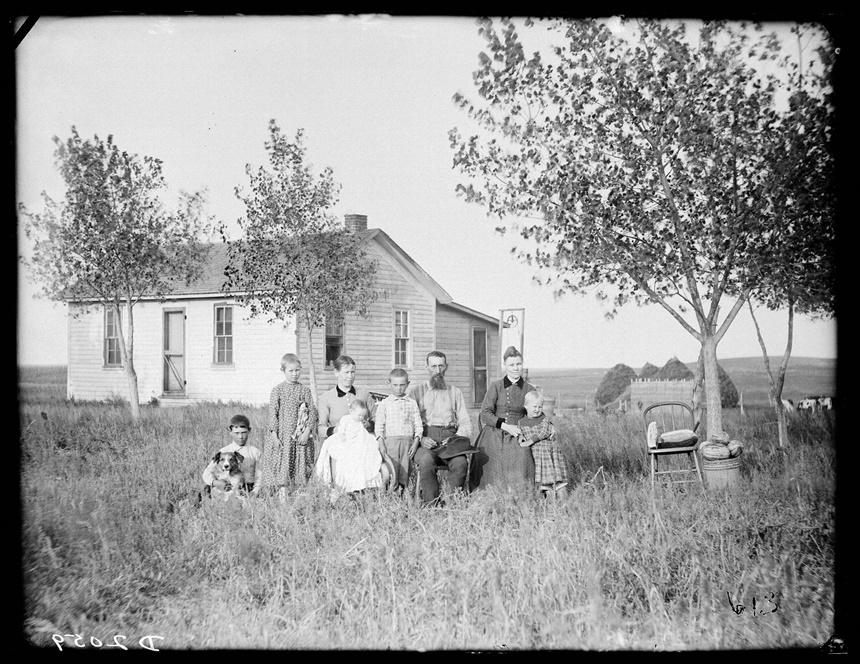
As pioneers and fortune-seekers moved westward during the 19th century, some arrived in what is today known as Nebraska.  Wide-open plains...but, perhaps too wide open since they had no trees which they needed for shade and as windbreaks to hold the soil in place and to provide building material for their new homes.  So, a newspaper editor in Nebraska proposed a tree-planting holiday which was set for April 10, 1872.  An estimated 1 million trees were planted that day in Nebraska.  The day became known as Arbor Day.  By 1882, many schools were hosting special programs for schoolchildren on Arbor Day, teaching the importance of trees.  Today, National Arbor Day is marked in all 50 states on the last Friday in April.

Nevada - First Modern Roundabout in the United States

The modern "yield-at-entry" roundabouts that we see all the time around the United States got their start in Great Britain in the mid-1960s.  The design forced traffic to slow down, but simultaneously kept it moving.  There was no need for electric traffic lights and thus lowered the frequency and severity of accidents. It caught on quickly in Australia, but not in the United States.  European nations began to test roundabouts in the 1980s, but the first modern roundabout wasn't installed in the United States until spring of 1990 in Summerlin, Nevada.  Today there are more than 10,000 of them across the United States with Carmel, Indiana holding the record for most roundabouts with about 150 of them. 

New Hampshire - First Free Tax-Funded Public Library in America  


In 1833, at the recommendation of the Rev. Abiel Abbot, a Unitarian minister in Peterborough, New Hampshire, a library was started that was owned and funded by the people of the town and was payed for by taxes.  This was said to have been the first free public library, but it wasn't the first free public library building.  It was in 1893 that the town finally built the Peterborough Town Library building.

South Dakota - First (and so far only) Corn Palace 


The citizens of the small town known as Mitchell came together in 1892 and constructed a building on Main Street that was "conceived as a gathering place where city residents and their rural neighbors could enjoy a fall festival with extraordinary stage entertainment.  It was meant to be a celebration to climax a crop-growing season and harvest according to CornPalace.com.  Today the building is much larger and is host to musical hits, high school and college sporting events, local markets and celebrations as well as the annual Corn Palace Festival at the end of August. 

Tennessee - World's First Ball of Cotton Candy
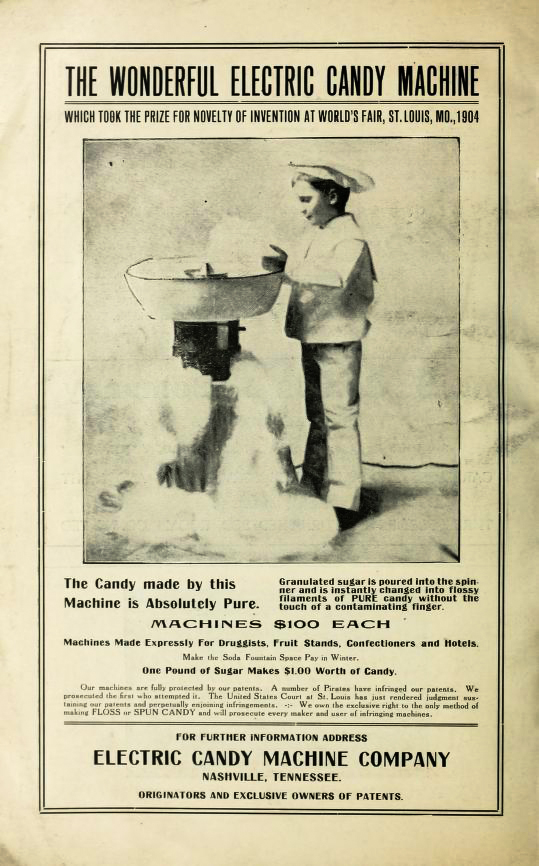

In 1897, Nashville resident William Morrison got together with confectioner John Wharton and developed an electric candy machine that pushed sugar crystals through a metal bowl covered in tiny holes, creating a cotton-like substance made from pure, tasty sugar.  Wow!  They were awarded a patent for it in 1899 and introduced the treat at the St. Lous World's Fair in 1904 as "Fairy Floss."  Can you remember the first time you ever ate cotton candy?  Perhaps you never had any of the sugary stuff at all in your life time.  Well, if that's the case, you better head to a fair somewhere in you neighborhood and buy yourself some...before it's to late.  But than again, your dentist may not appreciate it.

Vermont - First State to Outlaw Slavery


According to the Smithsonian Institution, while the people of Vermont were glad to have been rid of the yoke of British rule, they weren't too keen on joining the United States; since they liked their independence.  In an area where Quaker-led abolitionism had flourished, people didn't believe that freedom should be limited by skin color.  On July 2, 1777, the colonial legislature voted to abolish slavery, and elements were even pushing to extend the right to vote to African-Amerian men.  Vermont was the first free state to be admitted into the Union. 

Follow my blog in the near future to see a few more stories about how and when they joined the Union.  It was another extraordinary day in the life of an ordinary guy.

Saturday, October 14, 2023

The "Something You Have To See To Believe!" Story

It was an ordinary day.  Sitting in my new lounge chair at my new home in Woodcrest Villa reading a story in my new Reader's Digest.  The story is the first in the section "World of GOOD" and is titled "Look Down!"  It was a one page story that I managed to turn into a much longer story after doing a bit of research.  The story told of Japan's iconic landmarks such as the ancient temples of Kyoto and the neon-lit skyscrapers of Tokyo.  But...the story delves into something extremely different...at least to me!  Seems it is also about something that is under foot....manhole covers!!  Yes...exactly that!  It talks about and illustrates one of the roughly 6,000 beautifying manhole covers that grace the streets in many of the regions of Japan in which they can be found.  The manhole covers serve as canvases and depict cultural symbols and events.  British-Australian professional photographer Remo Camerota documented them in his new book "Drainspotting."  Remo said that, "Finding them is the best part. It feels like a treasure hunt."  So, I did a bit of searching and found quite a few of the photographs of the 6,000 manhole covers which you are about to observe for yourself.  Enjoy the beautiful photography of Mr. Camerota as well as the beautiful artwork of Japanese artists.  I most certainly did!!  A few photographs illustrate several of the manhole covers as a collage, but all the covers are just an individual cover on the street.  Wouldn't you just love to have the manhole covers in your town covered with the art of local artists.  Maybe even covered with student artwork from local schools.  Hey...I might have given you an idea...now it's up to you to carry it through!  And...perhaps you might care to purchase Mr. Camerota's book that shows you all 6,000 of the covers. Just Google him!  Click on images to enlarge them.  It was another extraordinary day in the life of an ordinary guy.


.


Friday, October 13, 2023

The "How Can Anybody Shoot A Little Dove?" Story

It was an ordinary day.  Looking at a large photograph of a dove that was featured on the front page of my local newspaper's "Food" page.  Yep, the food page.  At first I thought it was a joke, but as I began to read the story, which was titled "DOVES ON THE GRILL", I had a hard time realizing that people really do eat doves!  Seems that on September 1 in Pennsylvania, dove season opened.  First paragraph began with...Those who have at least one dove hunt under their belts know what a relaxed trip afield it is.

Could that be because the doves might not even move when they see a human with a gun because they tend to be so passive?  I'll bet they don't realize that someone plans to shoot them as they sit there looking at them with that unknowing look!  Paragraph #2 of the article read...Images of a hunter or two sitting on a 5 gallon bucket or two over a fresh-cut field, or a local power line hunting doves can to some seem "old-timey," like something your grandfather told you about from when no one had smartphones and gas was less than $1 a gallon."
What kind of hunter would sit in wait for an unsuspecting little dove and then shoot it dead as it landed on a tree branch above him...or her?  To me...it's much the same as sitting on your lounge chair in your back yard and shooting your dog or perhaps cat when it saw you and headed toward you with its tail wagging.  These small mourning doves are said to be a rare treat to eat, but how much meat can you get from one of these little creatures?
I know, to many of you reading this think I'm nuts..and it's only a bird and not a person that you might shoot and eat, but to me it is an extremely passive creature of nature that deserves to live just as a human does.  I went hunting with my Uncle Bob when I was 12 years old on his father's farm in nearby Strasburg, PA.  The first shot I took in the cornfield killed a rabbit that was trying to escape from me.  I told Uncle Bob that he could have it.  I had a cage at home that held all my pet rabbits.  I realize that many people rely on hunting in order to survive, but luckily, I'm not one of them.  I never hunted after that day!  So...if you are a hunter and love to hunt, I promise I will not try and scare off any of the natural game that you might hunt.  I believe that what's fun for one person might not be fun for another person.  It was another extraordinary day in the life of an ordinary guy.  PS - Yes...I do eat chicken, ham, beef, etc, but at least I don't shoot them myself.  And, a steer or pig or even a chicken raised for meat isn't the same as a little dove!  I try not to think about that when I'm eating!  It was another extraordinary day in the life of an ordinary guy.
   

Thursday, October 12, 2023

the "Have You Seen Any Of These Recently In Your Area? Story


It was an ordinary day.  Searching the neighborhood at Woodcrest Villa for one of the prettiest and most familiar butterflies in North America, the Eastern Tiger Swallowtail.  This butterfly is a native to eastern North America and is one of the most familiar butterflies in the eastern United States, ranging north to southern Ontario, Canada, and is common in many different habitats.  It flies from spring to fall, during which it produces two to three broods.  Adults feed on the nectar of many species of flowers.  The male is yellow with four black, “tiger” stripes on each forewing.  Females may be either yellow or black, making them dimorphic.  The yellow morph is similar to the male, but with a conspicuous band of blue spots along the hindwing, while the dark morph is almost completely black. 
The Chrysalis stage

Their green eggs are laid singly on plants of the famalilies Magnoliaceae and Rosaceae.  Young caterpillars are brown and white; older ones are green with two black, yellow, and blue eyespots on the thorax.  The caterpillar will turn brown prior to pupating.  It will reach a length of 5.5 centimentres.  The chrysalis varies from a whitish color to dark brown.  Hibernation occurs in this stage in locations with cold winter months. 
The male which has very few blue spots on it's tail

The eastern tiger swallowtail is the state butterfly of Alabama, Delaware, Georgia, North Carolina and South Carolina and is the state insect of Virginia.  They have a wingspan from 3.1 to 5.5 inches with females being the larger.  Males are yellow with four black “tiger stripes” on each forewing.  The outer edge of the forewing is black with a row of yellow spots.  The veins are marked with black.  The postmedian area of the hindwing is black with yellow spots along the margin.  The inner margin of the hindwing has small red and blue spots.  The ventral forewing margin has a yellow bar that is broken into spots.  
The female with blue spots on wings

It can be found in the estern United States from southern Vermont to Florida west to eastern Texas and the Great plains.  It is common throughout its range, although is rarer in southern Florida and absent from the Florida west to eastern Texas and the Great plains.  In 1932, a single specimen was collected in County Wicklow, Ireland.  It is believed to have been an accidental introduction from North America, perhaps taking a ride on a boat!  The eastern tiger swallowtail was formerly considered a single species with a vast range into northern Canada and the eastern United States.  The eastern tiger swallowtail, Papilio glaucus, is probably the most polyphagous of all 560+ species of swallowtail butterflies in the world.  Fun to watch and enjoy no matter where you may find them.  It was another extraordinary day in the life of an ordinary guy.

Wednesday, October 11, 2023

The "Exploring The Architect's Alphabet In Lancaster- 'A For Acanthus'" Story


Preface: Months ago I was reading an article in my morning newspaper telling me that their contributing architect, Gregory J. Scott, will be spending the next 26 months selecting an architectural style, or type of architecture, based on a letter of the alphabet that he will explain to the readers of the newspaper by means of photographs and a written explanation about that particular word that he choses.  You might remember that he did much the same thing in the past and it proved to be so popular that the readers of the newspaper asked for him to do the same once again.  I will also attempt to take Greg's "Architects' Alphabet" and add a few of my own photographs to his alphabet renderings as I interpret them.  Might not be as impressive as Greg's letters, but I'll give it a try.
 

It was an ordinary day.  Driving the streets of the city of Lancaster, Pennsylvania looking for architecture that illustrates the letter "A" for the word ACANTHUS.  In architecture, an ornament may be carved into stone or wood to resemble leaves from the Mediterranean species of the Acanthus genus of plant which has deeply cut leaves with some similarity to that of the thistle and poppy.  The word "Acanthus" is an interesting word, and one with a long association with architecture.  Acanthus is a hardy plant, native to the eastern Mediterranean region and capable of enduring severe weather and harsh climates.  The acanthus leaf was used by the Greeks in their temples dating back to 450 B.C.  The leaf is recognized by its thick serrated and jagged edges.  To the Greeks it is symbolic of long life and immortality.  Ancient and modern cultures stylized the leaf and used it as decoration on top of columns.  The Greeks employed three designs to cap off their columns: Doric, Ionic and Corinthian.  The tradition carried into modern times.  Mr. C. Emlen Urban was a "classicist architect" and enjoyed designing in the Renaissance styles associated with Greek traditions.  Acanthus leaves were also used as rooftop ornamentation.  Both carved wood and stone were used to create acanthus leaves.  Needless to say, stone offered the longest lasting effect.  The acanthus leaf is most closely associated with civic, religious and other public buildings, but can be found on large, private residences.  Check out the samples that I have found in the city of Lancaster.  It was another extraordinary day in the life of an ordinary guy.


Tuesday, October 10, 2023

The "TYPE CASTING - QWERTY" Story

It was an ordinary day.  Reading a story in The Smithsonian titled "Type Casting."  Story was about the invention of the typewriter.  All began in 1866 when a fellow named Christopher Latham Sholes, a newspaper publisher, co-invented an automated machine to number coupons and tickets, a task that had always been done by hand in the past.  When Christopher first told a fellow inventor, Carlos Glidden, of his idea, Glidden said "Why don't you make a machine that will print letters as well as figures?"  Christopher shared Carlos's enthusiasm, as did a Milwaukee printer, S.W. Soule.  So, the three gentlemen set up shop on State Street in downtown Milwaukee and began work on the world's first commercially successful "Type Writer".  Wasn't long before Mr. Soule gave up and left the other two gentlemen to develop the machine.  Christopher and Carlos's first prototype had a semi-sequential keyboard layout, with all letters upper-case and the capital letter "I" doing double duty as the #1.  Seems there is some dispute as to why they came up with the letters QWERTY across the top row of letters.  Some historians believed it solved a jamming problem by spacing out the most common letters in English; others believe that it was designed specifically to help telegraphists avoid common errors when transcribing Morse code.  After about 30 test models, they settled on QWERTY...and changed the world!  Their typewriter came to market in 1874.  It was manufactured by E. Remington & Sons, which was then expanding its offerings after a lucrative spell of manufacturing firearms for the Union Army.  The first commercially successful typewriter was sold as the "Remington No. 1."  Now, even those with chicken-scratch penmanship and sloppy inkwells could share their work with the reading public.  Then in 1961, IBM introduced the Selectric typewriter which was followed by the first personal computer in the 1970s and then the first keyed Blackberry in 1999.  And...the QWERTY has not perished!!!  And now, our children learn how to type, just as we did, with the top row beginning with QWERTY.  Do you know how easy that is to type QWERTY on my computer??  It's like running my fingernail across the keys on a piano and enjoying it! Anyway...in 1925, the columnist Marian Tallman counseled a reader seeking a good, affordable typewriter.  "You want to be sure it's of standard make.  Look and see if the upper row of letters begins with QWERTY.  If so, you have a good typewriter!  And so it ends!!  It was another extraordinary day in the life of an ordinary guy. 

Monday, October 9, 2023

The "Susquehanna Comes Alive With The Statue of Liberty - Part II" Story

 It was an ordinary day.  The Statue of Liberty had been revealed along the Susquehanna river, constructed by Gene Stilp and placed on the river in 1986.  The unique replica stood in the Susquehanna until 1992 when a series of storms forced her removal. In 1993, plans for reconstruction began: a 24-foot granite statue to be built by a group of local residents. It was going to cost an estimated $60,000 to build her again, along with the $250 yearly fee to use the bridge piling. “You’re talking about a first-class statue,” said Russell Enders, Borough Council president.  Local plumbers and pipe fitters prepared a crown and torch for the new statue, which were unveiled at a daylong ceremony.  Gene Stilp even went so far as to acquire a special granite cutter that used wire instead of diamond, which would save the group thousands in production costs. All seemed well; Dauphin County would once again be watched over by their Lady Liberty. But, somehow, the project hit a snag.  Well into 1996, there was still no statue. The Save Susqehanna’s Lady Liberty Committee, led by Gene Stilp himself, had collected countless donations, and had sold mugs, t-shirts, and even Christmas ornaments to fund the project.  Some local residents believed that the statue did not need to be replaced, that it was an eyesore detracting from the natural beauty of the river and surrounding landscape. In a letter published by Harrisburg’s Patriot News, resident Pete Barron wrote: “I grew up in the Dauphin area.  I’ve fished the river many times in Dauphin. A statue of any kind is not going to improve the scenic beauty. Stand in the Dauphin Narrows and watch the sunset. You can easily see the beauty of nature. Erecting a four-ton statue and thrusting it upon the Susquehanna appears to have become more of a monument to the people involved than to Liberty.”  Soon, dissent began to spread throughout the counties involved in the project. Questions were raised over Stilp’s ability to oversee the project. Stilp had to abandon constructing the statue from granite, as it would be much too heavy. He settled on constructing it mostly from fiberglass, wood, and metal. Such a construction would be impossible for a group of men to haul as they did that summer night. Stilp inquired with the Pennsylvania Air National Guard to have the statue airlifted onto the piling, free of charge. His inquiries seemed to fall on deaf ears as five years passed since the fall of the original. Fed up with Stilp’s inability to produce results, and desperate for their landmark to return, the Dauphin Borough Council took over the project in January of 1997.  Six months of construction later, a four-ton replica of Lady Liberty was airlifted to the stone pedestal from which she had fallen five years earlier. This new statue, constructed of metal, wood, and fiberglass with a polyester finish cost an estimated $33,000 to complete. It was a triumphant moment for the people involved and the surrounding communities, with over 100 spectators watching the event. Georgina Ciesnolcvicz drove all of the way from Wisconsin clad in patriotic attire: “All I did was bawl.” The statue was met with applause and cheers as it was secured into place. This small Pennsylvania town had its landmark back. “I knew we were going to get it done, no matter what the naysayers said. I’m not a sculptor; I’m just an amateur who is winging it,” Stilp said.  There, on the ever-rushing, roaring narrows of the Susquehanna River, Gene Stilp’s Lady Liberty has remained to this day. She endures freezing temperatures and howling winds, the baking sun and violent storms. Stilp is still involved with the statue, organizing a cleanup every few years that draws large numbers from the community. “It’s a tough time for America, so it’s nice to have a reminder of what people will do together. Everyone coming out and helping out. That’s a community,” said local songwriter Alex Kaschock. Strangers and neighbors alike continue to unite behind the preservation of their slice of Americana. Lady Liberty of the Dauphin Narrows serves as an enduring symbol of patriotism for this quaint town rooted in tradition.  Picture this. You’re driving along Route 322, through the town of Dauphin, Pennsylvania. As you’re looking at the beautiful Susquehanna River, you notice an all-white figure in the distance. It’s perched atop an overgrown, grey-brick pedestal — if you can even call it that. You squint, trying to see what exactly you’re looking at. “Is.... is that The Statue of Liberty?” you mutter to yourself. You keep driving, getting closer to the mysterious structure. “It IS The Statue of Liberty!” you exclaim.  You’re not seeing things. You didn’t hallucinate her on your long drive across the Keystone State. No. There is a replica Statue of Liberty overseeing a section of the Susquehanna River in Dauphin. She stands 25 feet tall on top of an old railroad piling in the near center of the water. This oddity has left motorists confused for decades. Especially those motorists with no time to stop and get a closer look, or to pull out their phones and search her up.  It was another extraordinary day in the life of an ordinary guy.


Sunday, October 8, 2023

The "The Human Brain - Part II" Story

It was an ordinary day.  Finishing my story from yesterday about the human brain.  The second part lists "Ten Ways You Can Boost Your Brain Power Starting Now!" and was created by Ruth Sheldon.  

1. Use It Or lose It...  Forget the old adage that if you're over 40, memory and cognitive function head south.  Scientists have found that the human brain can and does develop new neural pathways at every age.  Like any muscle, the brain needs regular workout to stay fit and healthy - and you're the leading player in keeping it that way.  Any brain exercise is good, but not all brain workouts are equal.  Repeating a familiar routine won't give your brain the aerobic activity it needs.  The best brain booster will challenge your cranial neurons with activities outside your comfort zone.     

 2. Break A Sweat...  The general rule is "what's good for your heart is good for your brain."  The more active you are, the more blood and oxygen are delivered to your brain.  Physical exercise also plays a big role in stimulating new neuronal connections.

3. Fuel Up With Brain Foods...  Fresh fruits and vegetables, whole grains,  "healthy" fats, and lean protein provides lots of health benefits for your body, heart, and brain. - including improved memory and a lower risk of dementia.

4. Get Enough Sleep...  Most adults require between 7 1/2 and 9 hours of sleep every night.  if you consistently miss your target zzzz, you're part of the majority of folks classified as sleep deprived. Even skimping on a few hours for one night can make a difference.  Memory, creativity, problem-saving, and critical thinking may be compromised the next day.

5. Keep Stress At Bay...  This definitely falls into the category of "easier said than done."  Stress is all around us.  But if we dwell on negative situations, we can lose focus nd our ability to problem solve when we need it most.

6.  See Your Doctor Regularly...  Dementia and Alzheimer's disease are not the only causes of memory loss and lack of clear thinking.  Diabetes, heart disease, menopause, lifestyle issues, and medications for colds and allegories can also be th culprits. 

7.  Spend Time With Friends...  We're wired to be social animals.  Some researchers believe sound social interactions maybe the best kind of brain therapy for all.  Recent findings show that people with an active social life have the slowest rate of memory loss.  Conversely, a significant lack of social activity can damage the brain as much as smoking or heavy drinking.

8,  Read More Fiction...  According to a recent study by neuroscientists published in the journal of Brain Connectively, reading a novel can improve brain function on a variety of levels.  The ability to use your imagination and put yourself in the shoes of another person is similar to developing muscle memory in sports.

9.  Don't Abuse Your Brain...  Activities like smoking and drug or alcohol abuse can have major consequences on mental functioning.  We all have our indulgences, but knowing your limits is always best.

10.   Take Time Off The Interest...  "Is Google making us stupid?"  When author Nicholas Carr first posed this question, he zeroed in on an important issue facing neuroscientists today.  As we increasingly use and depend on the Internet's bounties, he believes we're becoming lazier and changing our brain in ways that sacrifice our ability to concentrate and think deeply.  In fact, scientists are beginning to believe that because we're not "working" our brain sufficiently, we're becoming less smart than we were before.

This information, which you just read, was taken from the small phamplet: Smithsonian Presents BRAIN MATTERS.  It was another extraordinary day in the life of an ordinary guy.

Saturday, October 7, 2023

The "The Human Brain - Part I" Story

It was an ordinary day.  Reading an article in "Smithsonian Presents Brain Matters" about some 19th century physicians who thought music could infect the brain! When it comes to music in the brain, medicine has come a long way.   The following is from a small brochure I read and found very interesting.  Today we associate music with emotion and artistry.  It's used in medical therapy and activates the same region of the brain as complex mathematical formulas.  This largely positive image has strong roots in history, as well.  But, with opponents come the naysayers.  Until the 1600s and 1700s, music had a pretty positive image, linked with a sort of universal harmony and health.  But, as scientists learned about the auditory nerves in the brain, some physicians perceived music as  threat and an over stimulant.  According to  subset of medical scholars, listening to too much music could be dangerous, inducing headaches and perhaps even death!  By the time the 1800s rolled around, music was a full-blown pathogen, according to medicine, literature and etiquette books.  Excessive music - whether in audience or performance - was associated by some researchers with moral degradation and depravity.  When American neurologist George Beard coined "nervous exhaustion" as a mental condition called neurasthenic, he cited music as a cause of the illness.  Women, of course, were continually linked to the dangers of music.  In the 17th and 18th centuries, physicians thought the fairer sex had weak nerves and were prone to fainting.  They warned that excessive keyboard playing could aggravate such issues.  Gynecologists thought music might be too sexy for women or that it could lead to heavy menstrual cycles.  On the flip side, others linked it to infertility and reproductive problems.  Victorian researchers also thought that music talent might be more prevalent among homosexuals.  Musical pathology continued into the twentieth century.  Political parties - the Third Reich in Germany and the Soviets in Russia, specifically - capitalized on the negative undertones put forth by medicine and targeted specific genres to bolster their causes.  In the U.S., listening to too much jazz came with social and moral symptoms.  Even today, psychologists have linked music to addiction and mused on how it might affect the psyche.  Needless to say, neuroscience and psychology have come a long way.  Scientists now know a lot more about how the brain processes music.  While listening to music at a high volume for a long period of time can be psychologically straining as well as damaging to the eardrum, it's not the music itself that is the damage; it's the decibel levels.  Whatever you might think about the dregs of pop music today, listening to Taylor Swift probably won't kill you.  It was another extraordinary day in the life of an ordinary guy. 

The "Susquehanna Comes Alive With The Statue of Liberty - Part I" Story

It was an ordinary day.  Driving past the Statue of Liberty.  Not the one you may be thinking of, but the one that is in the middle of the Susquehanna River in Daupin County, Pennsylvania.  The maiden stands watch over the Susquehanna Valley and is a unique replica of the Statue of Liberty that stands in New York.  No special equipment is needed to see this apparition; one only needs to drive along Route 322 from Lancaster to State College.  Look toward the river when you reach the Susquehanna River and along an abandoned railroad piling she appears; a stark, poised Lady Liberty all in white greeting those who drive past.  This scaled-down replica of the original Statue of Liberty was constructed and erected in 1986 to commemorate the original statue's centennial.  It has since gone from legend to a tourist staple for motorists traveling to and from Harrisburg on Route 322.  Lady Liberty stands in the Susquehanna river in Dauphin County.  She currently rises 25 feet from and old bridge piling in a section of the Susquehanna River known a the Dauphin Narrows.  The inception of the statue was veiled in secrecy, only known by a few local men in Dauphin.  The idea was the brainchild of Gene Stilp, a non-practicing lawyer and engineering hobbyist.  He drafted plans and began construction of the statue using plywood and Venetian blinds in a friend's garage.  Upon completion, Gene gathered a few of his friends whom he could trust with his secret, and on the night of July 1, 1986, 12 men set out to put their Lady Liberty in her place.  One of the men, safety coordinator Steve Oliphant recalls, "I was concerned about taking a bunch of knuckleheads with a 450-pound statue out into the Dauphin Narrows.  It can get dangerous out there."  With only a few small boats, Stilp and his men paddled out onto the Susquehanna to the old Marysville Bridge piling.  
"We were 32 feet in the air, and it was pitch black, and we had to be very careful," said Stilp.  Using only ropes and their combined manpower, the men hoisted the 450 pound construction up on the 30 feet to her perch.  The men then convened over pizza and beer, not knowing they had sown the seeds of a local legend.  By the next morning, numerous cars were pulled over on the side of Route 322 taking pictures and calling into local radio stations about a white apparition that appeared on the river.  Stilp and his cohorts didn't know how the public would react, fearing it could be labeled as a hoax.  To their surprise, the people of Dauphin County embraced the statue as an enduring symbol of patriotism and hope for their country.  Stilp was identified as the creator within a few weeks. 
 Stilp is no stranger to unusual works.  In 2012 he constructed a 25-foot long inflatable pig that drew attention to government corruption.  In his race for the 11th District Congressional seat that year, he was asked about his involvement with the Statue on the Susquehanna River.  He replied, "How do you build community?  It's about caring about where you live."  He also spoke on its legacy:  "It's become a landmark, and I think it's become an inspiration for people.  It makes you think about a set of values we like in this country.  I for one love the statue.  Every time my wife and I travel to State College to visit with our friends Jere and Sue, we have to pass past the sculpture.  It is amazing.  Reminds us of a miniature Statue of Liberty.  What a sight along the Susquehanna!  So...what's next Gene?  It was another extraordinary day in the life of an ordinary guy.


Friday, October 6, 2023

The "Unbelievable Birds" Story

 It was an ordinary day.  Reading an article in my latest Smithsonian Magazine about "Avian America."  One segment was titled "Bird by Bird" and talked about some of the most remarkable birds in the world.  I selected a few of my favorite birds to share with you in this story. Maybe you too will enjoy the descriptions and picture what I will write about in each segment.  So...follow along as I begin with the Roseate Spoonbill.

The Spoonbill exited its shell the only way it knew...a blunt pink spoonbill!  The distinctive bill proved to be useful as the chick grew to scoop up crustaceans and fish from the ocean.  These birds have been described as "exhibiting paradoxical glamour and drollery," according to writer Robert Allen back in 1942.  The Audubon Society website describes it, through the words of Kenn Kaufman, as "gorgeous at a distance and bizarre up close."  After being almost exterminated by plume hunters in the late 1800s, the bird made a remarkable comeback.  They can be found along the Gulf Coast and farther south.  With sea-level rise impacting their fishing grounds, they've been sighted farther north in states such as Virginia, Maryland, the District of Columbia, New York and even as far North as Michigan and Connecticut.  Just a very unusual bird that must be so neat to view if you ever have the chance to see one in person.  


The Northern Pygmy Owl might at times be hard to find if hiking through a forest.  Even when you don't see them while hiking through the forest or sitting in a lush patch of sword ferns on the forest floor and looking upward into the canopy, just knowing they are somewhere up there, watching, deepens the experience and magic of the place.  Could be that the mother owl and her mate are searching for food to deliver to their chicks in a nearby tree.  In the predawn hours, moths are commonly delivered to their nest and as the day progresses there might be a steady stream of mice and voles which are often on the menu.  Although these owls aren't much bigger than a house sparrow, they can prey on species up to three times their size.  


The California Condor is the largest bird species in North America.  They are critically endangered, with just 275 free-flying in California, Utah, Arizona and Baja California.  Their heads and crops can reflect the entire range, from yellow to pink to crimson.  You can hear the wind flow past their massive wingtips, much like the sound of dozens of swords simultaneously swinging through the air.  If you are lucky enough to have one of these flying giants soar past you and look you right in the eyes, you can immediately sense their undeniable intelligence.  I have seen several photographs of the birds and many have been "tagged" as this one shows on its wing.


Three great birds that share the term "Avian America."  It was another extraordinary day in the life of an ordinary guy.

Thursday, October 5, 2023

The "BEHIND the NAME" The Story of Hamilton Watch Co." Story

It was an ordinary day.  Reading an old Sunday News and...the headline told it all;  BEHIND THE NAME!.  The two part story was about one of Lancaster's most famous businesses...Hamilton Watch Company.  I have written several stories about Hamilton Watch where my mother worked before meeting my father and getting married.  Hamilton Watch was named in 1892 in honor of James Hamilton, the son of one of Lancaster's founders, Andrew Hamilton.  The new company initially chose the name Columbian Watch Company, but learned that "Columbian" was a trademark held by another watchmaker, so they opted for the Hamilton name.  Today it is said that it was an unfortunate decision.  Like his father, James Hamilton owned enslaved Blacks.  There is no evidence that the company meant to honor this aspect of his character or was even aware of it.  Still, our city's founders were not as noble as popular history might indicate.  Andrew Hamilton was a famed Philadelphia lawyer and was the hero of the 1735 trial of printer and journalist John Peter Zenger  in which he helped establish truth as a defense to a libel claim.  His son James head a career as a lawyer, businessman and politician, serving as Philadelphia mayor and deputy governor.  In 1741 James inherited several Black people from his father.  And, there is no evidence that he ever freed them or their offspring.  James did have the opportunity to support independence for his slaves, but didn't.  Slave owner, supporter of royalty and we honored him.  Why?  I guess we will never know!  But, it was decided, for some strange reason, that the new company should be named after him.  If the watch company owners would have named the factory after the original owners of the land, Indiana Jones would have been sporting a "stylish" Conestoga Watch, rather than a Hamilton.  James Hamilton was actually quite far down the line of title from the original grant to William Penn.  Actually, the land should have belonged to the Native Americans who had owned and lived on the land until the arrival of the English!  
At that time in history, the number of enslaved blacks in Lancaster was relatively small, but the indelible stain of the "peculiar institution" has never seemed to have disappeared, even today, believe it or not!  Today, the Hamilton Watch Company no longer fills the many buildings along Columbia Pike.  It is now known as Hamilton Park and supplies housing for many families in the city of Lancaster.  

Wednesday, October 4, 2023

The "The Neighborhood Birthday Party Was A Hugh Success!" Story

It was an ordinary day.  Celebrating one of my neighbor's birthdays with a large gathering of neighborhood friends and a hugh cake.  Tom lives five doors away from my home on Rubia Place at Woodcrest Villa.  My wife, Carol, and I have lived in the neighborhood for almost a year now and have yet to meet all of our neighbors.

My wife Carol with the Elvis impersonator, Birthday Tom!
We thought that taking in a birthday party would be a good chance to meet a few more new neighbors. Tom was just turning 80 and was celebrating the event with the party and rides in a large limo as well as having one of his friends bring their immaculate 1931 Oldsmobile to his party for all the neighborhood to see.  
Tom's birthday cake!
The limo ride was OK, but the Olds was remarkable.  The place was so crowded that I couldn't even get an overalll photograph of the car, but I did spend time taking close-up photographs of the car.  The paint was immaculate and the chrome was polished to a remarkable luster.  Take a look at my photographs to see what you think of the car.  I was disappointed that the owner didn't offer rides, but I'm sure someone would have left some sort of mark on the beautiful paint job or interior.  After all...this is a retirement community and most of us are old!  After grabbing a bit to eat, Carol and I walked a couple of doors down Rubia and watched the Phillies!  It was another extraordinary day in the life of an ordinary guy.  PS - I'm sorry I didn't get a photo of the entire car.  I just forgot...since I'm quickly catching up to Tom in age.  


The "You Can't Erase A Written Mistake Made In Ink!" Story

It was an ordinary day.  Just picked up my mail from my mail "island" here at Woodcrest Villa.  In my large mailbox were two "Smithsonian" magazines.  I had subscribed to the magazine a few months ago and was waiting for my first magazine to arrive.  Finally arrived a week or two late, but I got my September/October issue as well as my November/December issue.  Since there is no dated material in this magazine, I didn't miss anything.  And...what a magazine!  Fantastic stories as well as spectacular photography fill this extremely informative magazine.  One of my favorite stories from the July-August issue was titled "The Write Stuff" and dealt with a family who a owned pencil company in Tennessee which to this day still makes a statement in the digital age.  Story begins with...Wood passes through the loud whine of saws spinning at 8,000 revolutions per minute.  Pencils clack-clack-clack as they shoot through a paint box and assume their various hues.  All that is needed to finish them is the imprinting of the logo and the freshly stamped name in silvery foil.  This is the Musgrave Pencil Company which is one of a few pencil manufacturers left in the United States.  Today there are perhaps four companies, whereas there used to be some two dozen companies that made lead pencils.  So...how many of you still use pencils?  The kind that you have to sharpen in a metal sharpener or perhaps sharpen with a folding knife.  The stamped name on the length the pencil shines with its silvery foil imbedded name.  The company is located in Shelbyville, Tennessee, about 60 miles south of Nashville, where the municipal seal bears the words "The Pencil City."  That reputation began with James Raford Musgrave, who founded the wood-pencil mill there in 1916.  The main reason they picked Shelbyville was the abundance of virgin eastern red cedars, the slow-growing premier pencil stock that the industry uses.  The company cuts the wood into thin, flat slats that the factory sandwich around sticks of graphite, then slice into pencils.  Mr. Musgrave began making pencils in 1923, launching what's thought to be the first pencil manufacturer in the South.  Wasn't long before others arrived in Shelbyville and began making their own pencils.  The company has close to 100 employees and produces about 72 million pencils a year!  Mr. Musgrave is watchful for new ways to do business, since the US imported 3.7 billion pencils last year from China, Brazil and elsewhere.  It wasn't the first time that the U.S. pencil industry was threatened.  In 1564 a high quality of graphite was found in England which brought more pencil imports into the United States.  Pencil making began in the United States around 1812.  The late 19th century brought the start of the yellow pencil.  Today, Musgrave gets most of its materials from China.  They produce the standard #2 as well as the thicker carpenter pencils and the rotund Choo-Choo pencils.  Their pencils are popular in the US because they are affordable and they are made in the USA.  In 2019, Musgrave started selling its Tennessee Red pencils which has a natural fragrance.  It is known as "the most American pencil that one could possibly buy.  It is written that when you buy a box of the American pencils, you get a hand-written Thank You note...written in pencil, naturally!  It was another extraordinary day in the life of an ordinary guy.      

Tuesday, October 3, 2023

The "Catching A Glimpse Of A Juvenile White Ibis" Story

It was an ordinary day.  Bird watchers in Lancaster County had a rare opportunity to get a  glimpse of a white ibis around the Octoraro Lake as one of the warm-weather birds was spotted there recently.  


The juvenile bird, reportedly scavenging the waters by Mount Eden Road at the lake running along the Lancaster/Chester county line, is more brownish gray than white.  It has yet to grow into its full-white adult plumage.  The President of the nearby Lancaster County Bird Club, Ted Nichols, said this is the eighth sighting of a white ibis in the last 25 years in the county.  The bird was last reported around this time of year last year on the Conejohela Flat, south of Columbia in the Susquehanna River.  Seeing the white ibis somewhere in Pennsylvania has become a special annual  occurrence in Pennsylvania.  The bird, typically found in the southern United States year round, has expanded it breeding range northward, like many other bird species, as the climate warms.  Sightings are becoming more frequent in this part of Pennsyvania due to climate warming.  How long these birds will remain in the area is uncertain, so if you care to chance seeing one, head to Octoraro Lake in the near future.  It was another extraordinary day in the life of an ordinary guy.      

Monday, October 2, 2023

The "A Trip Down The Susquehanna River" Story

It was an ordinary day.  Just finished reading an article in my local newspaper's "Living Section" that was written by a fellow named Dennis McMahon.  Story was about growing up along the Susquehanna River.  The Susquehanna River begins in Cooperstown, New York at the southern end of the Otsego River, just a hop, skip and jump from the Baseball Hall of Fame.  The river runs for 444 miles from Cooperstown to the Chesapeake Bay at Havre de Grace, Maryland.  And, the Chesapeake opens into the Atlantic Ocean.  Well, the writer of the article that I was reading said that his boyhood dream was to build a raft, and like Huck Finn, take it down the Susquehanna all the way to the Chesapeake Bay!  The writer said that the name of the article was "Down the Susquehanna by Canoe."  Well, the writer said he had a better idea which was to build himself a log raft.   Never did happen and along came high school, college, marriage, and his dream began to fade.  After college he and his wife moved to Puerto Rico where they lived for over four years before returning home.  They then had a child and before long he and his wife were both 30 years old.  Well, if he didn't face the dream by now, it would never happen.  So, that January he made his decision to take a canoe down the river rather than building a raft.  He rounded up six of his friends and they began to live out his childhood dream.  None of the crew had a canoe.  They would have to rent or buy camping gear, rain gear, life jackets, cooking equipment, floatable containers for food and menus for about 180 meals.  Boy...I wish I would have had the chance to have been a part of the crew for that excursion.  Well, they got geological survey maps and river information from county planning departments, since they needed to know where all the dams, pipes and sunken structures might be along the way.  By now it was 1975 and Dennis was 38 years old and they decided they wanted to draw attention to the 1973 Clean Water Act, which was enabling the increasing recreational use of rivers like the Susquehanna.  They petitioned the Governor of New York for a letter they could carry to the governors of Pennsylvnia and Maryland who sat along the Susquehanna River.  Then, on the afternoon of June 20, 1975, the six friends set off in three canoes on a 350-mile adventure on the mighty Susquehanna River.  I can't imagine how exciting that must have been.  They stopped at City Island in Harrisburg and presented their letter to the Secetary for Environmental Resources.  A short time later they stopped at Havre Grace, Maryland for the presentation of another letter to the Secretary for Environmental Resources at City Park.  Their trip was a grand adventure and as the author of the story said, "It was a wonderful trip!"  The story ended with a note stating that the author of the article lived in Manheim Township which is where I lived until moving to Woodcrest Villa about a year ago. I did a bit of figuring and realized that the fellow who had written the article for the Lancaster Newspaper is now about the same age as myself.  Oh, how I would have loved to have had the chance to travel with Dennis and his friends down the Mighty Susquehanna!  Just reading his story made me feel as if I had been with him.  I'm a bit too old to try something like that now, but the story made me feel like I was part of the crew on those canoes.  Thank you so much for your story in the Lancaster Newspaper.  I loved it.  It was onother extraordinary day in the life of an ordinary guy.             

The "Lancaster's 'The Scribbler' Details 'The Gingrich Wagon' Story"

It was an ordinary day.  Reading another of "The Scribbler's" (well-known Lancaster, Pennsylvania's author Jack Brubaker) stories that were in this past week's Lancaster Sunday News.  I have chosen to share with you a story titled "The Gingrich Wagon" which tells the story of a Conestoga Wagon owned by the Gingrich family.  Story began in 1913 in the city of Erie, Pennsylvania when the city of Erie celebrated the centennial of the "War of 1812's Battle of Lake Erie".  Seems they reenacted the journey of a Conestoga wagon carrying gun powder from Wilmington, Delaware to Erie, Pennsylvania before a battle.  The wagon belonged to Amos Gingrich, who happened to operate a stable and later an automobile garage in the city of Lancaster, Pennsylvania.  Since Mr. Gingrich's wagon was an extremely accurate and intact piece of history, it was constantly being used in a variety of displays as well as parades between 1912 and 1932.  It was known by many as a "de facto mascot of Lancaster County."  Actually, Mr. Gingrich's wagon was so historically correct, intact and accurate that it was featured in various parades between the years of 1912 and 1932.  The wagon was used to reenact the travel of a Conestoga wagon that was carrying guns  from Wilmington, Delaware to Erie, Pennsylvania in early July.  The wagon was also featured in other pageants and parades which included a role in Lancaster County's bicentennial in 1929.  Today, the same wagon can be seen on display at the Landis Valley Village & Farm Museum in Lancaster, Pennsylvania.  It was another extraordinary day in the life of an ordinary guy.     

Sunday, October 1, 2023

The "Channel 8 - All-New And Fantastic!" Story

It was an ordinary day.  Reading about Lancaster's Channel 8 Television new news room in their complex off of Columbia Ave. to the West of the city of Lancaster, Pennsylvania.  When Lancaster's Television station first began on the air on March 18, 1949, they were WGAL-TV Channel 4 and were owned by Hearst Properties Inc.  Not quite sure what year they changed channels, but they are now, and have been for as long as I can remember, Channel 8.  When I turned on Channel 8 last evening to watch the evening news, they were in an entirely new state-of-the-art newsroom from which to broadcast their news shows. The newly designed newsroom is beautiful!  Where they found the room to rebuild their new newsroom, in the location where they have been for years, is a wonder.  The new newsroom seems to be twice the size as the old newsroom.  It was fun to watch the news broadcasters give us the news last evening.  I did notice they had some problems with sound and I'm not sure if I like them standing instead of being seated, but I will get used to it before long.  At times they seemed to be lost in the hugh new newsroom.  Check out the following photograph and you can see what they have created in their location on Columbia Pike in Lancaster, PA.  Thanks Channel 8, WGAL TV, for all the many years I have been watching you.  I was a very young boy when you first came on the air, and I have been a loyal fan of your TV news broadcasts for as long as you have been on the air.  I now will have the chance to view the news shows in a new atmosphere.  Only wish all the old broadcasters would have had a chance to work in your new newsroom.  Keep up the great work that you have done in the past.  My wife and I really appreciate it knowing we are receiving the lastest news that can be reported.  It was another extraordinary day in the life of an ordinary guy.